




Psychics may use interpretive tools such as tarot decks, astrology charts, oracle cards, numerology systems or pendulums during a phone reading. The tool is generally used to organise the consultation and prompt questions, symbols and associations; it does not replace the reader’s judgement, conversation or intuitive impressions. The choice depends on the reader’s method and the type of guidance being sought.
Tarot cards
Tarot is one of the most recognisable tools used in psychic consultations. A reader typically asks you to focus on a topic, then selects cards and places them in a particular arrangement, known as a spread. Each position in the spread has a purpose, such as describing the current circumstances, an influence from the past, a possible obstacle or a factor to consider next.
The card’s traditional imagery, its position and its relationship to the other cards all contribute to the interpretation. Some readers also consider whether a card appears upright or reversed. During a phone reading, the reader describes the cards and explains how they relate to your question, so you do not need to see the deck yourself.
Astrology charts
An astrology reading uses a chart calculated from information such as a person’s birth date, birth time and birthplace. The chart maps the positions of planets and other points at the time of birth. A reader may examine signs, houses and aspects between planets to discuss themes such as communication, relationships, work preferences or periods of change.
For a more current question, the reader may compare the birth chart with present planetary movements. Accurate birth information can make the chart more specific, particularly when the birth time affects the rising sign or house placements. If the exact time is not known, the reader may explain that some parts of the interpretation are less precise.
Oracle cards
Oracle cards are similar to tarot in that they use a deck of illustrated cards, but they do not follow one universal structure. The number of cards, meanings and layouts vary between decks. Some focus on themes such as self-reflection, relationships, spiritual development or decision-making.
Because oracle decks are not governed by the same traditional system as tarot, the reader usually works from the guidebook, the imagery and their own associations. They may use an oracle deck on its own or alongside another method to explore a particular aspect of a reading.
Numerology
Numerology assigns significance to numbers derived from details such as a name or date of birth. A reader may calculate figures associated with life themes, personal tendencies or significant cycles. Different numerology traditions use different calculations, so the method should be explained rather than assumed.
During a phone consultation, numerology can provide a structured starting point for discussing recurring patterns or the timing of personal decisions. It is usually most useful as part of a wider conversation rather than as a standalone prediction.
Pendulums and other physical aids
Some practitioners use a pendulum as a concentration aid or for simple symbolic yes-or-no prompts. Others may work with crystals, photographs or other objects as part of a personal spiritual practice. These items are not essential to every reading, and their meaning depends on the reader’s approach.
A pendulum cannot provide the detail of a full interpretation. If it is used, the reader may first establish how movement is being interpreted, then treat the result as one prompt among several. A careful practitioner should avoid presenting a physical aid as an objective test or as proof of a future outcome.
Tools used in mediumship and clairvoyant work
Mediumistic or clairvoyant readings do not necessarily require cards, charts or other equipment. The reader may rely primarily on impressions, mental images, sensations, memories or perceived communication. In some cases, a photograph or personal object is used as a focus, but this is not a requirement and does not establish the identity or accuracy of an impression by itself.
How tools are handled during a phone reading
- The reader normally begins by clarifying the subject and the type of guidance you want to explore.
- They select a method that suits the question, such as a card spread for a decision or an astrology chart for longer-term themes.
- They interpret the symbols, calculations or impressions in conversation, explaining relevant details rather than expecting you to interpret them independently.
- You can ask for clarification if a symbol or term is unfamiliar, or explain factual context that may affect how the reading is understood.
- The consultation should distinguish between an interpretive possibility and a confirmed fact, particularly when discussing another person or a future event.
There is no single tool that every psychic must use, and a reading can be conducted without any physical aid. Tools are best understood as frameworks for reflection and interpretation, not as scientific measuring instruments or guarantees of what will happen. When selecting a phone reading, it is reasonable to ask which method the practitioner uses, whether you need to provide birth details, and how the tool will contribute to the consultation. Psychic guidance should also be kept separate from professional medical, legal or financial advice.
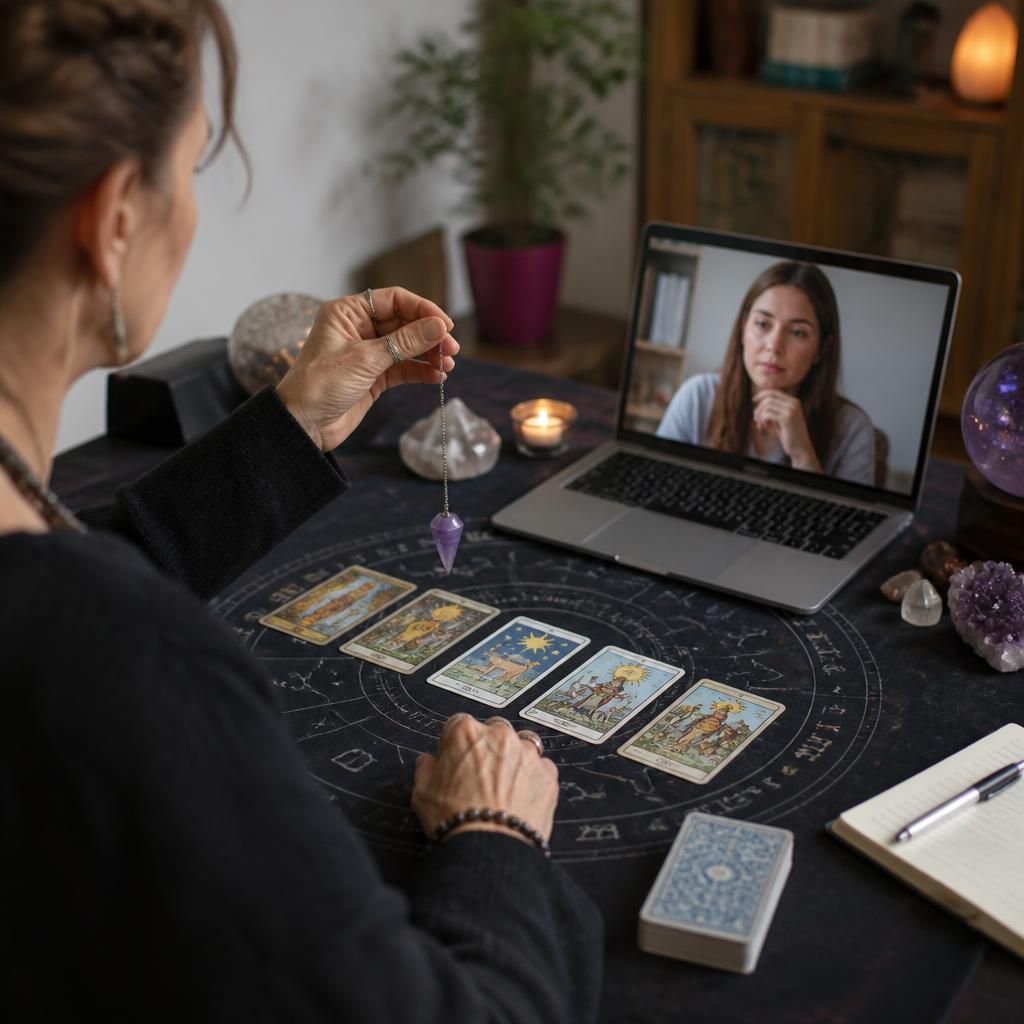
The same tool can produce different styles of reading because practitioners may use different spreads, calculation systems or interpretive traditions. For this reason, the useful question is not simply which tool is used, but how the reader applies it. A clear explanation should identify the symbols or patterns being considered, distinguish established meanings from personal interpretation, and relate the discussion to the subject you raised.
This approach also helps you assess the reading fairly. The tool provides a structure for the conversation, while the reader’s explanation supplies the context. If a method or term is unfamiliar, ask the reader to define it before drawing conclusions from it.