




Are phone psychic readings as accurate as in-person sessions?
Phone psychic readings can be just as meaningful as in-person sessions, but neither format guarantees accuracy. The quality of a reading depends more on the psychic’s approach, the clarity of the questions and the connection established than on whether the consultation takes place by phone or face to face.
Phone psychic readings are not inherently less accurate than in-person sessions. The format changes how the consultation is delivered, but it does not determine whether the guidance feels relevant or useful. Accuracy is influenced by the reader’s method, the type of reading, the information discussed and how clearly the client communicates their questions.
In-person readings may include visual and environmental cues, such as body language, facial expressions and the atmosphere of the meeting space. A phone reading removes those cues, which can be an advantage as well as a limitation. Without visual information, the conversation may place greater emphasis on the reader’s chosen practice, such as clairvoyance, mediumship, tarot or astrology, rather than on reactions that can be observed during a face-to-face meeting.
Phone readings can also provide a more neutral setting. Some clients find it easier to discuss sensitive relationship, career or personal matters when they are not sitting directly opposite the reader. Greater privacy may help them explain their circumstances more openly, although the quality of the consultation still depends on giving honest, relevant context and listening carefully to what is said.
The meaning of accuracy varies between different types of reading:
- Clairvoyant readings may focus on impressions, images or patterns perceived by the reader. Their relevance is assessed by how clearly those impressions relate to the client’s circumstances.
- Mediumship is generally concerned with perceived communication or connection involving someone who has died. Personal details may help a client decide whether the experience is meaningful, but they should not be treated as independently verified proof.
- Tarot readings use the symbolism of the cards to explore situations, influences and possible directions. The cards do not provide a fixed timetable or remove the need for personal judgement.
- Astrology interprets chart information and planetary patterns. The quality of the interpretation depends on the information used and the reader’s method, rather than on whether the discussion takes place by phone or in person.
Predictions require particular care when assessing accuracy. A reading may describe a possible development rather than an unavoidable event. Decisions, changing circumstances and information that is not yet known can all affect what happens next. For that reason, a responsible reading should be understood as reflective guidance, not a guaranteed forecast or a substitute for professional medical, legal or financial advice.
Several practical factors can improve the clarity of a phone session:
- Prepare a short list of focused questions instead of asking for a general prediction about every area of life.
- Give enough background to establish the subject, while allowing the reader to explain their interpretation rather than supplying an answer for them.
- Take notes so that you can consider the guidance afterwards without relying on memory or the immediate atmosphere of the conversation.
- Separate information that is specific and relevant from broad statements that could apply to many people.
- Keep personal responsibility in view, particularly when a reading discusses major decisions or emotionally difficult circumstances.
Warning signs are broadly the same in both formats. Be cautious of claims of certainty, pressure to purchase repeated sessions, frightening predictions presented as fact, or requests for unnecessary personal information. A credible consultation should allow questions, acknowledge uncertainty and avoid making the client feel dependent on further readings.
Ultimately, comparing phone and in-person accuracy is less useful than considering whether the reader uses a clear method, explains the limits of interpretation and addresses the client’s questions directly. Phone readings can offer a focused form of personalised spiritual guidance, while in-person sessions may suit people who value face-to-face interaction. Neither setting can guarantee a particular outcome, so the most reliable approach is to use a reading as one source of reflection alongside your own judgement and practical evidence.
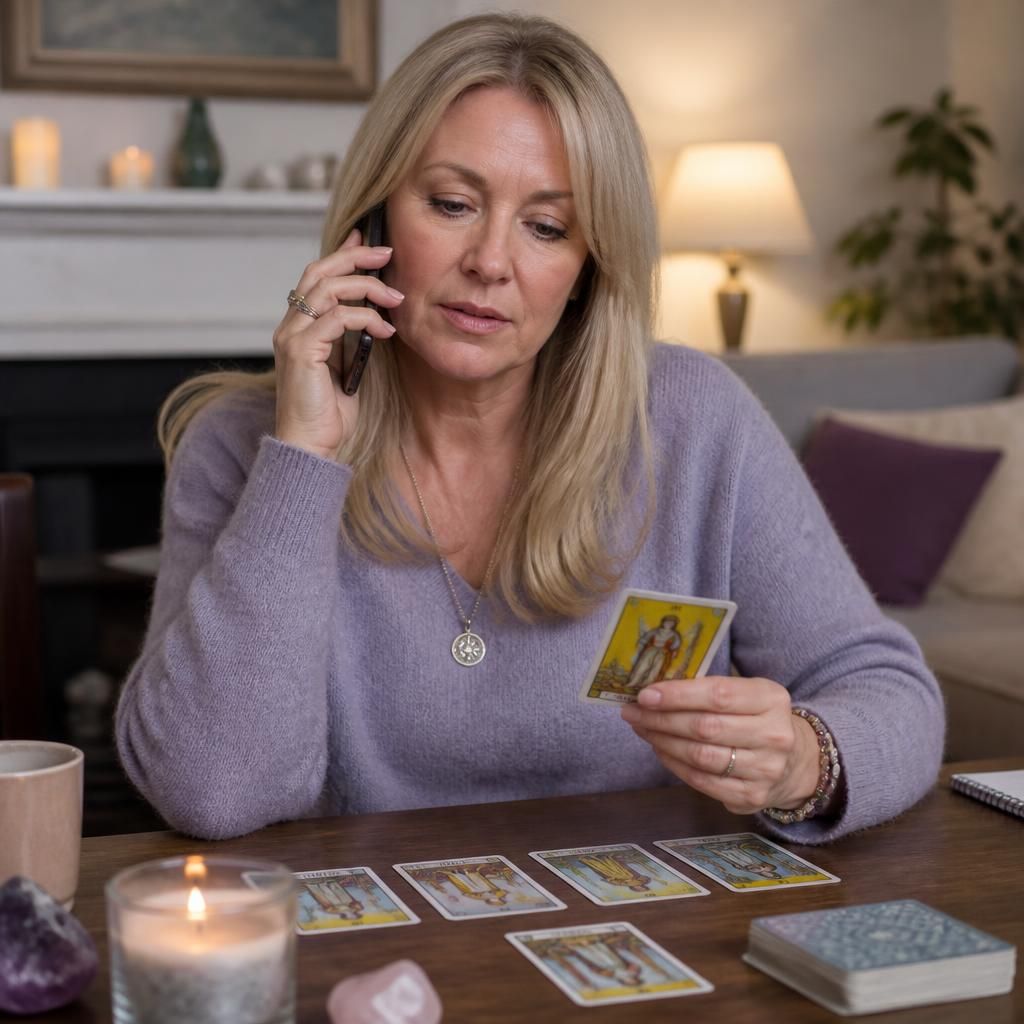
Phone psychic readings are assessed through the quality and relevance of the interpretation, while the telephone mainly affects how clearly the consultation is communicated. Poor audio, interruptions or divided attention can cause a client to miss important qualifications or misunderstand what the reader is explaining, but a clearer call does not guarantee a more accurate prediction.
To make a fair comparison with an in-person session, treat communication quality as a separate factor. Use a private, quiet setting, avoid multitasking and ask the reader to clarify any statement that seems ambiguous. After the session, review the guidance in context rather than judging it solely by an immediate emotional reaction. This helps distinguish a useful interpretation from information that only appears convincing because the conversation was difficult to follow.