


What methods do astrologers use during phone readings to provide insights?
During phone readings, astrologers typically analyse a birth chart using the positions of the Sun, Moon, planets, signs, houses and aspects, then compare it with current planetary transits. They may combine this technical interpretation with intuitive guidance to explore themes such as relationships, career and personal growth.
Astrologers use a combination of chart calculation, symbolic interpretation, timing techniques and focused questioning during phone readings. The method usually begins by establishing the reader’s birth details and the main area of concern, then selecting the astrological techniques most relevant to that question.
1. Confirming the information used
The astrologer normally checks the date, place and, where available, exact time of birth. The time matters because it affects the ascendant and the division of the chart into houses. If the birth time is uncertain, the astrologer may explain which parts of the reading can still be considered confidently and which details should be treated more cautiously.
Some practitioners use a process known as birth-time rectification. This involves comparing major past events with possible chart times to identify a time that appears to fit the person’s history. Rectification is interpretive rather than a way to verify a birth record, so its limitations should be made clear before it is used.
2. Choosing an astrological framework
Different astrologers may work within different traditions. Western astrology commonly uses the tropical zodiac, while Vedic astrology generally uses a sidereal zodiac and its own calculation methods. House systems can also vary, with each system dividing the chart in a slightly different way. These choices influence the language and emphasis of the reading, but the astrologer should be able to explain which framework is being applied.
3. Weighing chart factors rather than reading symbols in isolation
A professional interpretation considers how several factors interact. For example, a planet may have one meaning by sign, another through its house placement, and a further emphasis because of its relationship with other planets. The astrologer looks for repeated themes instead of treating a single placement as a complete description of a person.
Aspects are particularly important in this process. They describe angular relationships between planets and are commonly interpreted as points of ease, tension or concentration. The strength of an aspect may be assessed by its orb, meaning how closely the planets align. A close aspect is generally given more weight than a distant one, although the significance depends on the astrologer’s chosen system.
4. Using timing techniques
For questions about changing circumstances, astrologers may use methods beyond the natal chart. Transits compare present planetary movement with the positions at birth, helping the reader discuss periods of emphasis or transition. Progressions symbolically advance the birth chart to reflect inner development over time, while solar return charts are cast for the moment the Sun returns to its birth position and are used to examine themes for the following year.
Other timing methods may include lunar cycles, planetary periods or annual profections. These techniques are not normally used to establish an unavoidable event. Instead, they help the astrologer identify periods that may be useful for reflection, preparation or decision-making.
5. Matching the technique to the question
The question itself affects the method. A relationship reading may use synastry, which compares two natal charts, or a composite chart, which treats the relationship as a separate entity for interpretive purposes. A career question may focus on the tenth house, its ruling planet and relevant timing indicators. Personal-development questions may place greater emphasis on recurring patterns, values, emotional responses and areas where the individual is seeking greater self-awareness.
Some astrologers also use horary astrology, in which a chart is cast for the time a specific question is asked. This is distinct from analysing a person’s birth chart and is generally used for a defined matter rather than broad life guidance. The practitioner should explain the method being used, particularly if it differs from the approach the caller expected.
6. Combining analysis with conversation
A phone reading is interactive, so the astrologer may ask clarifying questions rather than deliver a fixed interpretation. The caller’s circumstances can help distinguish whether a symbol relates more closely to work, family, relationships or an internal concern. This does not mean the caller is being asked to supply answers for the astrologer; it allows technical observations to be placed in an accurate personal context.
Some readers add intuitive impressions, meditation or mediumistic sensitivity to their astrological analysis. When this happens, the intuitive element should be distinguished from information calculated from the chart. Keeping the two approaches separate helps the caller understand which conclusions come from established astrological techniques and which are subjective impressions.
7. Explaining conclusions responsibly
A useful reading translates technical terms into practical language. Rather than presenting one planetary influence as a guaranteed event, the astrologer may describe possible tendencies, choices and areas requiring attention. A forecast can therefore be used to consider options, communication patterns or personal priorities, not as a substitute for professional medical, legal or financial advice.
The clearest phone readings usually include the reasoning behind an interpretation, acknowledge uncertainty where the birth information is incomplete, and leave room for the caller’s own judgement. Astrology provides a symbolic framework for examining patterns and timing; the meaning assigned to those symbols depends on the tradition, technique and quality of the interpretation.
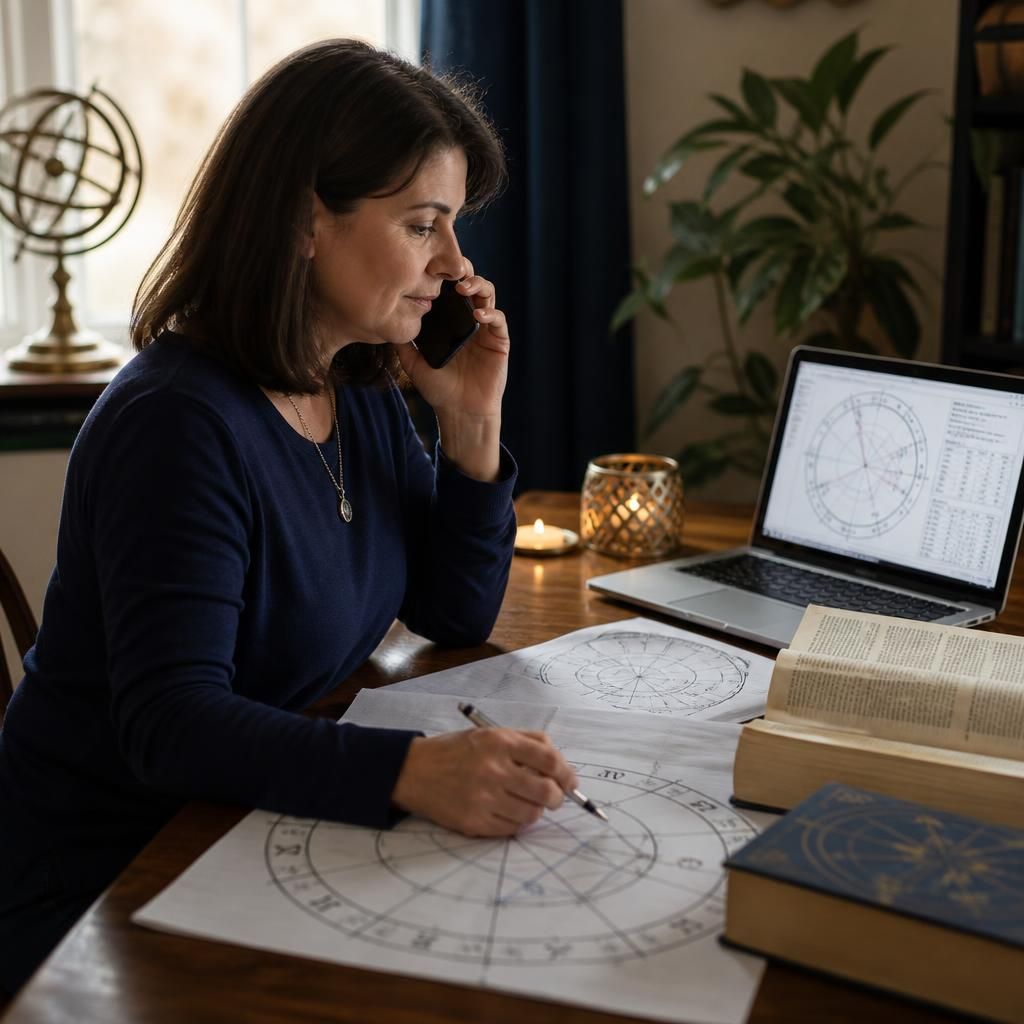
A key method behind an astrology phone reading is separating astronomical calculation from symbolic interpretation. An ephemeris or astrology software can calculate planetary positions for a particular date, time and location, but it does not determine what those positions mean in a person’s life. The astrologer applies an astrological tradition to interpret the calculated data and explain its relevance to the caller’s question.
This distinction helps explain why two practitioners may produce different readings from the same information. They may use different zodiac settings, house systems, aspect rules or interpretive priorities. A well-structured consultation should make these choices understandable, so the caller can distinguish the underlying calculation from the astrologer’s judgement about its significance.