

What are the different methods used in mediumship readings?
Mediumship readings may involve clairvoyance (receiving visual impressions), clairaudience (hearing words or sounds), clairsentience (sensing emotions or physical sensations) and claircognizance (receiving a strong sense of knowing). A medium may combine these intuitive methods with evidential communication, using details, memories or personality traits to interpret messages associated with a deceased person.
Mediumship readings use several distinct approaches to interpret perceived contact with a deceased person or the wider spirit world. The main methods include mental mediumship, trance or altered-state work, psychometry, automatic writing, direct voice, physical mediumship and platform-style demonstration. In practice, a medium may use one primary method alongside supporting techniques, depending on the setting, the reader’s preferences and the type of information that emerges.
Mental mediumship
Mental mediumship is the most commonly discussed approach in private readings. The medium receives impressions internally and translates them into descriptions, possible memories, character traits or messages. This does not necessarily involve a dramatic change in manner; the medium generally remains conscious and communicates directly with the client. The process is interpretive, so the medium may describe an impression and ask whether it has personal relevance rather than presenting every detail as certain.
Trance mediumship
In trance mediumship, the practitioner enters a deeply focused or altered state while communicating. The degree of trance can vary. Some practitioners remain aware of the conversation, while others allow the communication to influence their speech, mannerisms or choice of words more substantially. Full trance is relatively specialised and should not be confused with ordinary concentration or a medium pausing to reflect on an impression.
Because trance work involves changes in awareness, a responsible practitioner should explain the process beforehand, establish consent and make clear how the session will be conducted. Clients should also be able to ask questions about the method before agreeing to a reading.
Psychometry
Psychometry involves using an object, photograph or personal belonging as a focus for a reading. The object is not usually treated as magical in itself. Instead, the medium uses it as a point of concentration when interpreting impressions connected with its owner, history or emotional associations.
For a psychometry session, clients may be asked to provide an item with a meaningful connection to the person or situation they wish to explore. The object should be supplied voluntarily, and the medium should avoid treating ownership or provenance as proof of a particular conclusion. This method can be useful for people who prefer a tangible focus during a remote or in-person consultation.
Automatic writing and drawing
Automatic writing is a practice in which a medium writes while allowing words, phrases or symbols to emerge with limited deliberate planning. Some practitioners use a similar method through sketching, symbols or written responses to a particular person. The resulting material is then reviewed and interpreted rather than assumed to be self-explanatory.
This approach can produce fragmented language, recurring themes or symbolic imagery. It is therefore important to distinguish the original writing from the medium’s later interpretation. A reader may find the process meaningful, but it should not be presented as an unquestionable record or as a substitute for professional advice.
Direct voice and physical mediumship
Direct voice mediumship traditionally refers to purported communication heard independently of the medium’s normal speaking voice, sometimes through a séance trumpet or another physical setup. Physical mediumship is a broader category involving claims of observable effects, such as movements, sounds or changes to objects. These practices are different from mental mediumship because they focus on an external phenomenon rather than the medium’s internal interpretation.
Physical and direct voice methods require particular care. The conditions, equipment and participants should be explained clearly, and clients should be free to assess claims critically. A demonstration of an unusual event is not automatically proof of its claimed source. Many private phone and email readings use interpretive forms of mediumship instead, as those formats do not provide the physical environment traditionally associated with séance-based work.
Platform or group demonstration
Platform mediumship takes place before an audience rather than in a one-to-one consultation. The medium addresses individuals in the group and attempts to establish which messages may relate to them. This format can show how a medium works publicly, but it offers less time for personal context and follow-up than a private reading.
A group demonstration is therefore not directly equivalent to a private session. A message may be brief, general in structure or intended for someone other than the person who first identifies with it. Anyone attending should avoid forcing a connection simply because a description sounds familiar.
How methods may be combined
Methods are not always used in isolation. A medium might begin with mental impressions, use a photograph as a psychometric focus and then record key details in writing. Another practitioner may combine a structured conversation with a quieter period of concentration. The labels used by practitioners can also differ: one medium’s “intuitive reading” may resemble another’s mental mediumship or evidential approach.
The useful question is not only which label a practitioner uses, but what the process involves. Before booking, ask:
- Will the reading be conducted as a private conversation, written response or group demonstration?
- Is an object, photograph or other personal material required?
- Will the medium ask questions, or should the client remain mostly passive?
- How are uncertainty, symbolism and information that does not seem relevant handled?
- What privacy measures apply to details shared during the consultation?
Choosing a suitable method
The right method depends on the type of interaction the client finds most comfortable. Someone wanting a focused discussion may prefer a private mental mediumship reading. A person who values a personal object as a starting point may choose psychometry. Those interested in demonstrations of altered states or séance traditions may want to research trance or physical mediumship separately, as these are not interchangeable with an ordinary remote consultation.
Mediumship is a spiritual and interpretive practice, and its claims are not established in the same way as findings from controlled scientific testing. A careful reading should be approached as an opportunity for reflection rather than as guaranteed evidence, a diagnosis or a basis for major legal, financial or medical decisions. A trustworthy practitioner explains the method plainly, respects boundaries and leaves room for the client to decide what, if anything, has personal meaning.
For clients seeking a remote service, phone and email mediumship readings provide formats in which the method is generally conversational or written rather than physically demonstrative. Elizabeth Rose Psychics provides professional psychic readings for people throughout the USA, with mediumship among its areas of focus. Understanding the method in advance makes it easier to compare a practitioner’s approach with the type of reading you want.
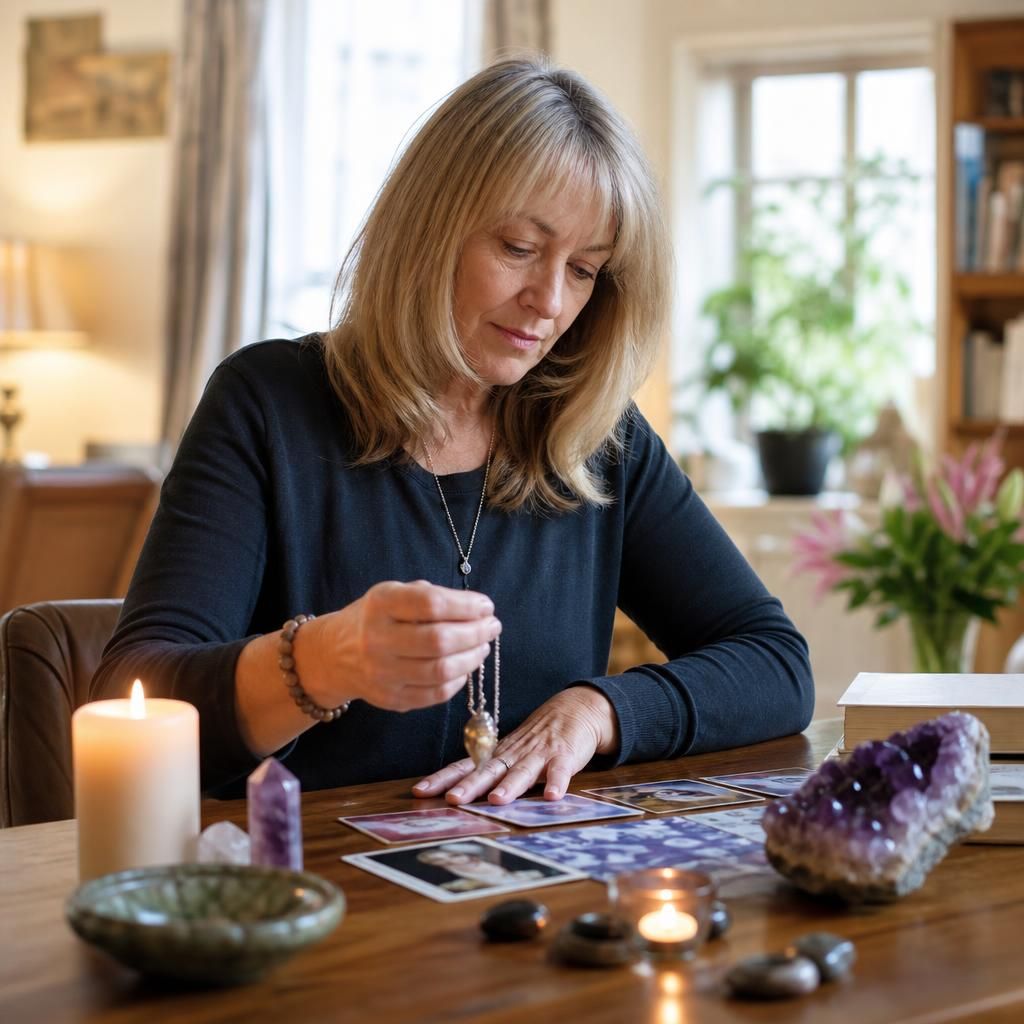
One useful way to compare mediumship methods is to examine how impressions are recorded and interpreted. A disciplined reading separates the medium’s initial observation from its possible meaning, reducing the risk that a broad symbol or feeling is treated as a definite message.
- Note the exact words, images, sensations or details offered before explaining their personal significance.
- Distinguish information volunteered by the medium from details supplied by the client during conversation.
- Allow time to consider whether an impression has a specific, independently recognisable connection rather than accepting every association immediately.
- Keep uncertainty visible: an interpretation may be meaningful without being presented as verified fact.
This approach is particularly relevant when a method relies heavily on symbolism, emotional impressions or intuitive interpretation. It gives the client a clearer basis for deciding what is personally relevant, while preserving the difference between a spiritual perspective and independently confirmed information.