






What role do horoscopes play in daily astrology readings?
Horoscopes provide a daily astrological overview by relating current planetary movements to a person’s zodiac sign or birth chart. In a daily astrology reading, they can highlight potential themes, patterns and areas for reflection in relationships, decisions and personal growth, while a personalised reading offers greater detail than a general star-sign forecast.
Horoscopes serve as a structured interpretive framework within daily astrology readings. They condense current astrological influences into themes that can be considered in relation to behaviour, priorities and likely areas of attention, rather than presenting a fixed schedule of events.
A short horoscope usually begins with a zodiac sign, most commonly the Sun sign. This makes it accessible, but it also means the interpretation is broad: everyone born under the same sign is being grouped together. A daily reading can therefore be useful as a starting point, while its meaning depends on the individual’s circumstances and the rest of their chart.
More detailed daily astrology considers the relationship between current planetary positions and the natal chart. An astrologer may examine:
- Transits: the present movement of planets in relation to natal placements.
- Aspects: the angles formed between planets, which are traditionally interpreted as supporting, challenging or activating particular themes.
- Houses: chart areas associated with subjects such as work, relationships, finances, home and personal development.
- The Moon: its changing position, often used to explore short-term emotional patterns, reactions and shifting priorities.
This additional context changes the role of the horoscope from a general forecast into a tool for prioritising reflection. For example, a general horoscope may mention communication, whereas a personalised daily reading could explore whether that theme relates more closely to a work discussion, a family matter or a romantic relationship. The interpretation is shaped by the chart factors being activated and by the question the reader brings to the session.
Horoscopes can be applied to everyday decision-making without being treated as instructions. A reader might use one to consider whether to communicate more carefully, review a commitment, allow time for rest or examine a recurring response. The useful question is not simply “What will happen?” but “What pattern or possibility should I be more aware of, and how might I respond constructively?”
In relationship readings, daily astrology may draw attention to communication styles, emotional sensitivity or the need to clarify expectations. In career-related readings, it may be used to examine concentration, collaboration, planning and attitudes towards change. For personal growth, recurring astrological themes can provide prompts for noticing habits and making deliberate choices. These interpretations describe tendencies or areas for consideration; they do not remove personal agency.
It is also important to distinguish symbolic guidance from certainty. A horoscope does not establish that a particular event must occur, and a daily interpretation cannot account for every practical factor affecting a person’s life. Sound use of astrology keeps room for judgement, evidence and changing circumstances. Health concerns, financial decisions and legal matters should be assessed with appropriate qualified advice rather than relying on a horoscope alone.
For the clearest daily reading, useful background may include the date, exact time and place of birth, together with the area the reader wants to explore. When a birth time is unavailable, some chart details may be less precise. A professional astrology reading can then place the day’s symbolism in a broader personal context, helping the reader distinguish general sign-based material from themes that are specifically relevant to their chart.
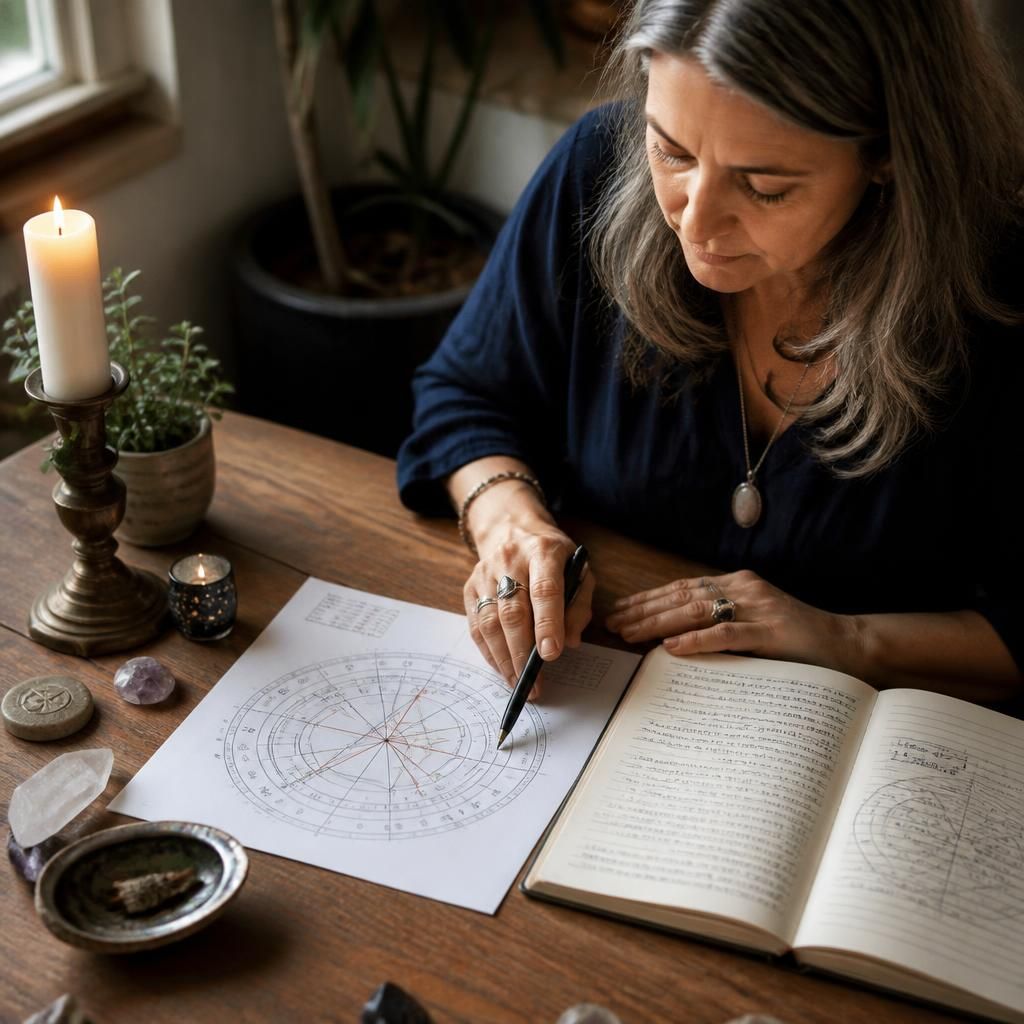
A horoscope is a short-term snapshot within a longer astrological cycle, so its role in a daily reading is to show how the day’s emphasis may develop rather than to treat each date as an isolated prediction. Comparing successive readings can help identify whether an influence appears brief, gradually intensifies or forms part of a wider period of change.
This time-based view gives daily astrology greater context. An astrologer may use the horoscope as an initial reference point, then consider whether the same subject is reflected in longer-lasting planetary cycles or in the person’s ongoing concerns. The result is a clearer distinction between a passing daily emphasis and a pattern that may deserve sustained attention.