

How does a tarot reading differ from other psychic readings?
A tarot reading uses the imagery and structure of a tarot deck to explore situations, influences and possible choices, whereas other psychic readings may rely primarily on clairvoyance, mediumship or astrological interpretation. Tarot therefore provides a defined symbolic framework, while non-tarot readings draw on the practitioner’s particular psychic or spiritual method.
The main difference is that tarot readings interpret a spread of cards, while other psychic readings may be based on direct intuitive impressions, communication with spirits, or astrological information. This affects the evidence discussed, the way the session develops and the kind of guidance you receive, although the approaches can sometimes be used together.
Tarot readings use the meanings, imagery and position of selected cards to examine a question or situation. A reader may consider the symbolism of each card, its relationship to surrounding cards and whether it appears upright or reversed. The spread creates a sequence or pattern for discussion, which can help organise complex circumstances into themes such as motivation, obstacles, choices and likely developments.
Tarot is not generally a fixed prediction of one unavoidable future. The cards are more useful for exploring present influences and possible directions. Your decisions, other people’s actions and changing circumstances can affect how a situation unfolds. A careful interpretation therefore distinguishes between what appears to be influencing a matter now and what may happen if the current pattern continues.
Clairvoyant readings rely more directly on the reader’s intuitive impressions. These may take the form of images, sensations, words, emotions or an overall sense about a person or situation. There is no card spread to interpret, so the conversation may move between subjects according to the impressions received and the information you provide. This can suit someone who wants an open-ended reading rather than a structured examination of a particular question.
Mediumship has a different purpose again. It centres on attempting to connect with the presence or memories of people who have died, rather than primarily analysing choices, events or future possibilities. A mediumship session may include personal details, feelings or messages that are intended to identify or reflect a connection. It should not be treated as a substitute for medical, legal or financial advice, or as proof that a particular outcome is certain.
Astrology uses astrological charts and the positions of celestial bodies as an interpretative framework. Depending on the reading, it may consider birth information, planetary movements and recurring patterns associated with personality, relationships or periods of change. Unlike tarot, which usually examines a question through a card spread, astrology often provides a broader framework for considering life themes and timing.
The approaches can therefore differ in several practical ways:
- Method: tarot works with cards and spreads; clairvoyance uses intuitive impressions; mediumship focuses on spirit communication; astrology uses charts and planetary symbolism.
- Structure: tarot normally follows a defined layout, whereas a clairvoyant or mediumship reading may develop more freely. Astrology is often organised around a birth chart or a particular period.
- Focus: tarot is commonly used to examine a specific question, decision or relationship dynamic. Clairvoyance may be broader, mediumship concerns connections with the deceased, and astrology may explore longer-term patterns or timing.
- Interpretation: tarot interpretations can be discussed through recognisable card symbols and their positions. Other readings depend more heavily on the practitioner’s impressions or the principles used to interpret a chart.
- Interaction: in any approach, relevant context can help clarify the discussion. However, the reader may ask different kinds of questions: a tarot reader may explore the meaning of a card in relation to your circumstances, while an astrologer may need accurate birth details.
There is no requirement to view these methods as competing alternatives. A practitioner might use tarot to give a situation a clear structure and then draw on clairvoyant impressions to add context. Combining methods does not make an interpretation automatically more accurate, so it is sensible to ask which method is being used and how conclusions are reached.
When choosing a reading, start with the type of information you want to explore. A focused decision or relationship question may be well suited to tarot. A request for general intuitive impressions may point towards clairvoyance, while questions about a deceased person belong more appropriately to mediumship. If you are interested in recurring life patterns or astrological periods, astrology may be the more relevant framework.
Whichever style you choose, treat the reading as an interpretative service rather than a guaranteed forecast. Keep responsibility for important decisions, check factual information independently and seek qualified professional support for health, legal, financial or other specialist concerns. Elizabeth Rose Psychics provides tarot, clairvoyant, mediumship and astrology readings by phone and email for clients throughout the USA, so you can ask which approach best matches the subject you wish to discuss.
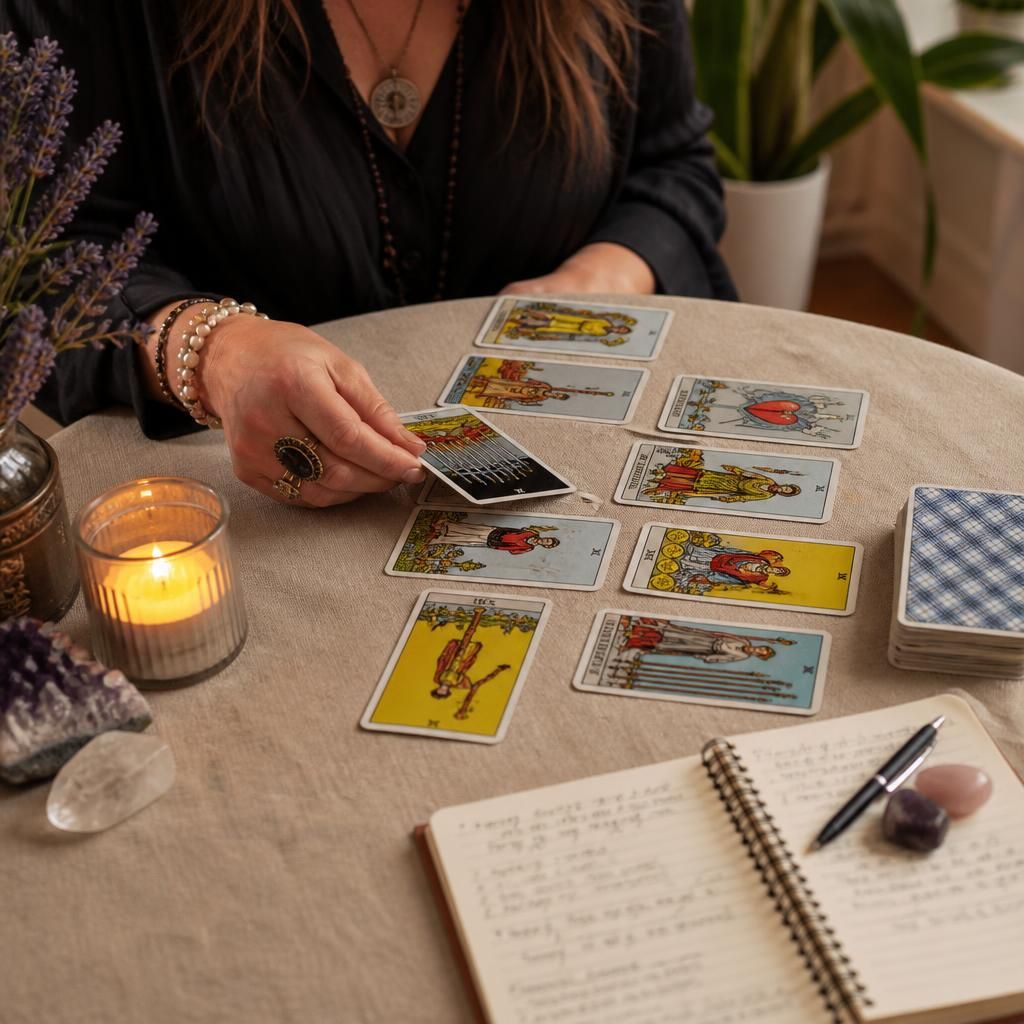
A practical difference is how the reading can be followed after the session. Tarot provides a fixed reference point: the card names, positions and spread can be noted and revisited as the circumstances develop. This can make it easier to distinguish the original interpretation from later events or changing assumptions.
Other psychic readings may not produce the same visible record. A clairvoyant reading is usually based on impressions conveyed during the consultation, while mediumship centres on the details and messages that arise through the connection. If you want to reflect on the discussion afterwards, taking notes is particularly useful for these approaches. With a tarot reading, the spread itself provides an additional framework for reviewing what was discussed.