






What are some practical ways to prepare myself mentally and emotionally for a clairvoyant reading?
Prepare for a clairvoyant reading by identifying the main questions or areas of life you want to explore, while remaining open to information that may not match your expectations. Before the session, settle your thoughts, acknowledge any strong emotions, and approach the reading as an opportunity for reflection rather than a fixed prediction.
Practical preparation for a clairvoyant reading involves creating the right conditions to listen, setting personal boundaries and deciding how you will assess what you hear afterwards. The aim is not to produce a particular outcome, but to help you take part attentively while retaining responsibility for your own choices.
Choose a suitable setting. Arrange the reading somewhere private and reasonably free from interruptions. For a phone session, keep your device charged and have a stable connection. Remove avoidable distractions such as background television or notifications. A calm setting makes it easier to follow the conversation and notice your own reactions.
Decide your boundaries in advance. Consider which subjects you are willing to discuss and which are private. You can decline to answer a question, ask for a different explanation or end a line of discussion that feels inappropriate. A reading is a voluntary conversation, so you do not need to disclose personal details simply because they are requested.
Separate observation from interpretation. During the session, note the specific words, images or themes communicated, rather than recording only your immediate conclusion about them. This helps distinguish what was actually said from assumptions added in the moment. If a message is unclear, ask the clairvoyant to explain it in another way instead of trying to force a meaning.
Use a simple note-taking method. Keep paper or a digital document nearby and divide it into three sections:
- Information or themes mentioned during the reading
- Your immediate response to each point
- Questions or reflections to consider later
This structure reduces the risk of treating every statement as equally important and gives you a record to review once the session has ended.
Allow time before acting. Avoid making significant relationship, career, health or financial decisions during the reading or immediately afterwards. Give yourself time to check practical facts, consider alternative explanations and decide whether any suggested action fits your circumstances. Clairvoyant guidance can be used as a prompt for reflection, but it should not replace professional medical, legal or financial advice.
Check your emotional readiness. If you are highly distressed, exhausted or experiencing a crisis, postponing the session may help you participate more safely and clearly. A clairvoyant reading is not a substitute for a doctor, therapist, crisis service or other qualified support. Where there is an immediate risk to your safety, seek appropriate emergency assistance instead.
Plan a neutral aftercare activity. Leave enough space after the reading to write down your thoughts, take a walk or speak with someone you trust. Avoid judging the session solely by whether it confirmed what you hoped to hear. Review the information later, when your initial reaction has had time to settle, and keep only the insights that remain useful and consistent with your values.
Finally, remember that you remain the decision-maker. You can listen respectfully, question unclear points and reject advice that conflicts with your judgement or wellbeing. This combination of attention, boundaries and considered reflection provides a sound mental and emotional framework for engaging with a clairvoyant reading.
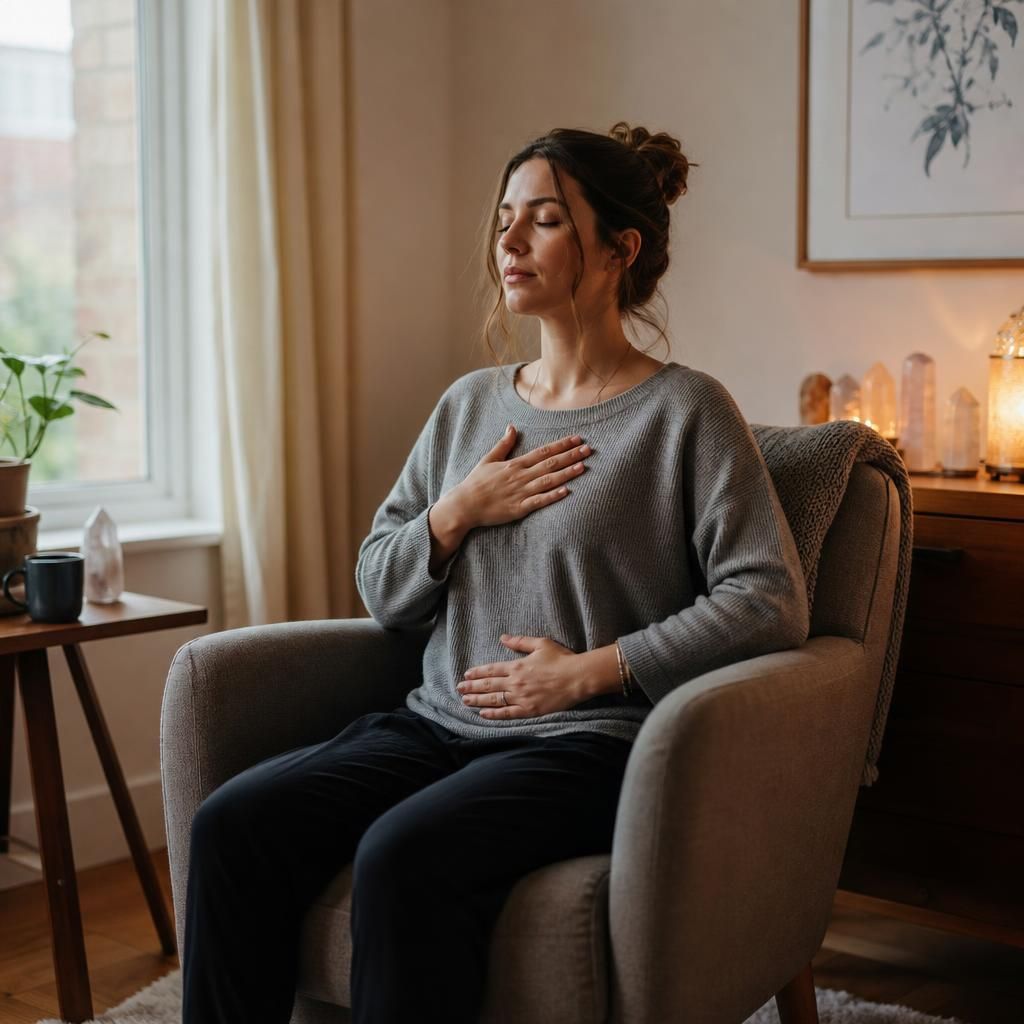
Grounding is a practical way to prepare emotionally for a clairvoyant reading by bringing your attention back to the present before the conversation begins. It can reduce mental overactivity without requiring you to suppress feelings or create a particular state of mind.
- Place both feet on the floor and notice the support beneath them.
- Breathe slowly, making the exhalation slightly longer than the inhalation.
- Identify a few things you can see, hear and physically feel.
- Relax areas where you are holding tension, such as your jaw, shoulders or hands.
- Silently remind yourself that you may listen, reflect and decide what is relevant afterwards.
This brief routine helps separate the reading from worries that may have built up beforehand. You do not need to feel completely calm or emotionally neutral; being aware of your state is sufficient. If a strong reaction arises during the session, pause, take a breath and give yourself time to regain focus before continuing.