



What role do tarot readings play in love predictions and soulmate discovery?
Tarot readings use symbolic cards and their relationships within a spread to explore emotional patterns, relationship possibilities and qualities associated with a potential soulmate. They offer reflective guidance rather than guaranteed predictions, helping you consider compatibility, personal choices and the factors shaping your love life.
In love-prediction work, tarot readings function as a structured way to examine romantic circumstances, likely developments and the choices that may influence them. They can support soulmate discovery by helping you assess whether a connection reflects the qualities, values and relationship patterns you are looking for, but they cannot prove that a particular person is destined to be your soulmate.
A tarot reading usually begins with a focused question rather than a request for an absolute verdict. Questions such as “What should I understand about this connection?” or “What may help me build a lasting relationship?” give the reading useful direction. A question framed around another person’s private thoughts or a fixed outcome can produce a less practical interpretation, because relationships involve two people’s autonomy and circumstances can change.
The spread provides a structure for examining different parts of a romantic situation. Depending on the purpose of the reading, positions may consider:
- the present condition of the relationship;
- your expectations, concerns or emotional readiness;
- the other person’s observable approach to the connection;
- factors supporting or obstructing progress;
- the lesson or pattern that may need attention;
- the most constructive next step; and
- a possible direction if current behaviour continues.
This structure matters because a single card is rarely a complete answer. Its meaning is influenced by its position, the surrounding cards and the question being asked. A card commonly associated with separation, uncertainty or conflict may describe a current obstacle rather than predict a permanent ending. Similarly, a favourable card may indicate an opportunity or healthy potential without guaranteeing that a relationship will develop.
For soulmate questions, tarot is more useful for examining compatibility indicators than for producing a name, date or unmistakable identity. A reading may draw attention to qualities such as emotional maturity, consistency, shared priorities, communication style or willingness to make a commitment. It can also highlight recurring patterns that affect partner selection, including avoiding vulnerability, confusing intensity with compatibility or overlooking behaviour that conflicts with stated intentions.
Tarot can therefore contribute to soulmate discovery in three related ways. First, it can clarify what you genuinely need from a long-term partnership rather than what appears attractive in the short term. Secondly, it can help you compare a connection’s behaviour with those requirements. Thirdly, it can identify personal decisions that may improve your chances of forming a stable relationship, such as setting clearer boundaries or addressing unresolved expectations.
Predictions about timing require particular care. Tarot may be used to discuss stages, momentum or conditions that appear to affect progress, but it is not a reliable calendar. An apparent delay could reflect hesitation, practical circumstances or the need for a decision, rather than a fixed date. Treating a time indication as certain can encourage unnecessary waiting or cause you to overlook evidence in the relationship itself.
The most responsible interpretation keeps prediction and personal judgement together. If a reading suggests potential, consider whether the person communicates openly, respects boundaries and behaves consistently. If it indicates difficulty, look for specific evidence rather than assuming that the relationship must fail. Tarot should inform reflection, not replace direct conversation, consent, independent decision-making or professional support where a relationship involves harm or serious distress.
Before a reading, it is helpful to note the facts you already know, the uncertainty you want to explore and the outcome you are hoping for. Afterwards, record the main themes and translate them into practical questions: What behaviour needs clarification? Which boundary should be stated? What evidence would show that the connection is progressing? This approach reduces the risk of fitting every event to a prediction and makes the reading more useful as a tool for considered romantic decisions.
At Elizabeth Rose Psychics, a tarot consultation can be combined with your own knowledge of the relationship to explore these themes in a personalised way. The value lies in the quality of the interpretation and the perspective it offers, while the eventual direction of your love life remains shaped by real interactions, mutual choices and changing circumstances.
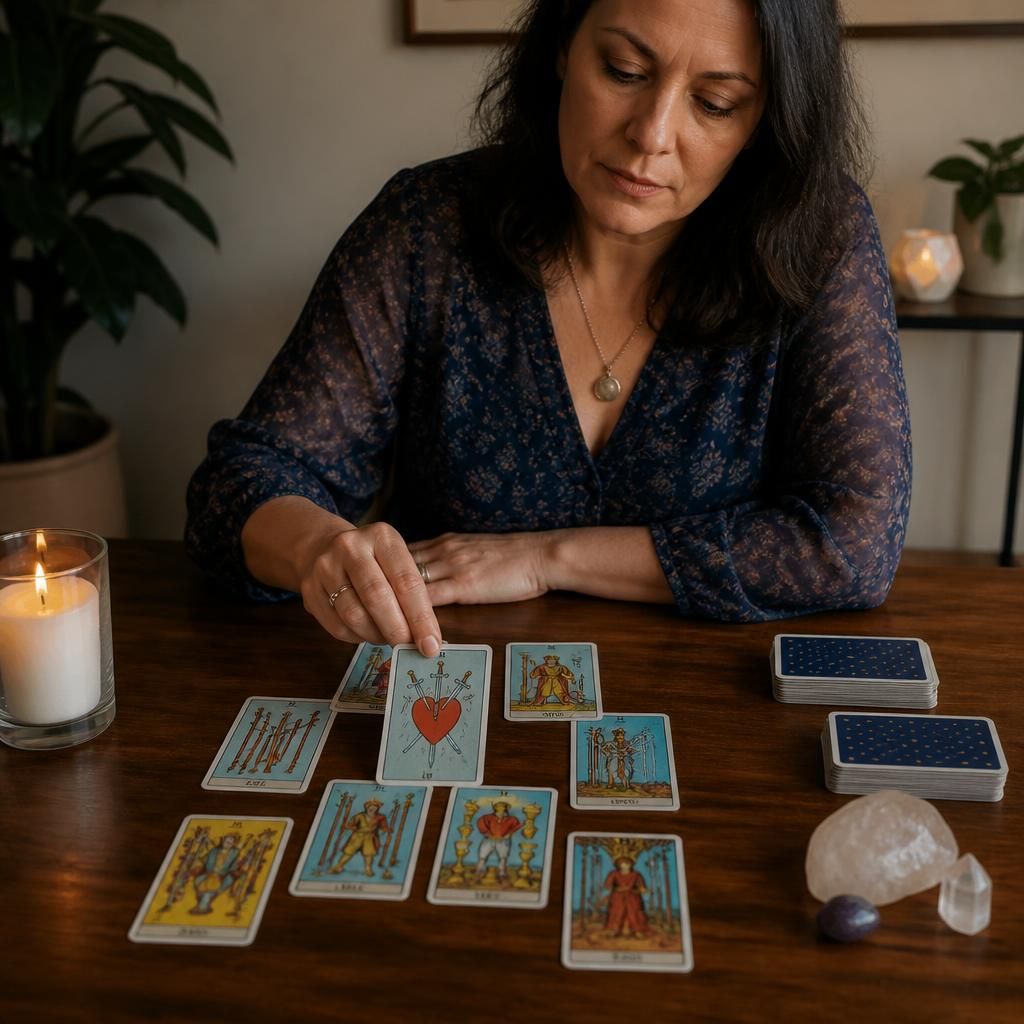
Tarot readings contribute to love predictions by combining broad relationship themes with practical details about how a connection may develop. Major Arcana cards can point to significant emotional or personal transitions, while Minor Arcana cards often add context about communication, choices, conflict and day-to-day behaviour. Reading these categories together gives a more nuanced picture than treating one card as a fixed prediction.
Court cards require particular care in soulmate readings. They may represent a person, an attitude or a role within the relationship rather than identify someone’s exact appearance or identity. For example, a Queen may describe emotional independence and maturity, while a Knight may indicate movement, pursuit or developing intentions. Their meaning depends on the question and surrounding cards, so they are best used to examine relationship qualities rather than confirm that a specific individual is destined to be a soulmate.