






What role do houses play in zodiac love readings?
Astrological houses show which areas of life are activated in a zodiac love reading, such as partnership, intimacy, communication and shared resources. By examining the signs and planets connected with relevant houses—especially the fifth, seventh and eighth—an astrologer can add context to romantic patterns beyond a person’s Sun sign.
Houses give a zodiac love reading its life context. Rather than describing personality in isolation, they indicate where romantic themes may be expressed, such as dating, commitment, emotional closeness, communication, home life and shared responsibilities. An astrologer assesses the signs on house cusps, the planets occupying those houses and the condition of each house ruler to develop a more specific interpretation.
Houses are calculated from the Ascendant, which is determined by the date, place and, ideally, exact time of birth. This means that two people born under the same Sun sign can have very different house placements and therefore different relationship patterns. A birth time that is uncertain can make house-based conclusions less precise, particularly when a planet is close to a house cusp.
The main relationship houses have distinct functions.
- The fifth house is associated with attraction, courtship, pleasure, flirtation, creativity and the way someone enjoys romantic attention. Its condition may be considered when exploring dating preferences and what makes a connection feel exciting.
- The seventh house concerns committed one-to-one relationships, including partnership and the qualities a person may seek or encounter in a significant other. Its sign and ruler can describe expectations around equality, cooperation and commitment.
- The eighth house relates to emotional vulnerability, sexual intimacy, trust, merging of resources and the deeper changes that can accompany close relationships. It can add information about how a person handles dependence, boundaries and shared obligations.
These houses should not be interpreted as isolated compartments. For example, a reading might compare the ruler of the fifth house with the ruler of the seventh to consider how casual attraction develops into partnership. A strong link between the seventh and eighth may place greater emphasis on trust and shared commitments, while a connection with the third house may show that conversation and mental rapport are particularly important to romantic development.
House rulers often provide the most useful additional detail. The sign on a house cusp describes the style in which that area may operate, but its ruling planet shows where the relevant relationship concerns may be directed. If the ruler of the partnership house is placed in the tenth house, relationship matters may intersect with public life, reputation or career aims. If it is placed in the fourth, domestic security, family expectations or the need for a settled home may carry more weight. These are interpretive possibilities rather than fixed predictions.
Planets within houses modify the reading further. Venus may highlight affection, attraction and values; Mars can bring initiative, desire or conflict; the Moon may emphasise emotional security and responsiveness; and Saturn can draw attention to responsibility, caution, boundaries or long-term development. Jupiter may be associated with growth and generosity, while Uranus, Neptune and Pluto can introduce themes of change, idealisation or psychological intensity. The meaning depends on the planet’s sign, aspects and relationship with the house ruler, so no placement should be judged on symbolism alone.
An apparently empty relationship house does not mean a person will lack romance or partnership. In that situation, an astrologer normally examines the sign on the cusp, its ruling planet, and any transits or progressions affecting the house. An empty house simply means that no natal planet is located there; it does not remove that area from the chart.
House systems can alter the boundaries of a chart. Different calculation methods may place a planet in a neighbouring house, particularly in charts made at high latitudes or when a birth time is approximate. The broad symbolism may remain relevant, but a careful reading should identify the house system used and avoid treating a borderline placement as certain. When birth details are incomplete, sign-based and planetary interpretations may be more dependable than highly specific house claims.
Houses are also important when comparing two charts. In synastry, one person’s planets may fall into another person’s relationship houses, suggesting which parts of life are activated by the connection. For instance, one person’s Venus in the other’s fifth house may be read as an emphasis on enjoyment and attraction, whereas planets placed in the other’s seventh or eighth may bring partnership or intimacy themes to the foreground. This describes the interaction between charts, not a guarantee that the relationship will last.
Current planetary movements can activate natal houses as well. A transit through a romantic house may coincide with increased attention to dating, partnership or emotional closeness, while an aspect to the house ruler can focus the same theme indirectly. The timing is best understood alongside the natal chart, current circumstances and the planet’s actual condition. A single transit should not be used to make absolute claims about a new relationship, separation or future event.
For a useful zodiac love reading, houses are therefore weighed alongside planetary aspects, sign placements, the Moon, Venus and Mars, and the individual’s stated circumstances. Their role is to answer the practical question of where relationship themes are likely to be experienced, while the planets and signs help explain how those themes may be expressed. Astrology offers a symbolic framework for reflection; decisions about relationships still require direct communication, personal judgement and attention to real-world behaviour.
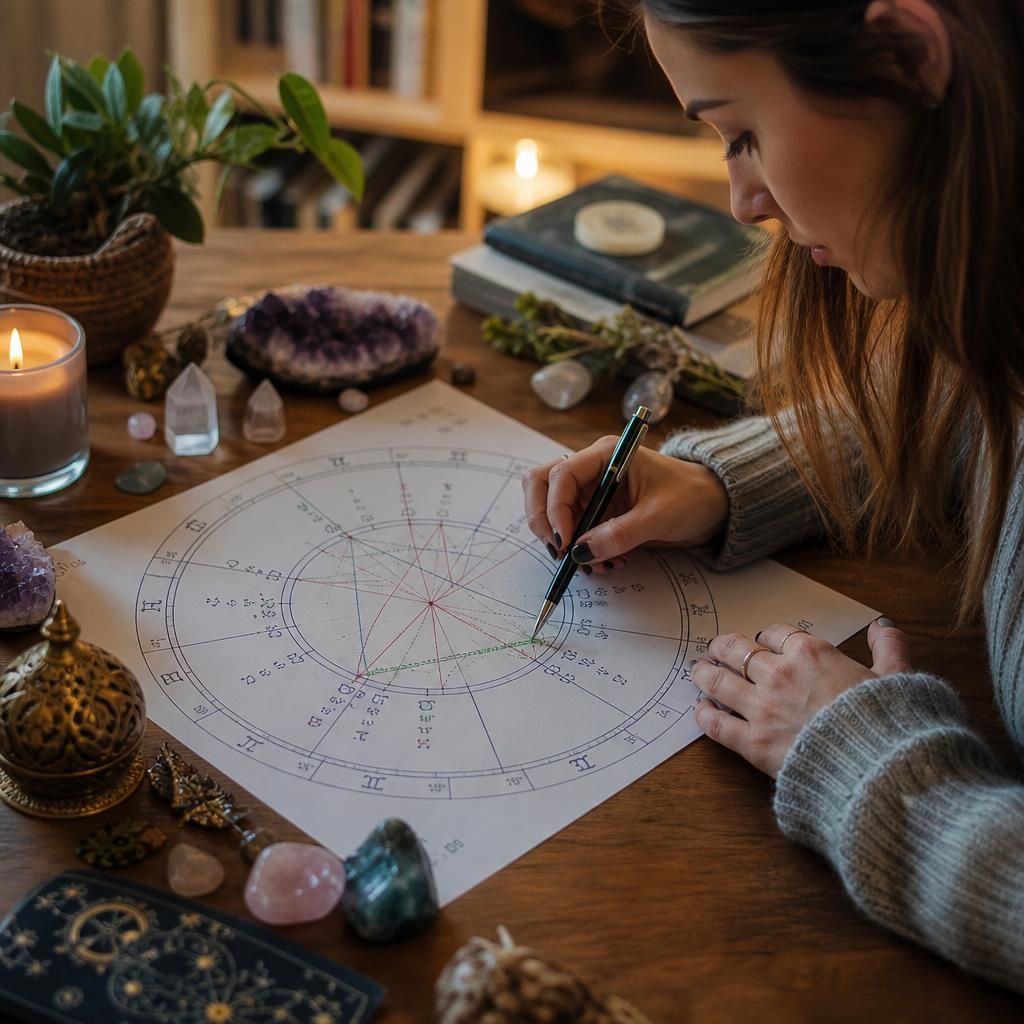
House position also indicates how prominently a romantic theme may operate. Planets in angular houses—the first, fourth, seventh and tenth—are traditionally given greater visibility and may describe relationship matters that are more active in a person’s outward life or personal identity. A planet in a succedent house, such as the second, fifth, eighth or eleventh, is often interpreted as developing and consolidating its themes, while a planet in a cadent house may relate more to thought, adjustment or preparation.
This classification adds emphasis rather than changing a planet’s basic meaning. For example, Venus in the fifth house may describe attraction and enjoyment, but its angular or cadent status can suggest whether those themes are especially prominent, steadily developing or expressed more indirectly. An astrologer therefore considers both the house’s subject and its position within the chart before drawing conclusions about a person’s romantic patterns.