








What role do planetary alignments play in forecasting future events?
Planetary alignments help astrologers forecast possible future developments by examining the positions and relationships of planets at a particular time. These patterns are interpreted symbolically to identify themes, opportunities and periods of tension, rather than to establish fixed or inevitable events.
Planetary alignments are used in astrology as timing indicators: they show when particular planetary relationships become active in relation to a person’s birth chart or to a wider event chart. The alignment itself is not treated as a complete prediction. Its meaning depends on which planets are involved, the angle they form, the areas of the chart they affect and the wider astrological context.
Astrologers usually begin by examining the planets’ positions against the zodiac and then comparing them with the natal chart. The natal chart provides a reference point based on the date, time and place of birth. Current or forthcoming planetary movements, known as transits, are then assessed in relation to that chart. For example, a transit to a natal planet may draw attention to themes associated with that planet, while a transit through a particular house may relate to an area such as work, finances, partnerships or home life.
The angle between two planets is called an aspect. Common aspects include:
- Conjunction: planets occupy the same or a closely related position, combining their influences.
- Opposition: planets face each other across the chart, often highlighting a need to manage two contrasting priorities.
- Square: planets form a challenging relationship that may indicate pressure, friction or the need for adjustment.
- Trine: planets are linked by a more flowing relationship, which astrologers may associate with ease, support or compatible circumstances.
- Sextile: planets form a constructive connection that can point to cooperation or an opening that requires conscious use.
These aspects help an astrologer assess how different planetary functions interact. Mars, for instance, is traditionally linked with drive and initiative, whereas Saturn is associated with structure, responsibility and limits. An aspect between them may therefore be considered when interpreting periods involving effort, discipline, delays or the careful use of energy. The interpretation is refined by considering the signs occupied by the planets and the houses they activate.
Planetary speed also affects forecasting. The Moon moves rapidly and is often used to examine short-term changes in mood, attention or daily circumstances. Faster planets can mark developments over relatively brief periods, while slower planets such as Jupiter, Saturn, Uranus, Neptune and Pluto are used to examine longer cycles. A slow-moving planet may affect the same point in a chart more than once because of retrograde motion, creating an extended period for a matter to develop, be reviewed and reach a later stage.
Retrograde motion is the apparent backward movement of a planet as viewed from Earth. In astrological forecasting, a retrograde period is often associated with review, reconsideration or the revisiting of unfinished matters. It does not automatically signify a negative event. Its significance depends on the planet involved, the part of the natal chart affected and the other alignments occurring at the same time.
Astrologers may also study larger cycles and recurring patterns. Jupiter’s cycle can be used to consider periods of expansion or learning, while Saturn’s cycle is commonly examined in relation to commitments, maturity and long-term responsibilities. Eclipses and conjunctions involving slower planets can receive particular attention because they mark distinctive points within broader cycles. These indicators are generally interpreted alongside personal chart factors rather than in isolation.
Forecasting commonly involves three stages:
- Identifying the alignment: the astrologer records the planets, signs, houses and aspect involved.
- Establishing the timing: the dates of the approaching, exact and separating phases are considered, including any retrograde repetitions.
- Synthesising the chart: the alignment is compared with the natal chart and other current movements to determine which subjects appear most relevant.
This process is why the same planetary alignment can be interpreted differently for different people. A transit that activates a person’s career house may be considered in a professional context, while the same transit affecting another house may be read through relationships, study or domestic responsibilities. The birth chart supplies the personal framework; the alignment supplies the timing and emphasis.
Astrological forecasting is best understood as an interpretive system rather than a method for establishing scientifically verified future events. Planetary alignments do not provide a substitute for practical evidence, professional advice or personal judgement, particularly for decisions involving health, finances or legal matters. A careful astrology reading uses the chart to explore possible patterns, questions and periods for reflection, then leaves room for circumstances and choices to shape what happens next.
For that reason, the most useful forecasts tend to describe likely areas of attention and practical ways to respond rather than claim that one precise outcome must occur. When planetary alignments are read with the natal chart, timing techniques and the client’s circumstances, they can provide a structured way to examine forthcoming phases and the choices associated with them.
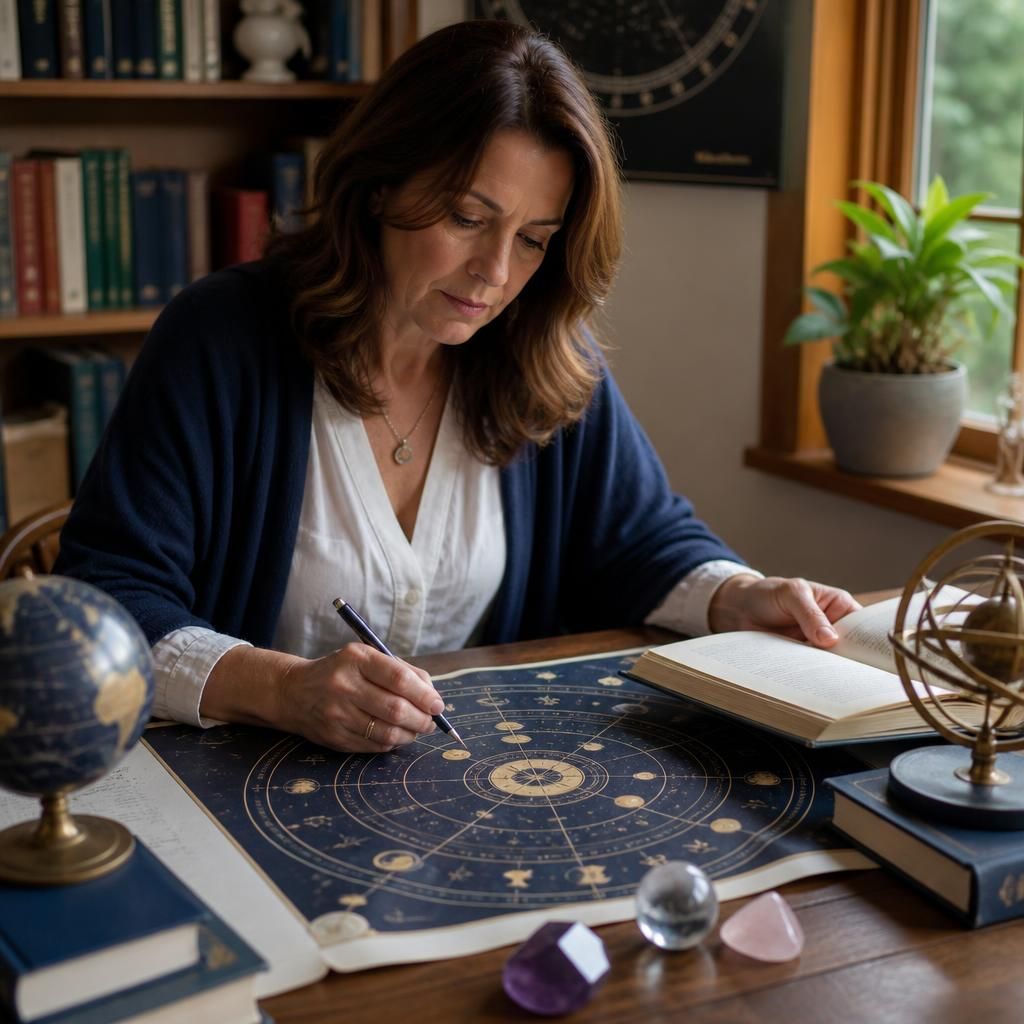
An astrological alignment is not limited to the moment when two planets form an exact aspect. Astrologers use an orb, meaning a range of degrees within which an aspect is considered active. The interpretation may begin as the planets approach exact alignment, become more prominent near the exact point, and continue while they separate.
This helps explain why forecasts often describe a period rather than a single date. The size of the orb varies according to the planets, the aspect and the astrologer’s method. A close alignment is generally given greater interpretive weight, while a wider one may provide background rather than define the main focus. Forecasting therefore considers the developing pattern and its changing emphasis, not simply whether an alignment occurs on one particular day.
Discuss Planetary Alignments in an Astrology Reading
To explore how current planetary patterns may relate to your birth chart, consider arranging a personalised astrology reading with Elizabeth Rose Psychics. Bring specific areas of life or upcoming decisions you would like to examine during the consultation.