


What specific skills and tools does the clairvoyant use during a reading?
A clairvoyant uses intuitive perception, clairvoyance and energy sensing to interpret impressions, patterns and emotional influences during a reading. Depending on the consultation, they may also use tools such as tarot cards or astrological charts to structure the discussion and add context to the guidance provided.
A clairvoyant reading combines the practitioner’s perceptive and communication skills with optional systems such as cards or birth-chart analysis. The clairvoyant’s role is not simply to name symbols or impressions, but to assess their possible meaning, relate them to the question being explored and explain the interpretation in a clear, responsible way.
Core skills used during a reading
- Focused awareness: The practitioner pays close attention to impressions, images, sensations, emotions or recurring themes that arise during the consultation. This requires concentration and the ability to separate a central impression from passing thoughts or distractions.
- Discernment: Discernment involves considering whether an impression is relevant, how strongly it presents itself and whether it fits the context of the reading. A careful clairvoyant avoids treating every image or feeling as a definite prediction.
- Active listening: Listening helps the practitioner understand the wording of a question, its emotional significance and the areas where clarification may be useful. It also reduces the risk of giving a generic interpretation that does not address the client’s actual concern.
- Question development: A reading may begin with a broad topic, but useful follow-up questions can identify whether the focus is a relationship decision, a career direction or a personal pattern. Questions should clarify the subject rather than lead the client towards a preferred answer.
- Symbolic interpretation: Clairvoyants often work with symbolic material. Interpreting it requires familiarity with common meanings while also considering the circumstances of the individual reading. The same image, card or astrological placement may have a different emphasis depending on the question.
- Pattern recognition: The practitioner looks for connections between separate impressions, recurring symbols, timing indicators or themes in the conversation. Patterns can help organise a reading, although they should be presented as interpretive guidance rather than certainty.
- Clear communication: Technical or symbolic information must be translated into ordinary language. A skilled reader distinguishes between what was directly perceived, what is inferred and what remains open to interpretation.
- Emotional sensitivity: Discussions about relationships, bereavement, work or major decisions can involve difficult feelings. Sensitivity allows the clairvoyant to communicate carefully without using fear, pressure or unnecessarily absolute language.
Tools that may support the reading
- Tarot cards: Tarot provides a structured set of images and themes for exploring circumstances, influences, choices and possible developments. The spread, position of each card and relationship between cards all contribute to the interpretation. Cards are generally used to encourage reflection and organise a discussion, rather than to remove personal choice.
- Astrological charts: An astrological chart maps planetary positions in relation to a person’s birth details or a particular time. A practitioner may examine signs, houses and aspects to discuss character tendencies, recurring themes or periods that appear significant within the chosen astrological system.
- Oracle cards: Oracle decks are less standardised than tarot and may focus on themes such as emotions, relationships or personal development. Their value lies in the prompts and imagery they provide for a conversation; meanings depend on the deck and the reader’s method.
- Mediumship-related methods: Where a consultation includes mediumship, the practitioner may focus on impressions associated with a deceased person or spiritual presence. This is distinct from using a physical divination tool and should be explained as part of the reader’s particular approach.
- Reference systems: Some practitioners consult established meanings, chart calculations or personal notes to maintain consistency. These references support interpretation but do not replace listening, judgement or communication.
Tools are optional rather than a measure of ability. One clairvoyant may work without physical aids, while another may use cards or chart techniques to give the session a clear structure. The presence of a tool does not automatically make an interpretation more accurate; its usefulness depends on how appropriately and transparently it is applied.
When assessing a reading, it is reasonable to ask which methods will be used, how interpretations are formed and whether the practitioner distinguishes possibilities from firm statements. A responsible approach also respects privacy, avoids pressuring someone into further sessions or purchases and does not present spiritual guidance as a substitute for qualified medical, legal or financial advice.
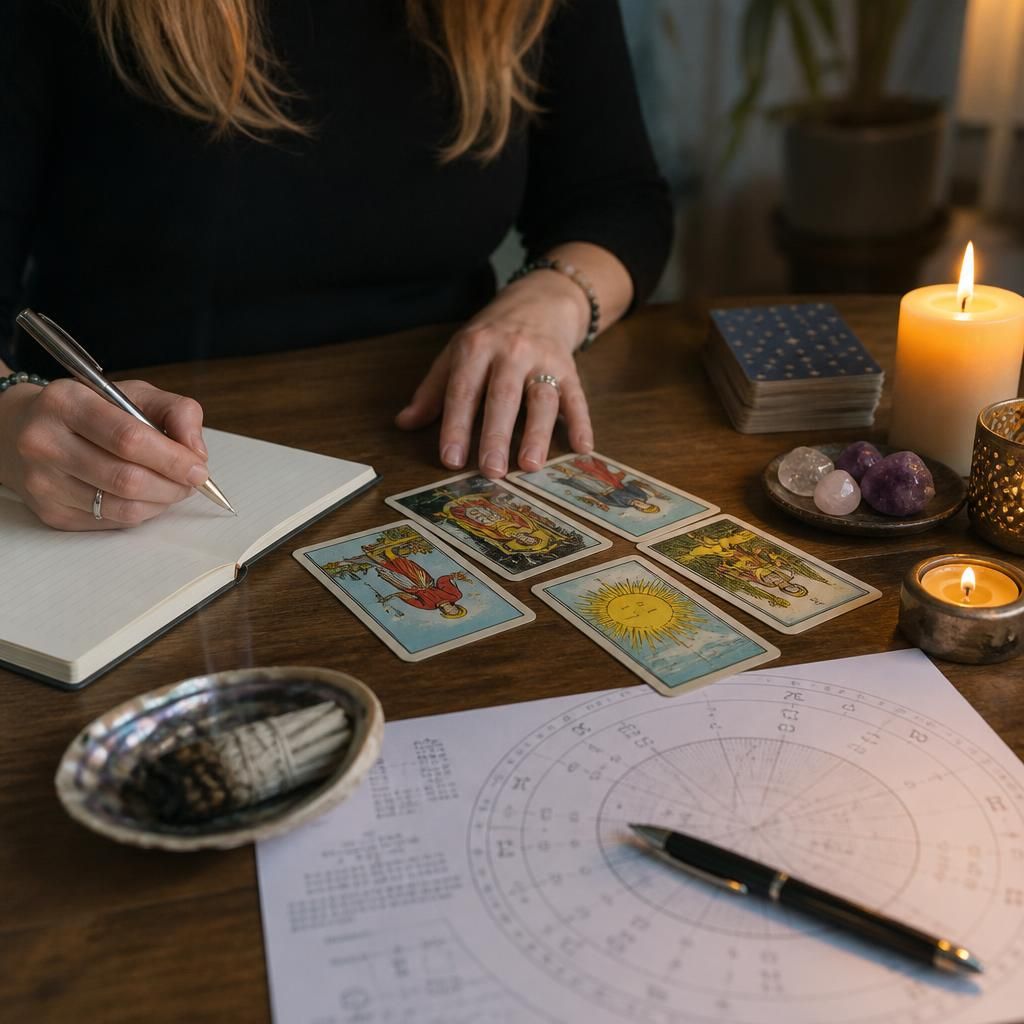
The choice and order of methods can shape how a clairvoyant explores a question. An initial intuitive impression may identify a theme, while tarot can examine the different influences surrounding a decision. An astrological chart may then add a broader framework based on birth details or timing. These methods are complementary, not interchangeable: each offers a different way to organise the discussion.
A practitioner may also decide that no tool is appropriate for a particular question. Using fewer methods can keep the reading focused, especially when the client is seeking clarity about one specific issue. The most suitable approach depends on the question, the information available and the clairvoyant’s established practice.