




Are phone psychic readings as accurate as in-person readings?
Phone psychic readings can be as accurate as in-person readings, but accuracy is not determined by the setting alone. It depends on the practitioner’s ability, the reading method used, the clarity of the questions and how the information is interpreted.
Phone psychic readings are not inherently less accurate than in-person readings. The main difference is the way the consultation is conducted, not a proven difference in the reader’s ability to provide insight. Accuracy is also difficult to measure objectively, particularly when a reading concerns future events, personal decisions or spiritual experiences.
What “accurate” means in a psychic reading
People use the word accuracy in several ways. It may mean that a reader identifies details about a situation that feel relevant, offers an interpretation that fits the client’s circumstances, or provides guidance that becomes meaningful over time. These are subjective measures rather than the same as a controlled prediction that can be independently verified.
Some information can be checked more easily, such as a reference to a past event or a known relationship. Other statements are open to interpretation, may relate to possibilities rather than fixed outcomes, or depend on choices made after the reading. A responsible approach therefore treats predictions as guidance to consider, rather than guaranteed results.
How phone and in-person sessions differ
In an in-person consultation, the reader and client share a physical setting. This can make it easier to use cards, crystals or other physical tools, although many tools can also be used during a phone session. An in-person reader may additionally notice posture, facial expressions and other visual signals. Those observations can help with ordinary conversation, but they can also influence how a reading is interpreted.
A phone consultation removes visual information. This may encourage the reader to concentrate on the spoken conversation, pauses and tone of voice rather than reacting to body language. It can also give the client greater privacy and distance from the setting, which some people find helpful when discussing relationships, career choices or personal concerns.
Neither arrangement guarantees a more accurate result. A quiet, focused conversation can be productive over the phone, while an in-person session may suit someone who finds direct interaction important. The better format is usually the one in which the client can communicate clearly and assess the information thoughtfully.
Why the reading method matters
Different forms of psychic practice use different approaches. A clairvoyant reading may focus on impressions or images. Mediumship is generally concerned with perceived communication involving someone who has died. Tarot uses the symbolism and arrangement of cards to explore themes, circumstances and possible directions, while astrology interprets planetary positions and patterns.
These methods are not interchangeable, so their information may be presented differently. Tarot, for example, often provides a structured way to examine a decision, whereas a mediumship session may centre on recognition and personal messages. Comparing them solely by whether they produce a precise prediction can overlook what each method is intended to do.
Factors that can affect the perceived accuracy
- Specificity: Broad statements can appear relevant to many people. More precise information gives the client a clearer basis for deciding whether it genuinely fits.
- Context: A reader may interpret the same symbol or impression differently depending on the subject being discussed.
- Communication: Misheard details, assumptions or unclear wording can change the meaning of an exchange on any platform.
- Timing: A prediction may concern a possibility rather than an immediate event, making it difficult to assess straight away.
- Interpretation: Clients can remember statements that resonate and overlook those that do not, so reviewing the complete reading can provide a fairer assessment.
How to assess a phone reading fairly
Before the session, decide what you want to explore and distinguish between information you want to understand and an outcome you want guaranteed. During the consultation, listen for explanations rather than relying only on a dramatic or reassuring statement. You can also ask the reader to clarify whether a point is presented as a firm impression, a possibility or symbolic guidance.
Afterwards, record the main points in your own words. Avoid changing your recollection to make later events fit the reading, and do not treat vague statements as confirmed predictions. If a message concerns health, legal matters, money or personal safety, use qualified professional advice as the basis for decisions; a psychic reading should not replace it.
Elizabeth Rose Psychics provides phone readings for people seeking spiritual perspectives through clairvoyance, mediumship, tarot and astrology. Whether a phone session feels accurate should be judged by the clarity, relevance and integrity of the consultation, rather than by the absence of a shared physical room.
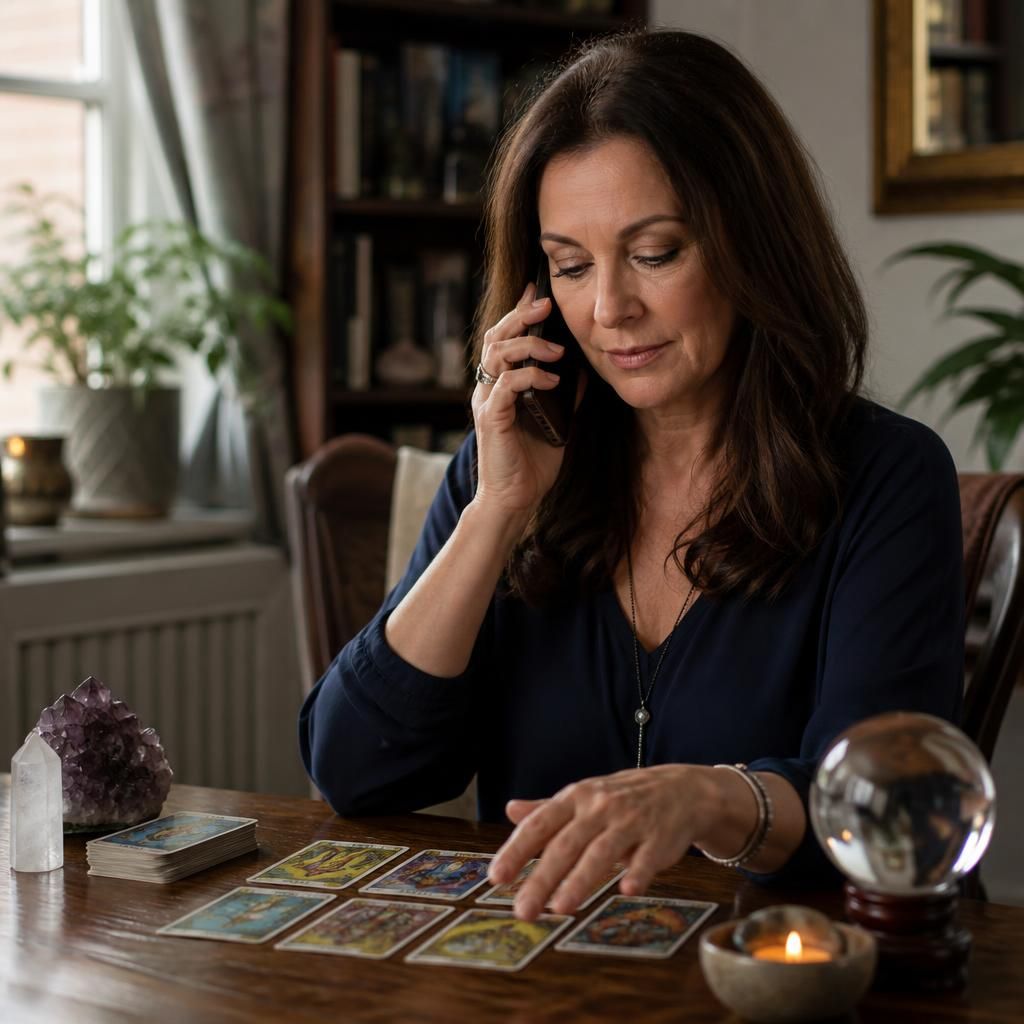
A reader’s conduct is a more useful indicator of reliability than whether the session takes place by phone or in person. A responsible practitioner should explain the nature of the reading, avoid presenting possibilities as certainties and allow you to decide how any information applies to your circumstances.
- Does the reader distinguish impressions from confirmed facts?
- Do they acknowledge uncertainty when a message is unclear?
- Do they avoid pressuring you to accept an interpretation?
- Are recommendations framed as choices rather than instructions?
These standards do not prove that a reading is accurate, but they make it easier to assess the consultation fairly. They also reduce the risk of confusing confidence or persuasive language with genuine insight.