





What types of psychic abilities are typically offered and what do they entail?
Psychic readings commonly include clairvoyance, mediumship, tarot and astrology, each using a different method to explore questions about relationships, career or personal growth. Clairvoyance involves intuitive impressions, mediumship focuses on perceived communication with the deceased, tarot uses symbolic cards for reflection, and astrology interprets planetary positions in relation to life themes.
Psychic abilities are best understood as different interpretive approaches used during a reading, rather than as interchangeable terms. Each approach places attention on a particular source of information: intuitive perception, spiritual connection, symbolic systems or planetary patterns. The reader’s method affects the kind of questions that can be explored and the form the guidance may take.
Clairvoyance literally refers to “clear seeing”, although a clairvoyant impression does not necessarily appear as a literal visual image. A practitioner may describe mental pictures, colours, symbols, scenes or strong visual associations that they interpret in relation to the client’s circumstances. Some clairvoyant readings also involve impressions received through other senses or an immediate sense of knowing. The useful detail is often in the meaning assigned to an impression, so clients may be asked whether a symbol, person or situation is relevant to their question.
Clairsentience and claircognisance are related intuitive faculties that may be included within a broader clairvoyant reading. Clairsentience involves perceived feelings or bodily sensations, while claircognisance describes a sudden sense of knowledge without a clearly identifiable chain of reasoning. These impressions can be used to explore emotional dynamics, possible concerns or areas requiring reflection. They should not be confused with medical diagnosis, psychological assessment or independently verified evidence.
Mediumship is centred on a claimed connection with people who have died. A medium may communicate impressions about a personality, memory, relationship or characteristic and invite the client to identify whether the information is meaningful. The quality of a sitting depends partly on the clarity and relevance of the impressions offered; no medium can establish a factual or legal conclusion merely through a reading. Anyone seeking support after bereavement should regard mediumship as a spiritual practice, not a replacement for professional grief or mental-health care.
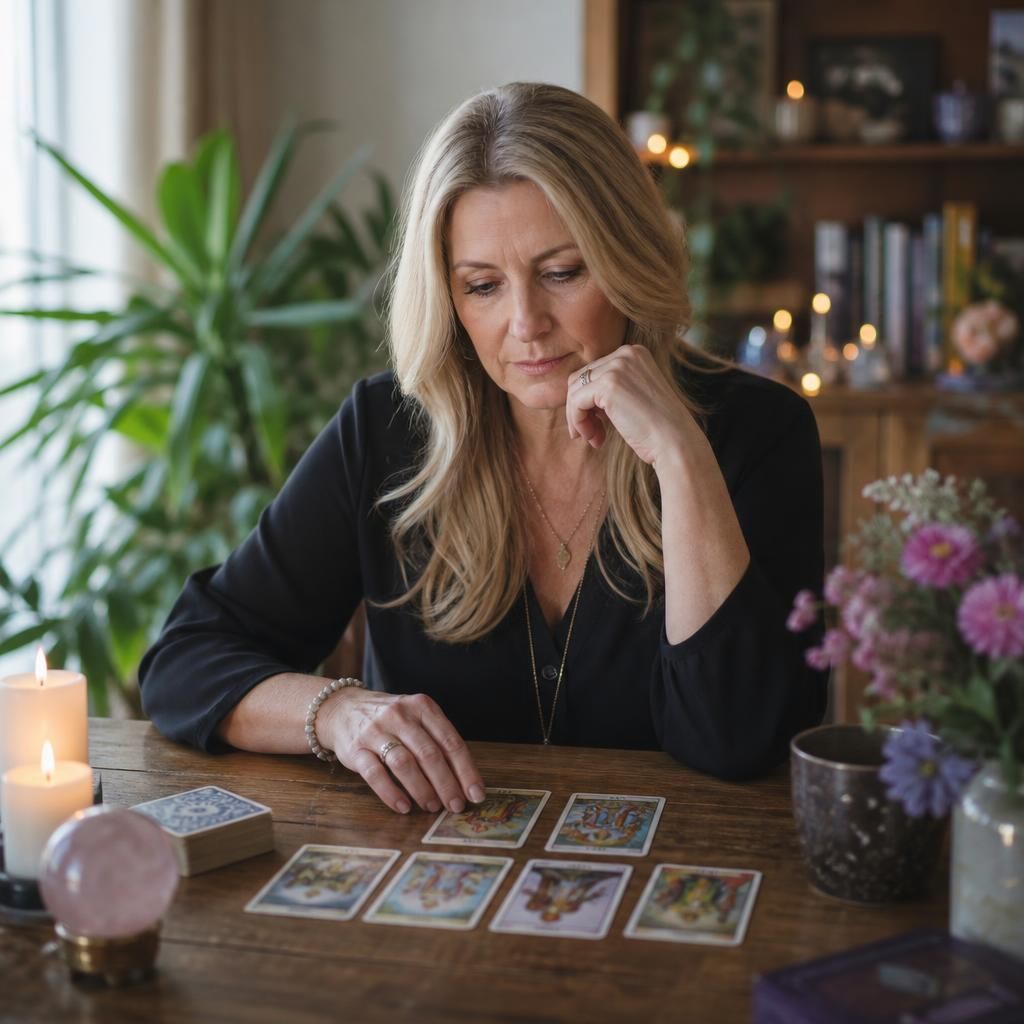
Tarot uses a structured deck of illustrated cards. The cards are arranged in a spread, with each position representing an aspect of the question, such as the present situation, an influencing factor or a possible direction. Readers interpret imagery, traditional meanings, the relationship between cards and the client’s circumstances. Tarot can therefore provide a framework for examining choices, recurring patterns and priorities, even when the reader and client take different views of whether the cards predict events or prompt reflection.
Tarot readings may be particularly suitable for questions that involve alternatives or personal decision-making. A responsible interpretation distinguishes between a possible tendency and a fixed outcome. It can help identify what may be influencing a situation and which factors remain within the client’s control, but it cannot remove uncertainty or make decisions on the client’s behalf.
Astrology interprets relationships between planetary positions, zodiac signs, houses and aspects within an astrological chart. A birth chart is calculated from birth details and is traditionally used to examine themes such as temperament, relationships, work preferences and personal development. Other techniques compare current or future planetary movements with the birth chart to discuss periods of emphasis or change.
Astrology differs from clairvoyance because it works from a symbolic chart rather than impressions received during the consultation. The reliability of a reading depends on the accuracy of the information supplied and on the astrologer’s chosen interpretive system. Astrological descriptions are not scientific forecasts or substitutes for financial, medical, legal or career advice.
Intuitive readings may combine several faculties instead of following one formal system. A practitioner might use conversational cues alongside impressions, cards or astrological information to develop a broader interpretation. When booking, it is sensible to ask whether the session is intended to focus on one method or to blend approaches, particularly if you want a tarot spread, a birth-chart interpretation or a mediumship reading.
The same question can produce different kinds of discussion depending on the ability used:
- Questions about emotional patterns or relationship dynamics may be explored through intuitive impressions, tarot symbolism or astrological themes.
- Questions about work and direction may be considered through cards or a chart, with attention to choices, priorities and recurring tendencies rather than guaranteed results.
- Questions about personal growth may involve identifying patterns, beliefs or options that the client wants to examine.
- Questions about someone who has died fall within the claimed scope of mediumship rather than ordinary tarot or astrology, although some practitioners combine methods.
There are also important differences in how much information a client may need to provide. A mediumship or open intuitive session may begin with comparatively little background, whereas an astrological consultation requires accurate birth information. A tarot reading generally benefits from a clearly framed question, although a spread can also be used for a wider review. Sharing only information that feels appropriate can help preserve the distinction between the practitioner’s impressions and details supplied by the client.
None of these practices should be treated as a guaranteed way to establish future events. Interpretations can be affected by the reader’s experience, the ambiguity of symbols, the wording of a question and the client’s own context. For practical decisions, use psychic guidance as one perspective alongside reliable evidence and appropriate qualified advice. This is especially important for health, legal, financial and safety-related matters.
Elizabeth Rose Psychics provides readings through phone and email, so the format can be considered alongside the chosen ability. A phone consultation may support a conversational exchange, while an email reading may provide a written interpretation that can be revisited. Before arranging a session, check which abilities the reader offers, how the method is used, what information is required and whether the consultation is intended as spiritual reflection, mediumship or predictive interpretation.
Labels for psychic abilities are not always used consistently. One practitioner may use “clairvoyance” as a broad term for intuitive impressions, while another may distinguish clairvoyance from clairsentience and claircognisance. Tarot and astrology, meanwhile, describe interpretive systems rather than abilities in the same sense. Before booking, ask the reader what they mean by the term they use and how it shapes the consultation.
It is also useful to clarify whether the session is structured around a specific method or allows the practitioner to combine approaches. This can affect the information you are asked to provide, the form the reading takes and the type of discussion that follows. Clear explanations help you compare services without assuming that identical labels represent identical practices.