


What tools or techniques are commonly used in telephone clairvoyance?
Common telephone clairvoyance techniques include intuitive impressions, focused questioning and, where appropriate, tools such as tarot cards or astrology charts. Some practitioners also use mediumship to interpret perceived connections with people who have died, while others rely primarily on clairvoyant insight without physical tools.
Telephone clairvoyance commonly combines non-physical intuitive techniques with structured conversation. The practitioner may use concentration, observation of vocal cues, symbolic interpretation and reflective questioning to develop and organise impressions during a call. Any cards, charts or other aids are interpretive frameworks rather than instruments that objectively measure a person’s future or energy.
Common techniques include:
- Grounding and centring: The practitioner may begin by settling their attention and reducing distractions before interpreting impressions. This helps separate a deliberate reading process from hurried guesses or assumptions.
- Visualisation: Some clairvoyants use mental imagery, such as colours, places, objects or scenes, and then explore what those images could symbolise in the context of the client’s question. The image is usually treated as a prompt for interpretation, not as a literal prediction.
- Clairsentient awareness: A practitioner may describe perceived emotional or bodily sensations, such as a feeling of tension, calm or heaviness. These impressions are subjective and should be discussed carefully rather than presented as medical evidence or a diagnosis.
- Auditory and verbal impressions: Some readers report receiving words, names, phrases or sounds internally. They may offer these as possibilities and ask whether they have relevant meaning, rather than assuming that every impression is fact.
- Symbolic association: An object, colour, number or repeated theme may be interpreted through its traditional or personal symbolism. The client’s own associations are important because the same symbol can mean different things to different people.
- Pattern recognition: The practitioner may compare themes that arise during the consultation, looking for links between the client’s stated concern and recurring ideas. This can help organise a reading, although it remains an interpretive method rather than a scientifically validated forecasting system.
- Reflective listening: Careful attention to the client’s wording, tone and pauses can help clarify what they are asking. A skilled reader distinguishes between information volunteered by the client and an impression offered by the practitioner, which makes the conversation easier to assess afterwards.
- Permission-based exploration: Sensitive subjects are better approached by checking whether the client wishes to discuss them. This is particularly relevant when a reading touches on bereavement, family conflict, health concerns or major life decisions.
Because a telephone session has no shared visual setting, the practitioner generally relies on the spoken exchange and on whatever information the client chooses to provide. A useful reading therefore involves clear questions, pauses for clarification and an explanation of which points are impressions, possibilities or direct responses to information already discussed.
Tools may be selected according to the reader’s practice and the purpose of the consultation. Some practitioners work without physical aids, while others use symbolic systems to structure a discussion. In either case, the tool does not replace judgement, listening or consent. Its role is to provide prompts that can support reflection on subjects such as relationships, work and personal development.
Clients should also distinguish spiritual interpretation from professional evidence. A telephone reading should not be used as a substitute for medical, legal or financial advice, and no technique can guarantee a particular outcome. The most responsible approach treats impressions as material for consideration, invites the client to apply their own judgement and avoids presenting uncertain information as fact.
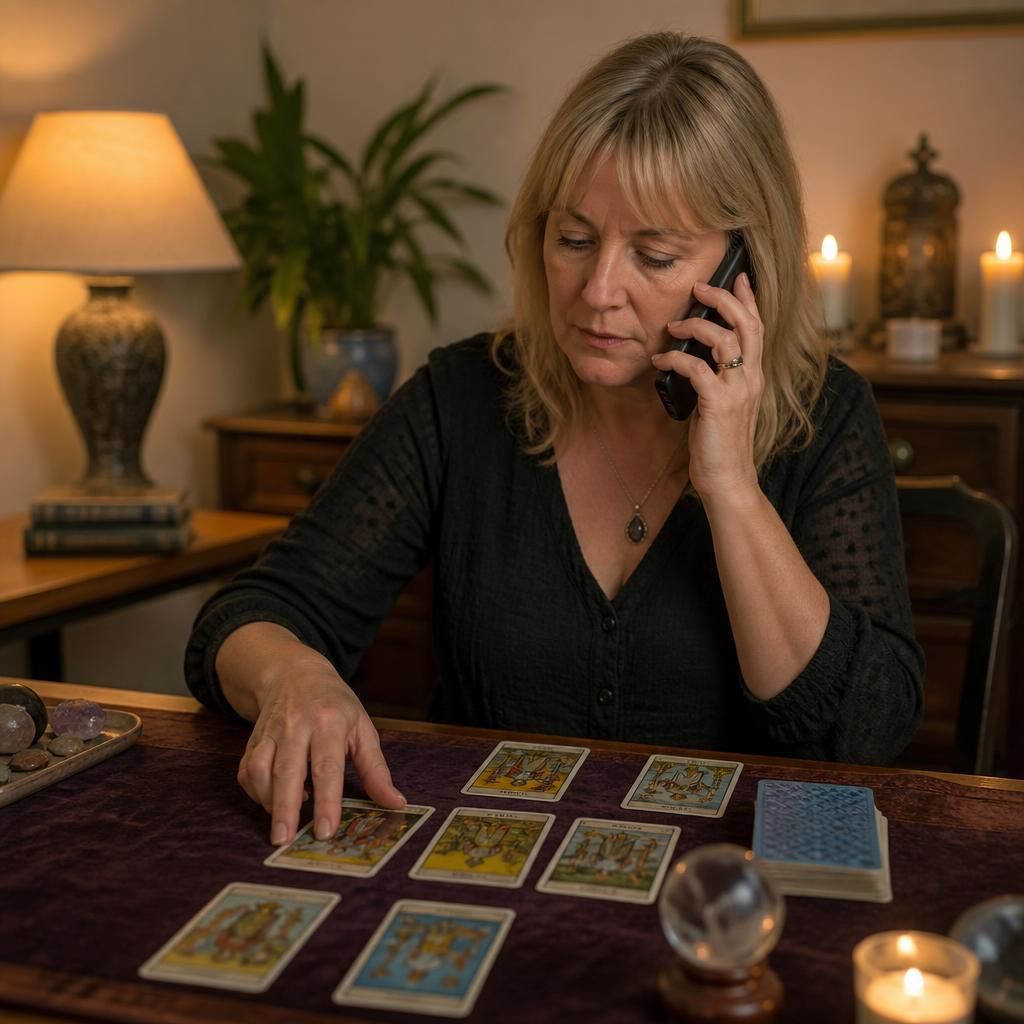
Tarot is often used in telephone clairvoyance as a structured way to explore a question. Rather than treating each card as a fixed prediction, the practitioner may select a spread in which each position represents a particular aspect of the situation, such as current influences, contributing factors or possible directions. The sequence of cards can then provide a framework for discussing themes relevant to the caller’s question.
During a phone reading, the practitioner may shuffle and draw the cards while explaining the process, then describe the imagery, traditional meanings and relationship between cards. A clarifying card may be used when a theme is unclear, although adding more cards does not make an interpretation certain. The value of the exercise lies in organising reflection around a specific question; the caller’s circumstances and judgement remain important when considering what the symbols may mean.