


Are telephone clairvoyant readings suitable for first-time users?
Yes. Telephone clairvoyant readings can suit first-time users because they provide a straightforward way to discuss focused questions about relationships, career or personal growth with a clairvoyant remotely, without needing prior experience of psychic services.
For a first session, telephone clairvoyance is most suitable when you want an interpretive conversation about a particular area of life and can treat the information as guidance rather than certainty. No specialist knowledge is needed, but a clear understanding of what you want to explore will help you assess whether the reading is useful.
Clairvoyance refers to receiving impressions or perceptions that the practitioner interprets in relation to your circumstances. A telephone reading does not depend on seeing the client in person. Instead, the discussion may develop through the questions asked, the information you choose to share and the clairvoyant’s interpretation of impressions during the call. Different practitioners may use slightly different approaches, so it is sensible to ask what the session involves before it begins.
First-time users should also understand what a reading cannot establish. It cannot provide guaranteed predictions, replace professional medical, legal or financial advice, or remove the need for your own judgement. A responsible reading should leave you able to make your own decisions. Be cautious of any claim that a particular outcome is unavoidable, or of pressure to purchase additional services to prevent a supposed problem.
Preparation can make the conversation more focused without requiring you to disclose everything in advance. Consider the following:
- Choose one or two areas you genuinely want to examine, such as a relationship, career decision or personal development.
- Write down the main facts and questions so that important points are not lost during the call.
- Prefer questions that invite context, such as “What should I understand about this situation?” rather than asking only for a fixed yes-or-no prediction.
- Decide beforehand which personal details you are comfortable sharing.
- Keep a note of significant points and review them afterwards rather than making an immediate decision during an emotionally intense conversation.
Telephone contact can be helpful for people who prefer to concentrate on the conversation rather than on visual surroundings or face-to-face reactions. It can also suit clients who want to reflect privately before responding. Conversely, it may be less suitable if you need extensive visual explanation, find spoken information difficult to process, or are looking for a definitive answer to a decision that requires specialist evidence.
During an introductory reading, you can reasonably expect the practitioner to establish the focus, explain how they work and invite you to respond to the impressions discussed. You should be able to correct misunderstandings, ask for clarification and pause if a topic becomes uncomfortable. A useful reading is not necessarily one that predicts a specific event; it may instead help you identify patterns, options or questions that deserve further consideration.
Elizabeth Rose Psychics provides telephone readings centred on clairvoyance, with consultations tailored to subjects such as relationships, career and personal growth. Before arranging a session, review the service description and any stated terms, then decide whether the practitioner’s approach matches the kind of guidance you are seeking. This gives a first-time user a practical basis for choosing a reading without assuming that psychic impressions are a substitute for evidence-based professional support.
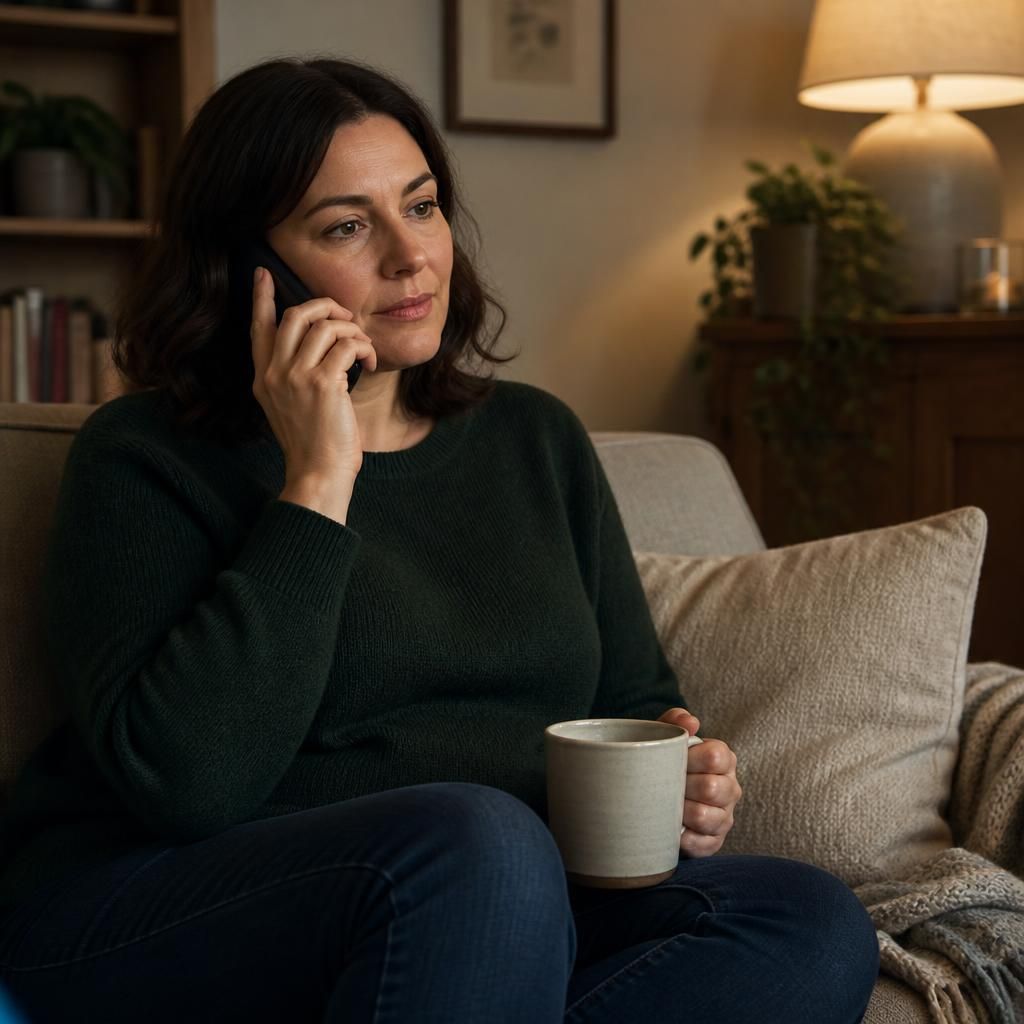
Telephone clairvoyance is generally suitable for a first-time user who can engage comfortably with an audio-only conversation. Because there are no visual cues, the quality of the experience depends partly on being able to hear the practitioner clearly, follow the discussion and explain when a point needs clarification.
Before the session, choose a quiet setting, check that your phone connection is reliable and keep something nearby for brief notes. Avoid multitasking, as divided attention can make an interpretive conversation harder to assess. You can also ask whether recording is permitted, rather than assuming that it is. These simple steps help you judge the reading on the clarity and relevance of the discussion, rather than on avoidable distractions caused by the telephone format.