




How does one develop their mediumship abilities?
Developing mediumship abilities involves learning to distinguish intuitive impressions from imagination, practising focused awareness, and recording and reviewing experiences over time. Structured exercises, ethical guidance, and constructive feedback can help you refine how you perceive and communicate impressions.
Mediumship abilities are generally developed through disciplined practice, theoretical study, supervised experience and careful attention to personal boundaries. In spiritualist traditions, development means learning to recognise and communicate perceived information that is understood as coming from a deceased person or another spiritual source; it does not mean attempting to force contact or treating every unusual thought as evidence of communication.
Start with a clear purpose. Before beginning exercises, decide what you are trying to develop. Mediumship may involve receiving impressions about a person’s character, memories, relationships or circumstances, but different practitioners work in different ways. Some concentrate on mental images, some notice words or phrases, and others describe physical sensations, emotions or an overall sense of identity. Defining the intended skill prevents unfocused practice and makes it easier to assess whether an exercise is useful.
Learn the usual forms of perception. Many training systems describe several forms of mediumistic perception:
- Clairvoyance: receiving an image, scene, symbol or visual detail internally;
- Clairaudience: noticing an internally perceived word, name, voice or sound;
- Clairsentience: experiencing a bodily sensation or emotional impression associated with the person being described;
- Claircognisance: receiving a sudden sense of knowledge without an obvious chain of reasoning.
These terms are descriptions used within mediumship traditions rather than medical or scientific diagnoses. A learner can use them as a vocabulary for discussing experiences without assuming that every sensation has a spiritual origin.
Build a foundation in symbolism and human communication. Symbols do not have one universal meaning. A particular image may relate to a person’s memory, occupation, cultural background or private association. Instead of memorising rigid definitions, study how symbols can operate in context. Communication skills are equally important: listen carefully, ask neutral questions, avoid leading the sitter, and repeat information accurately. A medium’s interpretation should not become more definite than the impression received.
Progress through controlled exercises. Development is more useful when exercises have a defined purpose and a way to review the result. Suitable activities can include:
- describing an unknown photograph without being told who or what it depicts;
- working with a willing partner who provides relevant information only after the exercise;
- practising short sittings with a specific limit on the information to be offered;
- separating direct descriptions from interpretations during spoken or written practice;
- comparing several possible explanations for an impression before presenting it as meaningful.
The aim is not to produce a dramatic performance. It is to improve precision, reduce embellishment and learn which kinds of information can be communicated responsibly. Exercises should be repeated under varied conditions rather than judged by one striking coincidence.
Use supervision and structured education. A reputable development circle, tutor or mentor can help a learner examine technique, presentation and conduct. Good supervision should allow questions, challenge unsupported certainty and make clear that a teacher’s status is not proof of a student’s ability. Training may cover the history of mediumship, different traditions, sitting structure, privacy, consent, handling difficult disclosures and the difference between evidence and interpretation.
When choosing instruction, look for transparent expectations and a refusal to pressure students into expensive commitments or unquestioning belief. Be cautious of anyone who claims exclusive authority, guarantees contact with a particular person or presents alarming statements as unavoidable facts. Mediumship development should not require surrendering personal judgement.
Develop evidential discipline. In a mediumship setting, evidence usually refers to specific, verifiable details that the sitter did not knowingly supply to the practitioner. A name, occupation, relationship or distinctive memory may be more useful than broad statements that could apply to many people. Even apparently accurate information should be treated carefully: it can be misunderstood, guessed, supplied indirectly or interpreted selectively. Ask what was actually said, what was confirmed, and what remained uncertain.
Avoid fishing for information through a sequence of leading questions. Instead, offer concise observations and allow the recipient to decide whether they are relevant. Do not add details simply to make a message sound complete. Accuracy includes acknowledging uncertainty and correcting mistakes without defensiveness.
Protect the sitter and the practitioner. Consent should be obtained before a reading begins, and the sitter should be free to stop or decline to discuss a subject. Confidential information should not be shared with others. Mediums should avoid presenting readings as medical, legal or financial advice, and should never tell someone to abandon professional care, prescribed treatment or necessary practical support. Predictions about death, serious illness, pregnancy or major financial decisions require particular restraint and are not appropriate substitutes for qualified guidance.
Personal boundaries matter during development as well. Set limits around practice, avoid becoming dependent on readings for ordinary decisions, and maintain ordinary social, physical and professional routines. If experiences become distressing, intrusive or disruptive, pause the practice and seek support from an appropriate health professional. Spiritual interpretation should not prevent someone from obtaining mental or physical healthcare.
Review development by quality, not intensity. Strong sensations, vivid images and emotional experiences can feel convincing, but intensity alone does not demonstrate accuracy. More useful measures include clarity, specificity, consistency, respectful communication and the ability to acknowledge uncertainty. A developing medium should become more measured over time, not more absolute.
Mediumship is understood differently across religious, cultural and secular perspectives, and there is no universally accepted method for proving a spiritual explanation. For that reason, responsible development combines openness with critical thinking. Those who want to explore the practice in a reading context can seek a practitioner who explains the process clearly, respects consent and presents impressions as guidance for consideration rather than established fact.
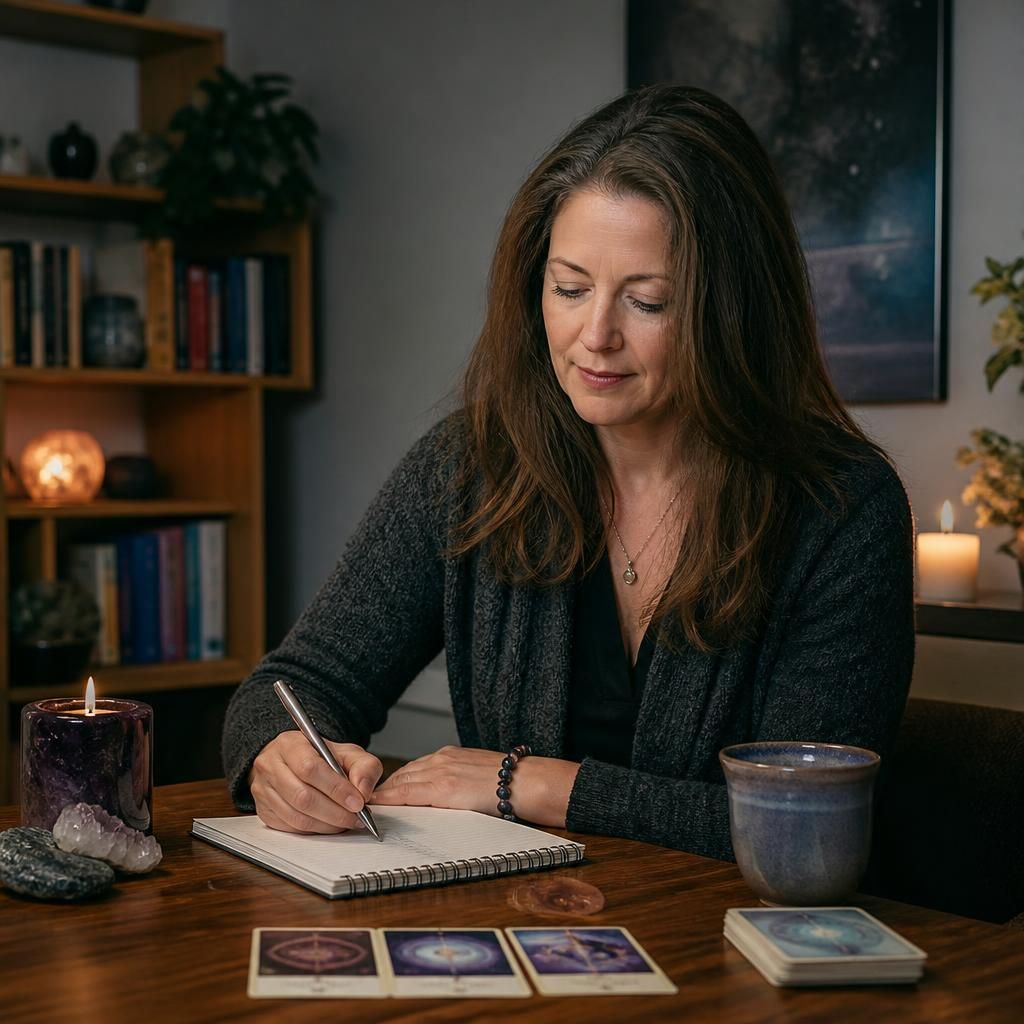
A useful way to develop mediumship abilities is to progress from private learning to supervised communication rather than attempting full readings immediately. Begin by observing experienced practitioners and analysing how they introduce a session, present an impression and respond when information is unclear. Next, practise with people who understand the exercise and can give considered feedback. Only then should a developing medium consider offering longer readings, with clear consent and agreed boundaries.
At each stage, assess readiness by conduct as well as perception. A developing medium should be able to explain what they are doing, accept correction, stop when requested and avoid making the recipient responsible for proving an impression. This staged approach turns mediumship into a learnable practice with defined responsibilities, rather than treating isolated experiences as evidence of complete ability.
Explore Your Mediumship Journey with Elizabeth Rose Psychics
When you are ready to explore mediumship in a reading context, Elizabeth Rose Psychics offers personalised phone and email consultations focused on spiritual insight. Consider a session as an opportunity to reflect on your questions and experiences with an experienced practitioner.