


What should I prepare before a phone medium reading?
Before a phone medium reading, decide which areas you would like to explore and write down any clear questions or key names and dates you may wish to mention. Choose a private setting where you can concentrate, keep something nearby for notes, and approach the session with an open mind rather than trying to direct the information you receive.
Preparing for a phone medium reading involves more than deciding what to ask. The most useful preparation is practical and mental: understand the purpose of mediumship, consider what you are comfortable discussing, check your expectations, and arrange the call so that you can give the conversation your full attention.
Mediumship is intended to explore a perceived connection with someone who has died. A medium may describe impressions, images, emotions, memories or other details and invite you to consider whether they have personal meaning. These impressions are not a substitute for verifiable evidence, professional advice or your own judgement. Keeping this distinction in mind can help you approach the session with curiosity without treating every statement as certain.
Before the reading, consider the outcome you want from the conversation. Some people are looking for a sense of connection, while others want to reflect on a particular relationship or understand their feelings after a bereavement. You do not need to formulate a perfect objective, but identifying your main reason for booking can help you recognise which parts of the session are most relevant to you.
It is also sensible to decide your personal boundaries in advance. You can choose not to discuss subjects that feel too private, decline to answer a question, or ask the medium to explain how they reached a particular impression. If the reading involves another living person, consider that person’s privacy and avoid treating a medium’s comments as proof about their thoughts, intentions or behaviour.
- Review your expectations: a reading may be exploratory rather than a direct answer to every issue, and different people interpret the same type of information differently.
- Consider your emotional readiness: if a recent loss feels overwhelming, decide whether discussing it in this format is appropriate for you at the time.
- Set a stopping point: know that you can pause or end the conversation if it becomes uncomfortable or no longer feels constructive.
- Decide how much background to provide: sharing relevant context can help explain your perspective, but you are not obliged to disclose extensive personal information.
- Plan how you will reflect afterwards: allow yourself time to consider the reading before making significant personal, relationship, career or financial decisions.
Check the practical details before the call begins. Confirm the telephone number to be used, make sure your phone has sufficient charge, and reduce avoidable interruptions such as notifications or competing conversations. If you use headphones, test them beforehand. These steps are not part of the mediumship itself, but they can prevent technical distractions from affecting your concentration.
It can be helpful to tell the medium at the start if there are subjects you would prefer to avoid or if you are unsure how the session will work. You may also ask whether the medium prefers you to respond freely to impressions or to wait until they have finished describing them. Clarifying this process helps distinguish information offered by the medium from details supplied by you during the conversation.
During the reading, listen carefully but avoid feeling pressured to confirm every statement. It is reasonable to say that something does not make sense, to request clarification, or to explain that you do not recognise a detail. A responsible approach leaves room for uncertainty and does not require you to accept a prediction, instruction or interpretation that conflicts with your judgement.
Afterwards, record only the points you genuinely remember as significant and separate them from your later interpretations. Give yourself time to reflect rather than making an immediate decision based solely on the session. If a topic concerns health, legal matters, money or safety, consult an appropriately qualified professional as well as considering any spiritual perspective.
In short, prepare by understanding the nature and limits of mediumship, deciding your boundaries, checking the call arrangements, and allowing yourself to evaluate the information independently. This creates a clearer basis for a respectful, focused phone reading without requiring you to predict what the medium will say.
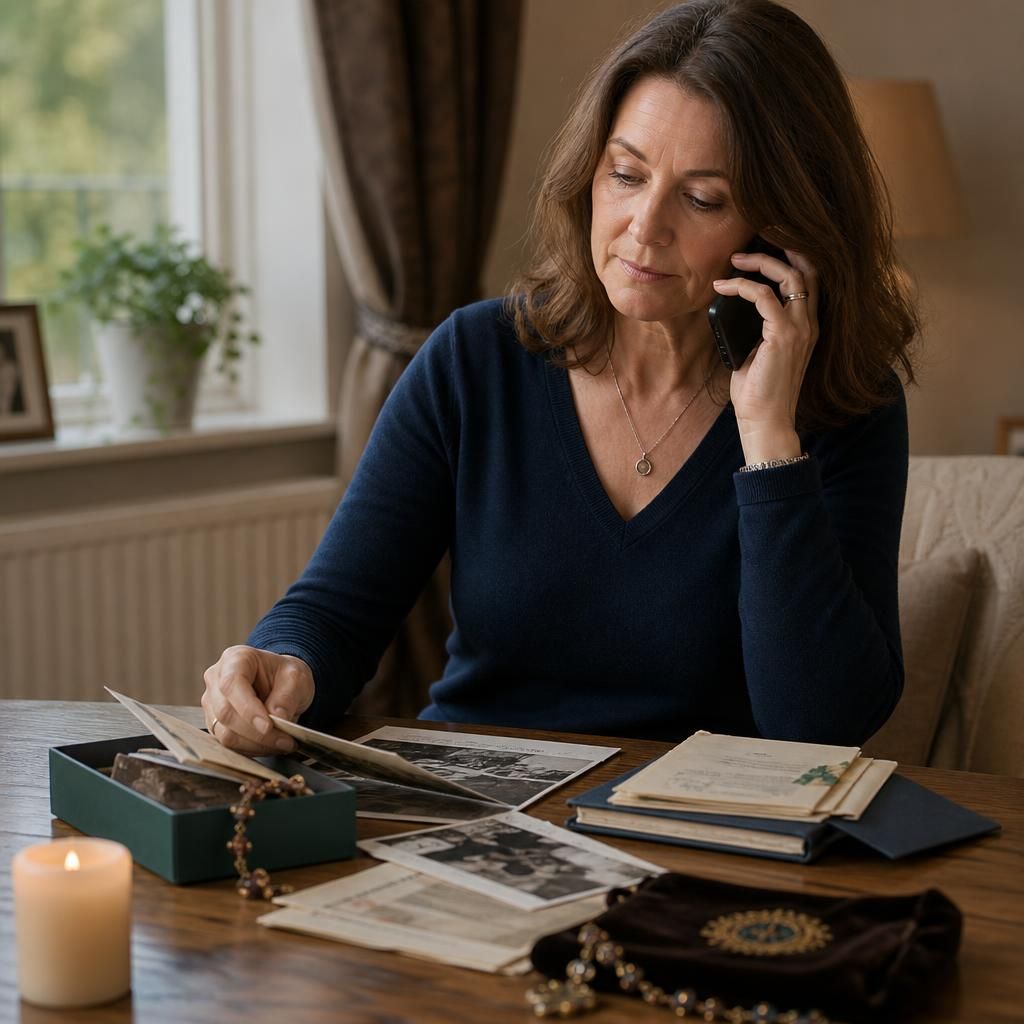
Preparing reference materials for a phone medium reading means deciding what personal information or objects, if any, you want available during the call. A medium may not require photographs, letters or belongings, so do not assume that sending or displaying them is necessary. If you believe an item has particular significance, ask about the preferred process before sharing it.
Keep any chosen material private and use it as background for your own reflection rather than as evidence that an impression is accurate. Avoid sending documents containing sensitive details, and do not share another person’s private information without their permission. This approach gives you control over what is disclosed while allowing the conversation to remain focused on the purpose of the reading.