




How do mediums prepare for a phone medium reading?
Mediums typically prepare for a phone medium reading by creating a quiet, focused environment, reviewing the session details and centring themselves before the call. They may use grounding or meditation techniques to establish concentration, while approaching the reading with an open mind, clear boundaries and respect for the sitter’s privacy.
Preparation for a phone medium reading combines ethical planning, practical checks and a clear approach to interpreting information. A responsible medium considers what the sitter has consented to discuss, decides how to handle uncertainty, and makes sure the session is conducted without leading the conversation or presenting spiritual impressions as guaranteed facts.
They establish the scope of the session. Before the call, a medium may clarify whether the sitter wants a general reading or wishes to focus on a particular area, such as bereavement, relationships or personal decisions. This helps define what the session is intended to explore. It also gives the sitter an opportunity to identify subjects they do not want to discuss.
They consider consent and personal information. Ethical preparation includes limiting the information collected about the sitter to what is relevant to arranging or conducting the reading. Some mediums prefer to receive very little background information so that the conversation is not shaped by assumptions. Others may ask for a broad topic in advance. In either case, the sitter should understand what will be discussed and should not feel pressured to disclose sensitive details.
They prepare to distinguish impressions from confirmed facts. Mediums may receive information in different forms, including images, words, emotions or symbolic ideas. Preparation involves deciding how to describe these impressions accurately rather than overstating them. A careful medium can explain when something is uncertain, invite the sitter to consider whether it has meaning, and avoid turning a possible interpretation into a definite claim.
They plan an appropriate conversational structure. A phone session usually benefits from a clear opening, time for the medium to communicate impressions, and opportunities for the sitter to clarify what has been said. The medium may prepare broad prompts, but should avoid questions that reveal the answer or steer the sitter towards a particular conclusion. This is especially important when discussing emotionally significant subjects.
They check the practical conditions for communication. Preparation can include confirming the correct telephone details, reducing the risk of interruptions and keeping suitable means of making notes nearby. These steps support accurate listening and help the medium keep track of names, themes or questions raised during the call. They are practical safeguards, not evidence that a reading will produce a particular result.
They consider emotional and ethical limits. A medium should be prepared to pause, reframe or decline a line of discussion if it could cause unnecessary distress. Readings should not be used to give definitive medical, legal or financial instructions, diagnose a condition, or pressure someone into making a major decision. Where a concern falls within a regulated professional area, the sitter should seek advice from an appropriately qualified professional.
They protect the integrity of the exchange. Preparation also involves adopting a non-judgemental manner and allowing the sitter to disagree with an interpretation. A sitter is not required to accept every statement as meaningful, and a reputable medium should not use fear, urgency or claims of unavoidable outcomes to influence them. The purpose is to offer a reflective spiritual perspective while leaving decisions with the individual.
These measures help create a more disciplined phone medium reading. They do not remove the subjective nature of mediumship or guarantee that every impression will be recognised. Instead, they support transparent communication, informed participation and a session in which uncertainty is acknowledged rather than concealed.
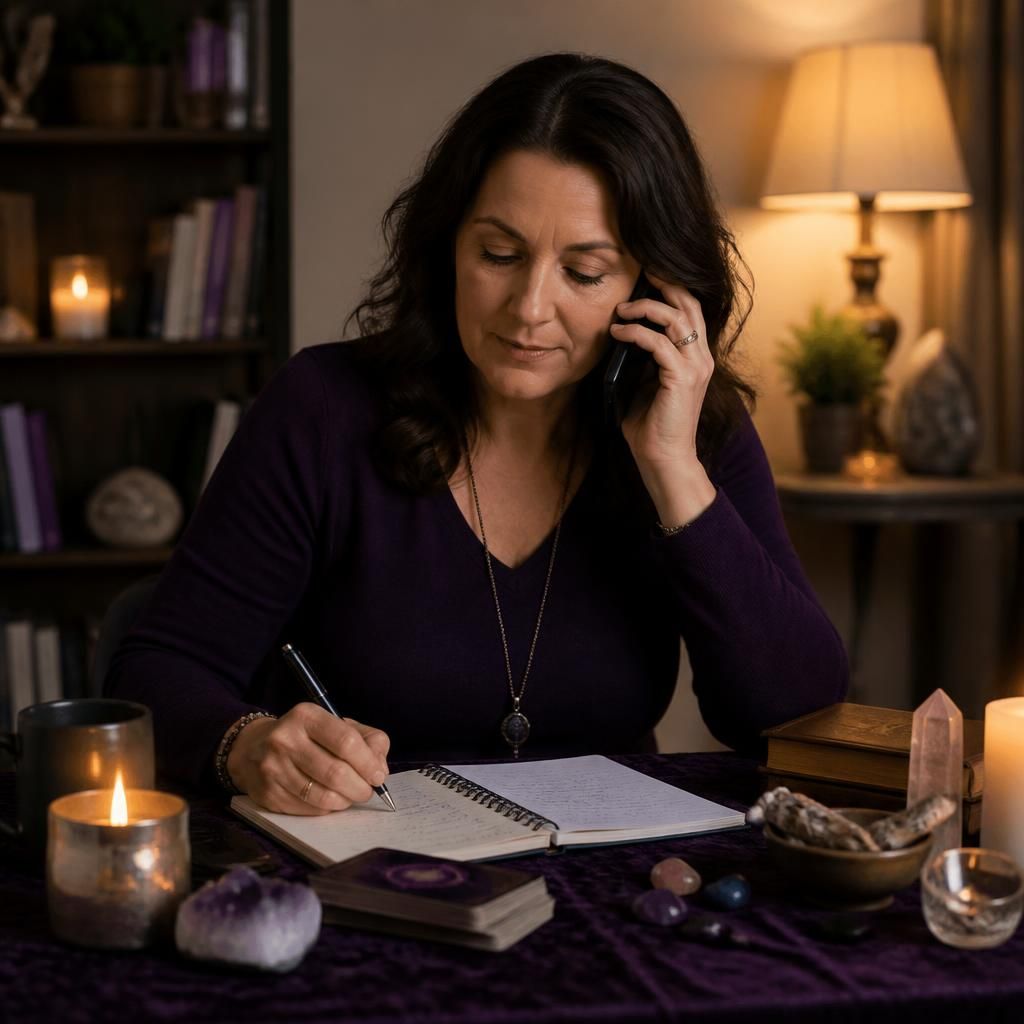
One phone-specific part of preparation is adapting communication to the absence of visual cues. Before the call, a medium may plan to describe impressions in clear, ordinary language rather than relying on gestures, facial expressions or visual symbolism that would be available in person.
They may also prepare to use pauses carefully, repeat an impression when necessary and check that the sitter has heard the information accurately. This helps separate genuine clarification from leading questions: the medium can ask whether a detail has meaning without suggesting the answer. Such preparation makes the exchange easier to follow while recognising that telephone communication provides less non-verbal context than a face-to-face session.