


Seer readings may use oracle decks, runes, scrying surfaces, numerology systems, playing cards and personal objects. These are interpretive aids rather than evidence-producing instruments: they give the reader symbols, patterns or associations to examine alongside the information discussed during the consultation. Some readers use several tools, while others rely mainly on clairvoyant perception or mediumistic impressions.
Oracle cards resemble tarot in that a reader draws and interprets illustrated cards, but oracle decks do not follow one universal structure. Each deck has its own themes, imagery and wording. A reader may choose an oracle deck when a broad reflective message is more suitable than a formal card spread. The meaning comes from the card’s image, its position in the layout, the question being considered and the reader’s interpretation.
Runes are marked stones, wood pieces or similar objects traditionally associated with an ancient Germanic alphabet. In a reading, runes may be drawn individually or placed in a spread. Their symbols can be considered in relation to themes such as movement, obstacles, communication or change. The reader may also assess whether a rune appears in its usual orientation or reversed, although practices vary between practitioners.
Scrying tools provide a surface on which the reader concentrates. Examples include a reflective black surface, a bowl of water or a flame. The purpose is not usually to treat the surface as a literal screen showing a fixed sequence of events. Instead, changes in visual focus, shapes, colours or impressions may prompt associations that the reader then explores. Lighting, concentration and the reader’s chosen method can all affect this form of practice.
Numerology tools organise numbers derived from information such as a name or date of birth. Calculations may be used to identify recurring numerical themes, character tendencies or periods that the reader considers significant. Numerology is separate from astrology, even though both may be used to discuss personal patterns and possible developments. Different numerological systems assign different meanings, so the reader should be able to explain which approach is being used.
Playing cards can also support cartomancy, a form of divination based on a standard deck rather than a dedicated tarot or oracle deck. Suits, numbers and face cards are interpreted individually or as combinations. Because a standard deck has familiar visual conventions, some readers use it for straightforward questions about practical circumstances, choices or interpersonal dynamics.
Personal objects may be used in psychometry, in which a reader handles or observes an item and describes impressions associated with it. Jewellery, photographs and other belongings are sometimes presented for this purpose, particularly in readings involving memories, relationships or mediumship. The object is treated as a focus for impressions, not as an independently verifiable record of the person or situation.
The tool usually influences the structure of a session. A reader might begin by clarifying the subject, select an appropriate method, arrange or draw the items, and then examine recurring symbols or contrasts. Follow-up questions help distinguish a central theme from a detail that may have little relevance. In an email reading, the practitioner may describe the items selected and explain their interpretation in writing. During a phone consultation, the same process can be explained verbally while the reader works with the chosen tools.
- The question: broad questions may suit a larger spread, while a focused concern may require only one or two symbols.
- The reader’s training: familiarity with a system affects how consistently its symbols are interpreted.
- The client’s context: symbols do not have one meaning in every situation, so context matters.
- The purpose of the session: reflective guidance calls for a different approach from a mediumistic reading focused on a deceased person.
No tool can establish that a future event is certain, and different readers may interpret the same symbol differently. A responsible reading should therefore distinguish between the conventional meaning of a symbol, the reader’s intuitive impression and the practical possibilities being discussed. Readers can use tools to organise a consultation and encourage reflection, but decisions about health, finances, legal matters or personal safety should be based on appropriate professional advice and direct evidence as well.
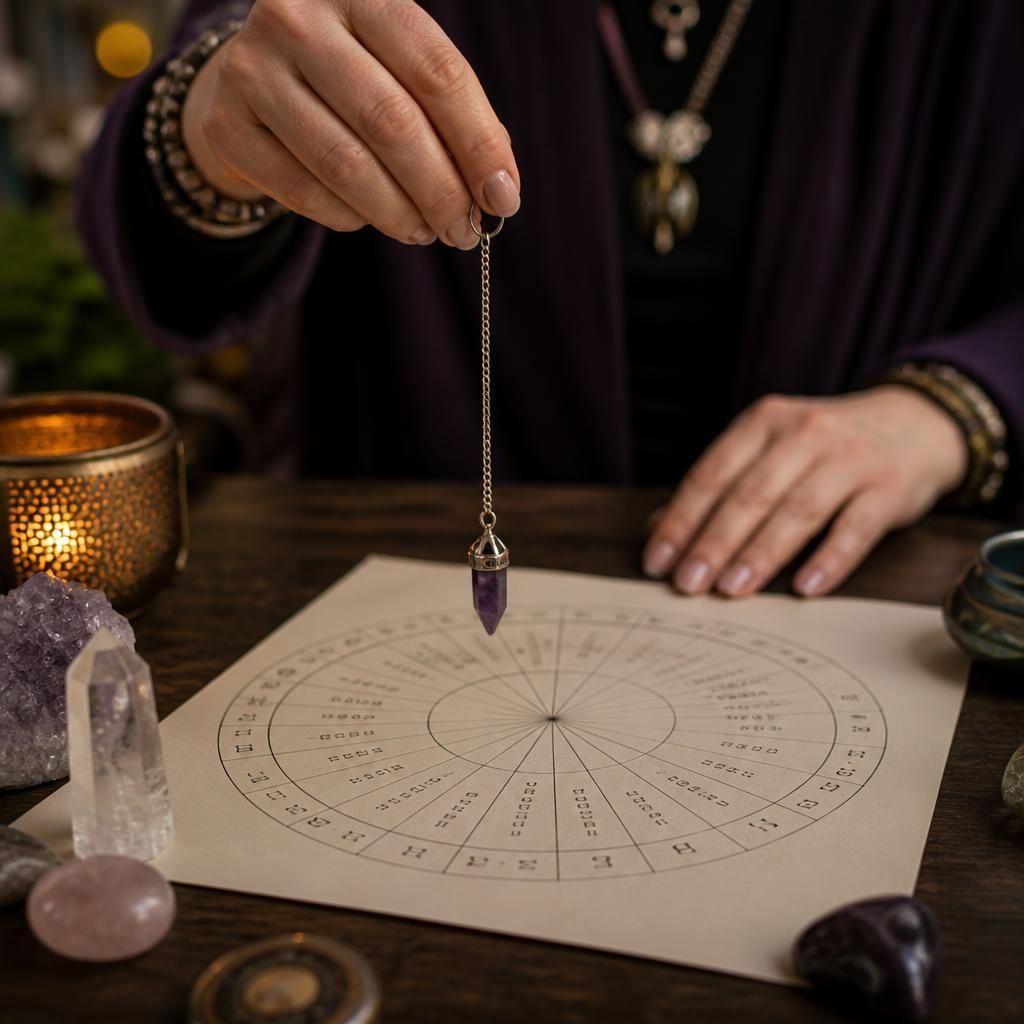
A pendulum is commonly used as a simple focus tool in seer readings. The reader may hold it over a chart, word list or set of options and interpret its movement as a symbolic response to a focused question. Practices differ: some readers assign movements to “yes”, “no” and “uncertain”, while others use the pendulum to identify areas for further discussion. Its movement should be understood as part of the reader’s interpretive method, not as an objective testing device or a substitute for evidence-based advice.