


What factors should be considered when choosing a love fortune teller?
When choosing a love fortune teller, consider their experience, reading methods, communication style, privacy practices and approach to uncertainty. Look for a practitioner who explains the session clearly, listens without judgement and presents insights as guidance rather than guaranteed predictions.
Choosing a love fortune teller involves assessing whether the practitioner’s approach, boundaries and service terms suit the type of relationship guidance you are seeking. In addition to considering experience and reading style, examine their ethical standards, specialisation, transparency, independence and respect for your ability to make your own decisions.
Consider the practitioner’s focus
Love readings can cover different questions, including the direction of an existing relationship, recurring patterns in dating, emotional compatibility or whether a past connection may still affect your choices. A practitioner who clearly describes the subjects they address is easier to assess than one who makes broad claims about every aspect of life. Check whether their approach is intended for reflection and guidance rather than presenting a fixed answer to every relationship question.
It is also useful to consider whether you want a reading based primarily on tarot, astrology, clairvoyance, mediumship or a combination of approaches. You do not need to choose a method simply because it is popular; the important point is that the method is explained clearly and matches the kind of insight you want to explore.
Look for ethical boundaries
Ethics are particularly important in readings about partners, ex-partners and emotionally difficult circumstances. A responsible fortune teller should avoid encouraging obsession, surveillance or attempts to control another person. They should not claim entitlement to access someone else’s private thoughts or use a reading to justify coercive behaviour.
Be cautious of claims that a reading can force reconciliation, guarantee marriage or remove another person from a relationship. Relationship outcomes depend on the choices and circumstances of several people, so no practitioner can responsibly promise a particular result. A sound reading should leave room for uncertainty and personal agency.
Psychic guidance should not replace professional help for issues involving abuse, threats, serious mental distress, medical concerns or legal matters. Where a relationship question involves immediate risk, practical support from an appropriately qualified service is more suitable than a fortune-telling session.
Check how the service is presented
Before booking, review the description of the consultation, including its format, expected duration if stated, how questions are submitted and whether any preparation is recommended. Clear terms help you understand what you are purchasing and reduce the risk of a session becoming focused on unexpected extras.
Pricing and payment information should be presented plainly, with no pressure to purchase additional readings. Be wary of repeated claims that you have a curse, urgent spiritual danger or a hidden problem that can only be resolved by paying for further work. Such tactics exploit uncertainty rather than providing responsible guidance.
For a remote consultation, also confirm how the session is arranged and what information is genuinely needed. You should not have to provide unnecessary personal details about yourself or another person in order to ask a relationship question.
Assess independence and personal agency
A useful reading should help you reflect on possibilities, patterns and choices without instructing you to surrender control of your decisions. Ask yourself whether the practitioner invites your perspective or treats their interpretation as unquestionable. A balanced approach distinguishes between an intuitive impression and a verified fact.
This is especially relevant when asking about a partner’s feelings or future behaviour. A fortune teller cannot confirm another person’s private intentions with certainty. The reading may help you identify questions to discuss, boundaries to consider or assumptions to examine, but direct communication and observable behaviour remain important when making relationship decisions.
Consider the reader’s treatment of sensitive information
Love readings may involve personal history, intimate experiences or information about someone who is not present. Before sharing details, establish how the service handles information provided during the consultation and whether you can keep your question general. Avoid giving passwords, financial details, identity documents or information that is unrelated to the reading.
You should also feel able to decline a question, end a discussion or correct an assumption without being made to feel guilty. Respect for consent applies throughout the consultation, not only when the booking is made.
Compare reviews carefully
Reviews can reveal whether a service is organised and whether clients found the consultation understandable, but they should not be treated as proof that predictions are accurate. Look for comments about clarity, respectful conduct and whether the service matched its description. Give less weight to testimonials based solely on dramatic predictions or guaranteed outcomes, since these are difficult to verify and may create unrealistic expectations.
It can also help to read the practitioner’s own explanatory material. Specific information about the reading process, limitations and ethical approach is more useful than unsupported claims of exceptional powers.
Use a practical suitability test
Before choosing, write down what you want from the reading and what would make you uncomfortable. You might want help organising your thoughts about a new relationship, a recurring dating pattern or a difficult conversation. Defining that purpose makes it easier to judge whether the service is relevant.
After reviewing the information, ask whether you understand the service, feel free to make your own decisions and know what the session can and cannot provide. If the presentation relies on fear, pressure, secrecy or absolute promises, choosing a different practitioner is the safer option. For people seeking remote guidance, Elizabeth Rose Psychics provides phone and email readings centred on areas including relationships, using services such as clairvoyance, mediumship, tarot and astrology.
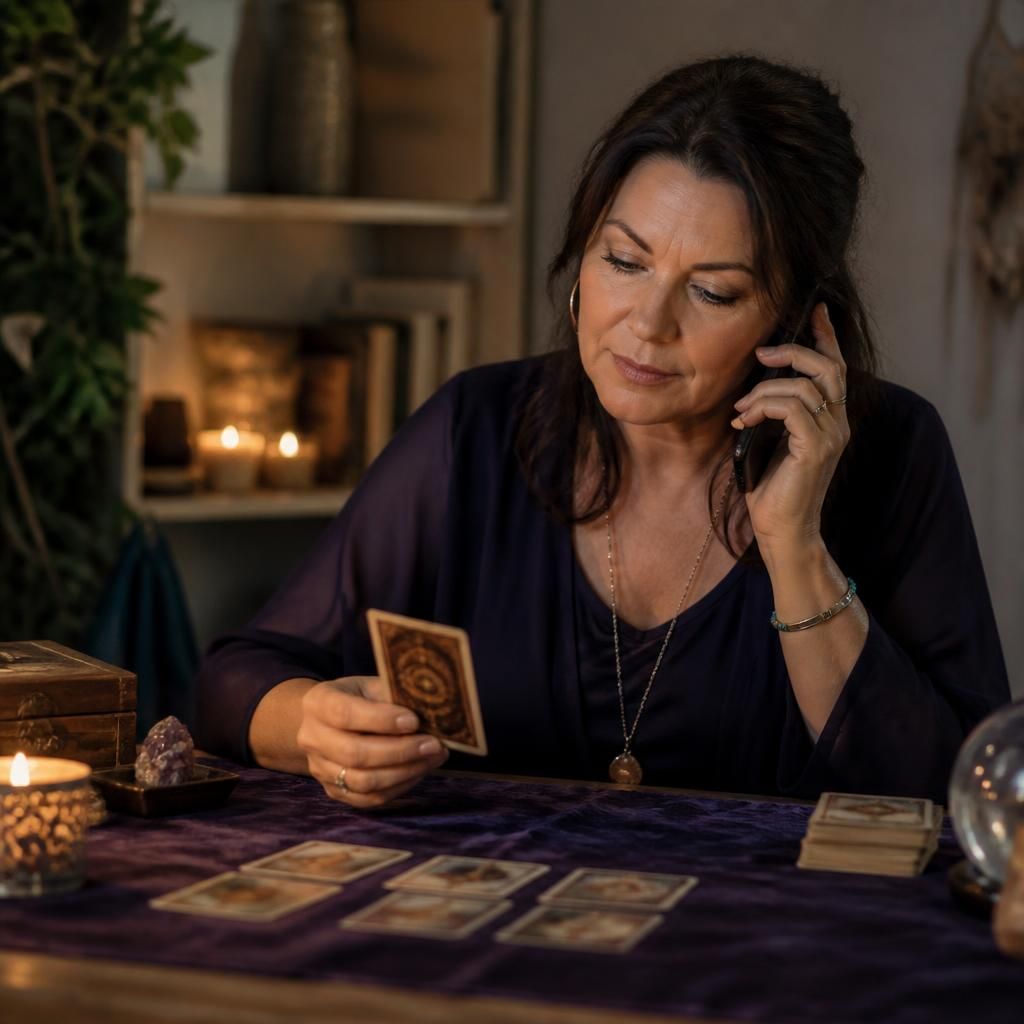
The consultation format is another factor when choosing a love fortune teller. Phone readings allow you to clarify a point as the discussion develops, while email readings provide a written response that can be reviewed later. Consider whether your question is easier to explore through live conversation or careful written reflection, and check that the chosen format gives you a practical way to communicate your concerns.
Also assess how the reader structures information. A well-organised consultation should distinguish the question you asked, the impressions being offered and the areas that remain uncertain. This makes the guidance easier to evaluate afterwards and reduces the risk of treating a symbolic interpretation as a definite statement about another person or a future event. Elizabeth Rose Psychics provides both phone and email readings, allowing clients to consider which format best suits their preferred way of receiving relationship guidance.
Compare your options before choosing a love fortune teller
Use your priorities to compare potential practitioners, then choose the consultation that best fits the question you want to explore. If Elizabeth Rose Psychics meets your criteria, review the available reading information before deciding whether to arrange a session.