


Is there a difference between phone psychic readings and in-person sessions?
The main difference is how the reading is delivered: phone psychic readings take place remotely by voice, while in-person sessions occur in the same physical space as the reader. Both may involve clairvoyance, mediumship, tarot or astrology; the more suitable option depends on your preferred level of privacy, personal interaction and convenience.
Yes, but the format does not determine the quality or type of psychic reading. Phone and in-person sessions can both be structured around clairvoyance, mediumship, tarot or astrology. The more meaningful differences concern how information is communicated, how tools are used, how much non-verbal interaction takes place and how easily you can review the guidance afterwards.
Phone readings rely mainly on spoken communication. You hear the reader’s interpretation, questions and explanations without seeing their surroundings, facial expressions or physical handling of any cards. This can make the conversation feel more focused for people who prefer to concentrate on words rather than visual details. It also means that careful listening is important, particularly when discussing several career options, workplace concerns or longer-term professional goals.
In-person sessions add a physical layer to the interaction. Depending on the reader’s approach, you may be able to see a tarot spread, observe the order in which cards are drawn or refer directly to written notes and other materials in the room. Some people find this useful because the process feels more tangible. Others may find the additional visual information distracting or may place too much weight on the arrangement of objects rather than the interpretation itself.
The reading method also affects what you experience:
- Clairvoyant readings: the focus is generally on impressions, images or intuitive information communicated by the reader. The physical setting may be less important than the clarity of the discussion.
- Mediumship: the session may centre on perceived communication with a deceased person. The key practical difference between formats is how the reader describes and explains the impressions received, rather than whether the session is held by phone or in person.
- Tarot: an in-person client may see the cards and spread directly, while a phone client may hear the cards described. Either format can support questions about professional direction, workplace relationships or a possible change in role.
- Astrology: the discussion may involve charts, dates and interpretations. In person, these materials can be viewed together; by phone, the reader normally explains the relevant points verbally.
Non-verbal communication is another distinction, although it should be treated carefully. In person, the reader can see your posture, expressions and reactions, and you can see theirs. This may make it easier to pause when a subject needs clarification. On the phone, neither party has access to those visual signals, so precise questions and direct requests for explanation become more important. A reputable consultation should not depend on reading body language alone, regardless of the setting.
The two formats can also lead to different levels of client participation. During an in-person session, a client may be invited to look at a spread, select cards or refer to documents while the reading develops. During a phone session, participation usually takes place through questions, answers and verbal reflection. Neither approach is automatically more informative; the better match depends on whether you process guidance more effectively through discussion, visual reference or a combination of both.
For a career-focused reading, consider the type of conversation you need rather than choosing a format based only on tradition. A phone session may suit a reader who wants to explain a complicated employment situation privately and keep the discussion centred on specific questions. An in-person session may suit someone who wants to engage directly with physical tarot cards or written chart material. In either case, separate intuitive guidance from practical decision-making: check contracts, qualifications, finances and workplace policies through appropriate professional or official sources.
Preparation can reduce the practical differences between the formats. Before a phone reading, write down the questions you want answered and keep a pen or digital note open for key points. Before an in-person session, decide whether you want to observe the tools being used, take notes or focus primarily on the conversation. For either option, identify the decision you are considering, the information you already know and any assumptions you want to examine. This gives the session a clearer structure without forcing a particular outcome.
In summary, phone readings generally place greater emphasis on verbal exchange, while in-person sessions may provide more visible interaction with the reader and any physical tools. The psychic practice itself is not automatically changed by the location. Choose the format that supports the way you communicate, absorb information and reflect on career questions, while assessing any guidance alongside practical evidence.
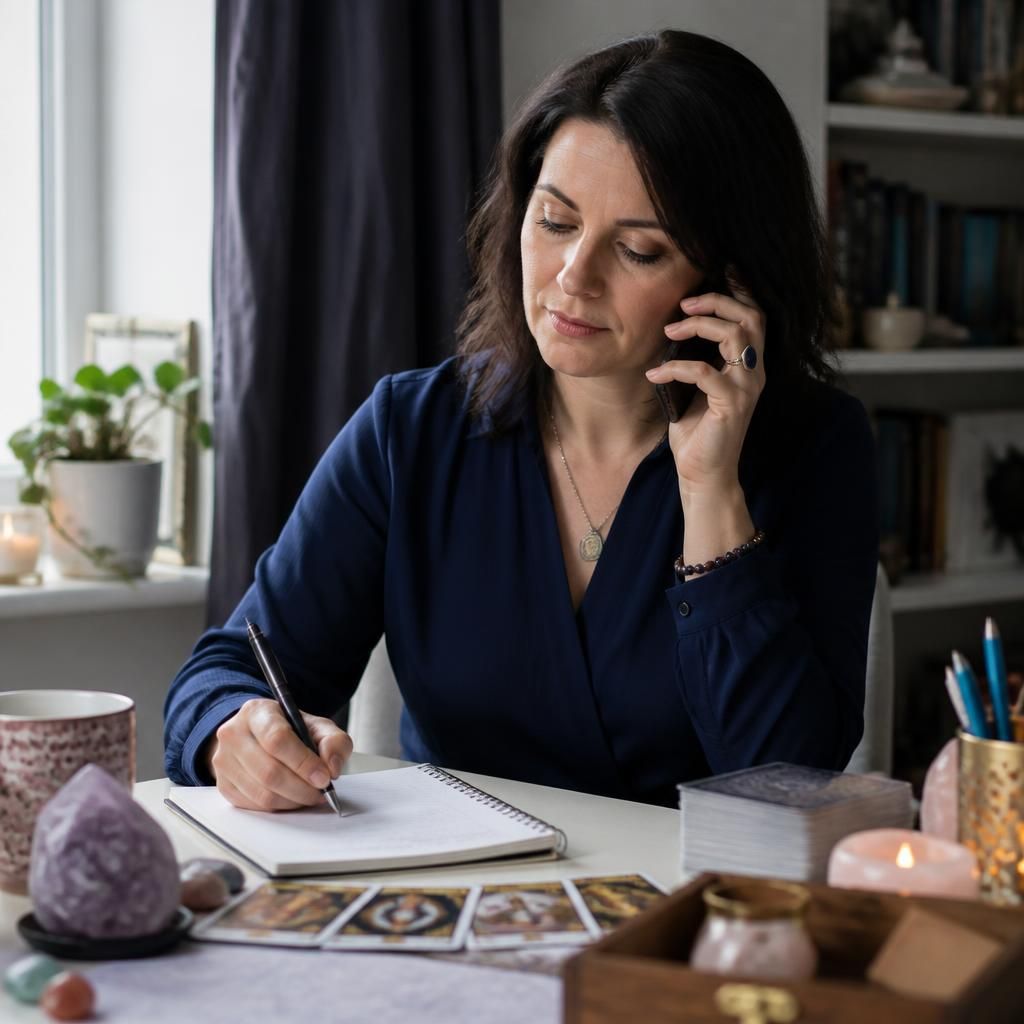
Privacy is a practical difference between phone psychic readings and in-person sessions, particularly when discussing workplace relationships, career uncertainty or plans to change roles. A phone reading can be taken from a private location chosen by the client, but confidentiality also depends on who may overhear the conversation and whether interruptions are likely. An in-person session may offer a dedicated consultation room, although travelling to a reader’s premises can make the appointment more visible or less convenient for some people.
Before either format, consider the level of privacy you need and ask how the consultation is handled. Use headphones or a quiet room for a phone session, and avoid discussing sensitive employment matters where colleagues or relatives may hear. For an in-person reading, check whether the space is private and whether you can speak without other people entering. The setting should support an open discussion without becoming a substitute for sensible workplace confidentiality.