





How can I evaluate the expertise of the astrologer for my chart reading?
Evaluate an astrologer by reviewing their training, experience with relationship chart readings, understanding of techniques such as synastry and composite charts, and ability to explain interpretations clearly rather than making unsupported claims. Client reviews, transparent consultation details, thoughtful questions about your circumstances, and a respectful approach to uncertainty can also help you judge whether their expertise suits your chart reading.
Evaluate an astrologer by examining the quality of their method, the care with which they handle chart data, their ethical boundaries, and whether their interpretation is specific and logically connected to the chart. Confidence or dramatic predictions are not reliable indicators of expertise; a capable astrologer should be able to show how they reached a conclusion and distinguish astrological interpretation from certainty about events.
Check the astrological framework they use. Astrologers may work with different traditions, including Western or Vedic astrology, tropical or sidereal zodiacs, and different house systems. These choices affect how a chart is calculated and interpreted. Before arranging a reading, ask which framework applies, whether the astrologer uses a particular house system, and how they handle issues such as retrograde planets, aspects, house rulers and chart angles. There is no single universal method, but the approach should be consistent rather than selected opportunistically to produce a preferred answer.
For a relationship chart reading, ask how the astrologer connects individual birth charts with relationship patterns. A sound interpretation should distinguish between a person’s individual tendencies and the dynamics created by interaction between two charts. It should also consider the wider chart context instead of treating one placement as a complete explanation of compatibility, conflict or commitment.
Assess the reasoning behind the interpretation. Useful explanations normally connect three stages:
- the chart feature being considered;
- the traditional meaning or interpretive principle applied to it; and
- the way that principle may appear in the relationship or personal circumstances.
For example, an astrologer should explain why a particular aspect is relevant, whether it is supportive or challenging, and what other chart factors modify its meaning. Be cautious if the reading relies mainly on broad statements that could apply to almost anyone, isolated placements presented as decisive, or technical terms used without explanation.
Look for balanced interpretation. Expertise involves recognising both strengths and tensions. An astrologer who presents every difficult placement as a problem, or every favourable placement as a guarantee, is oversimplifying the chart. Ask how they account for different possible expressions of the same influence, including the effect of personal choices, maturity, circumstances and communication. A balanced reading can identify themes without presenting them as fixed outcomes.
Examine ethical standards. An astrologer should respect your privacy, explain how personal and birth information will be used, and avoid pressuring you to disclose details that are not relevant to the consultation. They should not use fear to sell additional services, claim exclusive power over your decisions, or encourage dependence on repeated readings. They should also treat sensitive subjects carefully and make clear that astrological guidance does not replace medical, legal, financial or mental-health advice from an appropriately qualified professional.
Pay particular attention to how the astrologer handles uncertainty. No chart reading can establish another person’s private thoughts or guarantee a relationship outcome. Responsible practice uses language such as “may indicate”, “can be associated with” or “could be explored”, while still offering a useful interpretation. Absolute claims about divorce, pregnancy, illness, death or unavoidable events are serious warning signs.
Consider how chart information is prepared. Accurate birth date, location and, where available, birth time can affect chart calculations. Ask what the astrologer does when a birth time is uncertain and whether they will identify the limitations this creates. An astrologer who explains the difference between a precisely timed chart and an approximate one demonstrates more care than someone who treats all chart data as equally exact.
You can also evaluate whether the consultation structure suits your purpose. Find out whether the astrologer expects a focused question, provides a general overview first, or works through selected relationship themes such as communication, attraction, conflict or long-term expectations. A clear structure helps prevent the reading from becoming a series of disconnected observations and makes it easier to judge whether the interpretation addresses the issues you want to understand.
Before choosing, compare several astrologers using the same practical questions:
- Which astrological tradition and calculation method do they use?
- How do they handle an uncertain birth time?
- How do they separate chart symbolism from definite prediction?
- What privacy and ethical standards guide the reading?
- How will they explain technical points in terms that are relevant to your situation?
- What is included in the consultation, and what information should you prepare?
For a remote consultation, including a phone or email reading, the same standards apply. Written communication can make the reasoning easier to review, while a phone conversation may allow you to ask for clarification as the interpretation develops. In either format, assess the quality of the method and the boundaries of the advice rather than relying on presentation style alone.
Ultimately, the strongest indicators are consistency, transparency of reasoning, proportionate claims and respect for your autonomy. Choose an astrologer whose approach helps you examine relationship patterns and possibilities without presenting astrology as proof, diagnosis or a substitute for your own judgement.
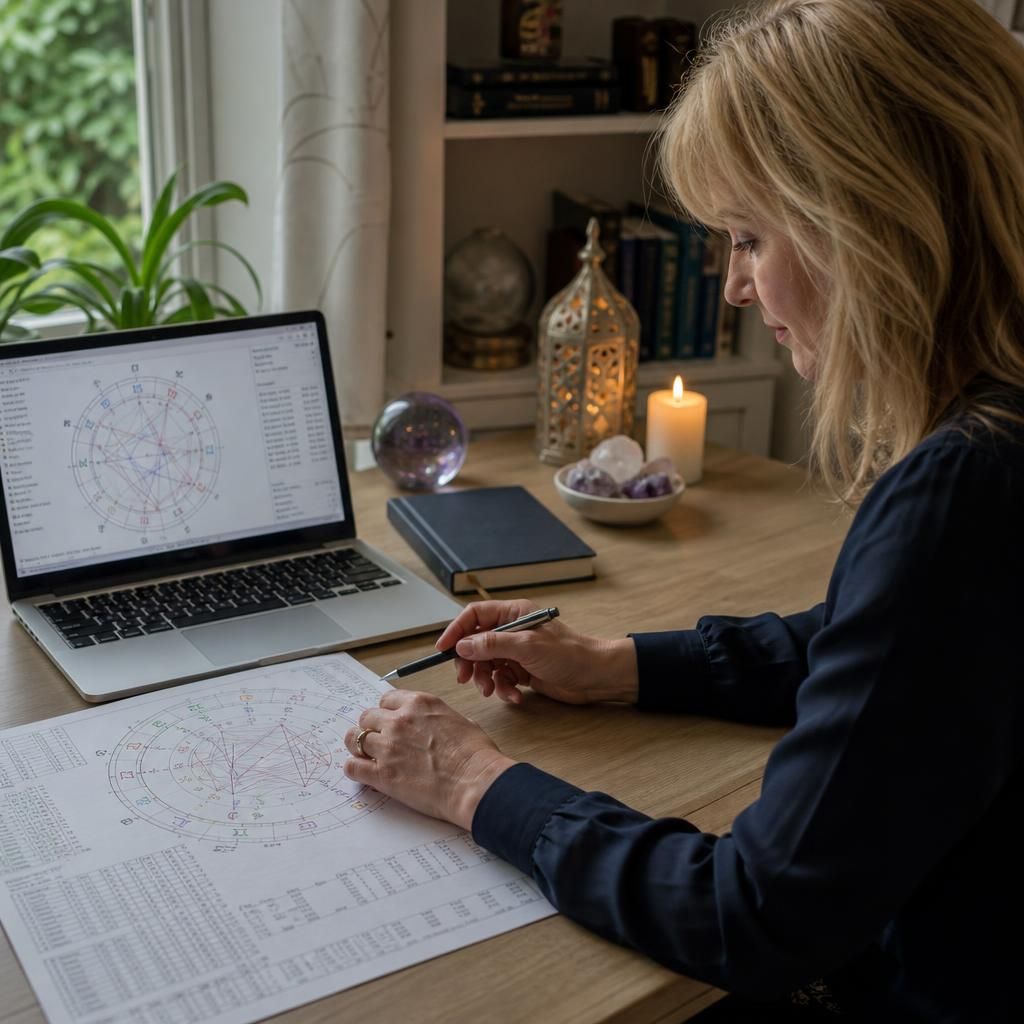
A practical way to assess an astrologer’s technical competence is to ask how the chart itself is checked before interpretation begins. The astrologer should confirm the birth date, birthplace and recorded birth time, account for the relevant time zone and daylight-saving rules, and identify the zodiac and house system used. They should also be able to show which chart factors their conclusions are based on, rather than presenting conclusions without a clear chart reference.
This matters because a small calculation difference can alter house cusps, angles or planetary positions. Ask whether you can review the basic chart information before the reading and how discrepancies would be corrected. An astrologer who welcomes verification and explains the calculation basis demonstrates a more accountable process than one who treats the chart as inaccessible or beyond question.