




What is the role of a psychic reader in tarot and love card readings?
A psychic reader interprets the symbolism of tarot cards while using intuitive insight to explore questions about love, relationships and emotional patterns. They explain possible themes, clarify the reading’s limitations and help you reflect on your circumstances rather than making decisions on your behalf.
A psychic reader in a tarot and love card reading acts as a facilitator who turns a client’s relationship concerns into a structured conversation. Their role includes selecting or adapting a suitable spread, connecting each card with its position and surrounding cards, and helping the client consider possible meanings in relation to their circumstances. The reader’s value lies not only in knowledge of tarot, but also in asking relevant questions, identifying patterns and keeping the discussion focused.
They establish the purpose of the reading. Love readings can address different issues, such as uncertainty about a developing relationship, recurring communication problems, emotional distance, reconciliation or the qualities to look for in a future partnership. A responsible reader first clarifies what the client wants to understand. This prevents a broad concern from producing an unfocused interpretation and helps determine whether a simple three-card layout or a more detailed spread is appropriate.
They give each card a role within the spread. A card does not have one fixed meaning in every reading. Its interpretation can change according to its position, the question being explored and the cards around it. For example, a card placed in a position concerning communication may be read differently from the same card in a position concerning an underlying fear or a possible next step. The reader explains these connections rather than presenting isolated card definitions.
They combine traditional tarot practice with intuitive impressions. Tarot knowledge provides a framework based on the suits, major and minor arcana, symbolism and established associations. A psychic approach may add impressions about emotional tone, recurring behaviour or areas that deserve further attention. These impressions should be presented as possibilities for consideration, not as independently verifiable facts. A clear reader distinguishes between what the cards suggest, what intuition may indicate and what the client has directly described.
They translate symbolic material into useful relationship insight. Instead of leaving the client with abstract references to particular cards, the reader can relate the spread to practical themes such as boundaries, trust, expectations, listening and consistency. This does not mean diagnosing a partner or deciding whether a relationship should continue. It means showing how the reading may illuminate the client’s perceptions, choices and responses within the situation.
They manage uncertainty and avoid overclaiming. Tarot is not a reliable method for proving another person’s private thoughts, establishing certainty about future events or replacing direct communication. Relationship outcomes depend on the actions of more than one person and can change as circumstances change. A careful reader therefore uses measured language, acknowledges alternative interpretations and avoids presenting a prediction as a guaranteed outcome.
They may use clarifying cards carefully. If a card appears particularly ambiguous, a reader can draw an additional card to explore the relevant aspect of the message. Clarification is most useful when it answers a precise follow-up, such as what may be influencing a pattern or what the client should examine. Repeatedly drawing cards until a preferred answer appears can make the reading confusing and encourage confirmation bias, so restraint is part of good practice.
They keep the client’s agency at the centre. The reader can offer questions for reflection, identify options and explain possible dynamics, but the client remains responsible for decisions about communication, boundaries and participation in the relationship. A reading should not be used to justify coercion, surveillance or pressure on another person. It should also not replace professional support where a situation involves abuse, serious mental distress or a medical concern.
For this reason, the depth of a reading depends on more than whether a particular card is considered favourable or difficult. It depends on the quality of the question, the coherence of the spread, the reader’s understanding of tarot and the reader’s ability to communicate uncertainty without losing useful detail. A well-conducted session leaves the client with a clearer view of the issues being examined and sensible points to consider, rather than a fixed instruction about what must happen next.
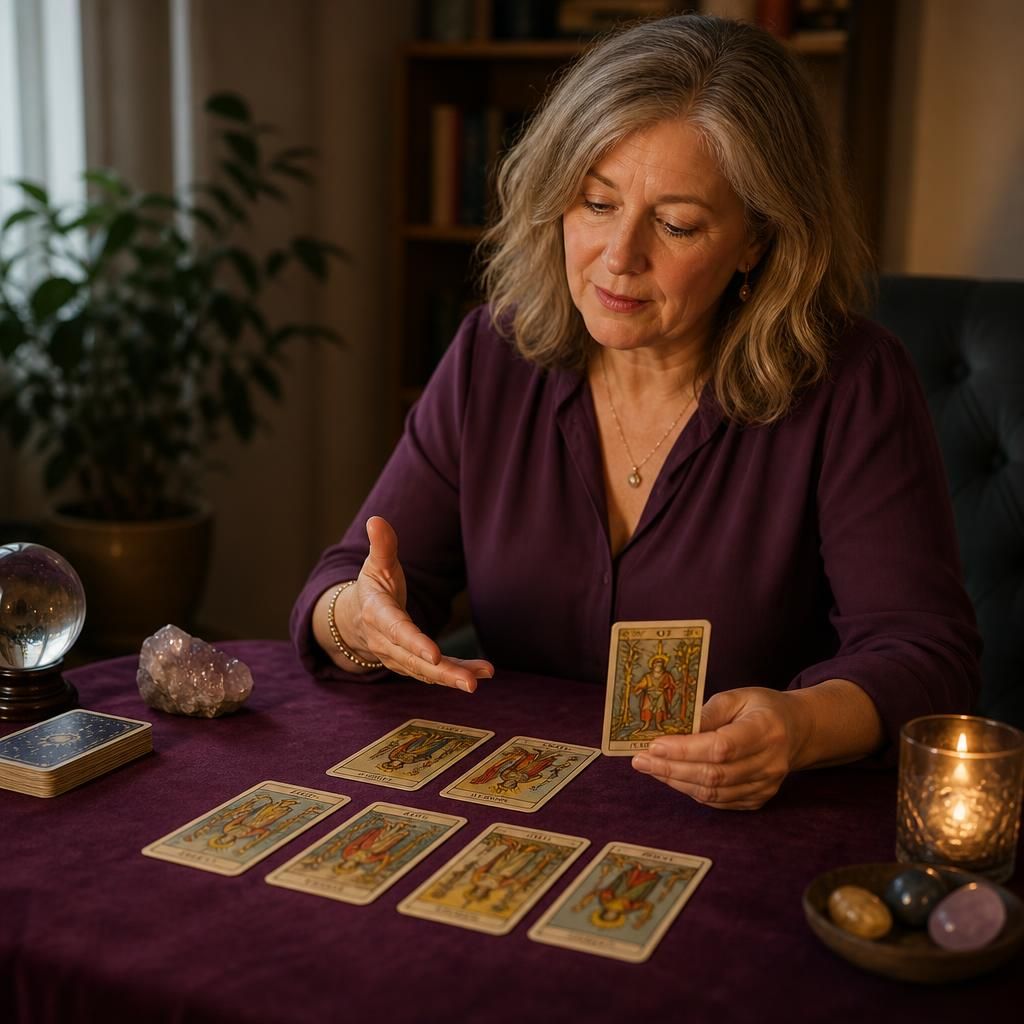
The psychic reader’s role also includes adapting the reading to the way the consultation is delivered. The tarot interpretation should remain grounded in the cards and the client’s question, whether the discussion takes place by phone or the guidance is provided by email.
In a phone reading, the reader can use spoken explanations and follow-up questions to clarify the client’s concerns as the spread develops. Tone and emphasis may help distinguish between a concern about trust, communication or commitment. In an email reading, the reader needs to set out the spread, card positions and interpretation clearly in writing, so the client can review how each conclusion relates to the original question.
In both formats, a skilled reader separates the description of the cards from personal interpretation and practical reflection. This makes the reading easier to assess and reduces the risk of a symbolic suggestion being mistaken for a definite statement about another person or the future.