


How can I assess the qualifications of a psychic before booking a reading over the phone?
Assess a psychic by checking their relevant experience, reading methods, professional standards and how clearly they explain the service before you book. Ask what type of reading they provide, whether they set ethical boundaries around sensitive subjects, and whether independent reviews support their claims.
Assess a psychic’s qualifications by separating formal training, practical experience, professional conduct and the clarity of their booking information. Psychic work is not governed by one universal licensing system, so a certificate or impressive title should not be treated as proof on its own. Look for specific, verifiable information about the reader’s background and compare it with the standards you expect from a professional consultation.
Start by identifying the reader’s stated area of practice. Terms such as clairvoyance, mediumship, tarot and astrology refer to different approaches rather than levels of qualification. A tarot reader may focus on interpreting symbols and spreads, while an astrologer may work from birth data and chart calculations. A medium describes their practice as communicating with people who have died, whereas clairvoyance generally refers to receiving impressions or images. The reader should be able to explain which approach they use in a phone session and what information, if any, they need from you.
Review the reader’s professional profile carefully. Useful details include:
- how long they have been practising and whether their experience relates to the type of session you want;
- any relevant study, mentoring or structured training, with the subject and provider described clearly;
- whether they belong to a recognised professional organisation, and what that membership actually requires;
- the subjects they are prepared to discuss and the subjects they will not address;
- how they conduct a reading remotely, including whether the consultation is voice-only or uses another format; and
- the name or professional identity under which they provide readings, so that their information is consistent across the website and booking material.
Ask direct questions before committing to a booking. For example, you could ask how the reader approaches a particular concern, whether they expect you to provide background information, and how they distinguish interpretation from a definite statement of fact. A qualified professional should answer in plain language without becoming evasive or pressuring you to book immediately. You can also ask what happens if the reader considers a subject unsuitable for a psychic consultation. Their response can indicate whether they understand the limits of the service.
Examine claims about credentials rather than accepting labels at face value. A course certificate may show that someone completed training, but it does not necessarily demonstrate competence, judgement or experience. Similarly, membership of an organisation may have different entry requirements depending on the organisation. If a qualification is central to the reader’s presentation, check whether the issuing body is identifiable and whether the claim can be independently confirmed. Be cautious of unexplained initials, grand professional titles or statements suggesting official authority where no supporting detail is provided.
Consider the quality of the reader’s written information. Clear terms should explain the nature of the consultation, the fee structure, how payment is handled, cancellation arrangements and any limits on the service. Information should not imply that a reading replaces medical, legal or financial advice. A responsible reader will not present a psychic interpretation as a diagnosis, guaranteed prediction or instruction that removes your need to make your own decisions.
Reviews can provide context, but they are not a qualification. Look for detailed feedback that discusses the consultation itself rather than repeated claims of perfect accuracy. Read reviews from more than one source where possible and consider whether they appear specific, balanced and relevant to phone readings. Treat anonymous testimonials, absolute promises and pressure created through countdowns or repeated upselling with caution. A large number of reviews does not establish that a reader has suitable training or professional judgement.
Pay attention to how personal information is requested. Before a phone reading, a reader may ask for basic details needed for the chosen method, but you should understand why each piece of information is required. Avoid sharing passwords, payment security codes, unnecessary identity documents or information that is unrelated to the consultation. If you are considering a mediumship reading, you can decide in advance how much personal or family information you are comfortable disclosing.
Be particularly cautious if a reader:
- claims certainty about a serious medical, legal or financial outcome;
- insists that you continue paying to remove a supposed curse or prevent a predicted event;
- uses fear, guilt or urgency to obtain more information or additional bookings;
- refuses to explain basic booking terms; or
- discourages you from consulting an appropriately qualified professional about an important real-world issue.
Before booking, write down the information you have verified, the questions you want to ask and the boundaries you want to maintain. Compare several profiles using the same criteria: identifiable training, relevant practice, transparent terms, responsible limits and respectful communication. This approach gives you a more reliable basis for choosing a phone psychic than a title, a dramatic claim or a single testimonial.
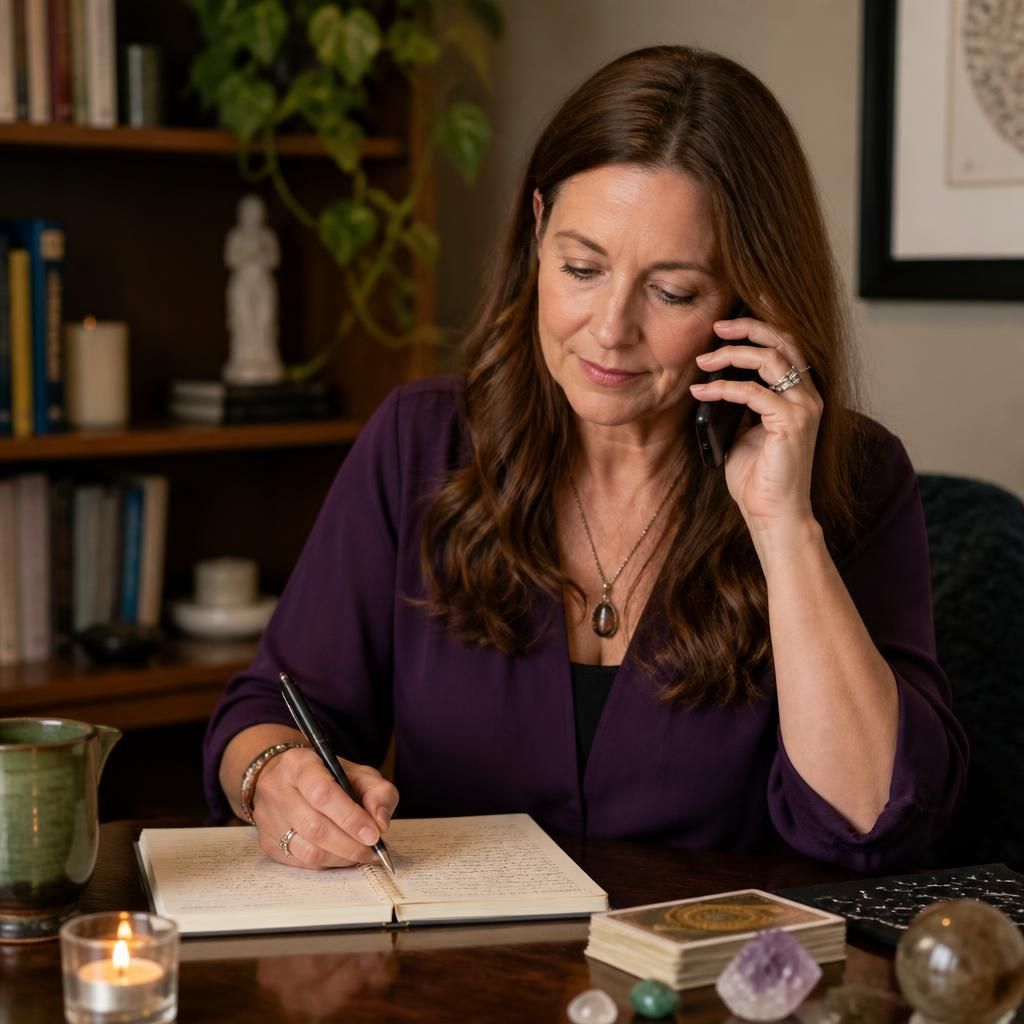
When a reading is booked through a wider service, assess the individual who will conduct it rather than treating the service’s general reputation as evidence of that person’s qualifications. Confirm the reader’s name or professional identity, stated method and experience, and check that these details match the profile and booking confirmation.
Also establish whether the named reader will conduct the consultation personally or whether assignments can be transferred. If the information is vague about who you are booking with, or the reader’s description changes between the profile and booking process, pause before paying. A clear match between the person described, the service offered and the consultation you select gives you a more reliable basis for evaluating their suitability.