


What should I know about the different types of psychic readings before choosing one?
Different psychic readings use distinct methods: tarot interprets card symbolism, clairvoyance focuses on intuitive impressions, mediumship addresses connections with spirits, and astrology examines planetary patterns. Choose the type that best matches the question or area of life you want to explore, such as relationships, career or personal growth.
The main difference between psychic reading types is the method used to structure interpretation. Tarot works through cards and their symbolism, clairvoyance through intuitive impressions, mediumship through perceived communication with spirits, and astrology through birth details and planetary movements. The most suitable option depends on the kind of question you have, how much structure you prefer, and whether you want reflective guidance, symbolic insight or a focus on spiritual connection.
Tarot readings are often the most structured choice because the cards provide a defined visual system for exploring a situation. A reader may use a spread to examine influences, possible developments, obstacles and potential choices. Tarot can be useful when your circumstances feel complicated and you want to break a broad concern into specific themes. It is generally better viewed as a way to explore patterns and options than as a fixed statement of what must happen. The meaning of a card depends on its position, surrounding cards and the question being considered.
Clairvoyant readings rely primarily on the reader’s intuitive impressions. These may relate to people, circumstances, images, sensations or possible developments. This approach can feel less formal than tarot because there is no card layout or chart to interpret. It may suit someone who has a particular situation in mind but is unsure how to frame it in technical terms. Before choosing this style, consider whether you are comfortable discussing impressions that may be broad, symbolic or open to interpretation rather than presented as verifiable facts.
Mediumship readings have a different purpose from readings focused solely on decisions or future possibilities. They centre on a perceived connection with a deceased person or spirit. People may seek this type of session for personal reflection, remembrance or a sense of connection. It is important to approach mediumship with realistic expectations: the reader cannot be required to produce a particular message, identify a specific person or provide proof in a form that satisfies every sitter. A responsible session should also respect grief and avoid pressuring you to accept an interpretation.
Astrology readings use a birth chart and planetary positions as an interpretive framework. A natal chart is commonly used to consider personality tendencies, recurring themes and areas of development, while current or future planetary movements may be examined in relation to a period of change. Accurate birth information can affect the detail of a chart, so check what information the reader requires before booking. Astrology is usually most helpful when you want a broader view of patterns over time rather than an answer to one isolated event.
Some readings combine methods. For example, tarot may be used to focus a question while clairvoyant impressions add context, or astrology may provide a wider perspective before a discussion of a current decision. A combined reading is not automatically more suitable than a single-method reading. It can introduce several interpretations at once, so ask in advance which method will lead the session and how the different sources of information will be separated.
Use the following process to compare the options:
- Define the subject: Decide whether you want to examine a relationship, career choice, personal development or a connection with someone who has died.
- Choose the level of structure: Select tarot or astrology if you prefer a recognised system to organise the discussion. Consider clairvoyance if you would rather receive impressions without cards or a chart.
- Decide whether you want reflection or a specific focus: A broad chart or open intuitive reading may suit exploration, whereas a carefully worded tarot question may be better for one defined situation.
- Check the reader’s approach: Ask how interpretations are presented, whether you can ask follow-up questions and whether the session is intended as guidance rather than certainty.
- Consider the format: Phone and email readings can both provide access to these methods, but they create different communication experiences. A phone session allows direct discussion, while email gives you a written interpretation to review.
Whatever type you choose, prepare a small number of clear questions and distinguish between what you know, what you suspect and what you want to explore. Avoid wording that demands an absolute prediction, such as whether a particular outcome is guaranteed. Questions about influences, choices, patterns and useful areas of attention usually produce a more meaningful discussion.
Psychic readings should not replace professional medical, legal, financial or mental-health advice. Health concerns require an appropriately qualified healthcare professional, and serious decisions should be assessed using relevant evidence as well as any personal or spiritual reflection. Elizabeth Rose Psychics provides readings involving clairvoyance, mediumship, tarot and astrology, so you can compare these approaches and select the one that best fits the purpose of your consultation.
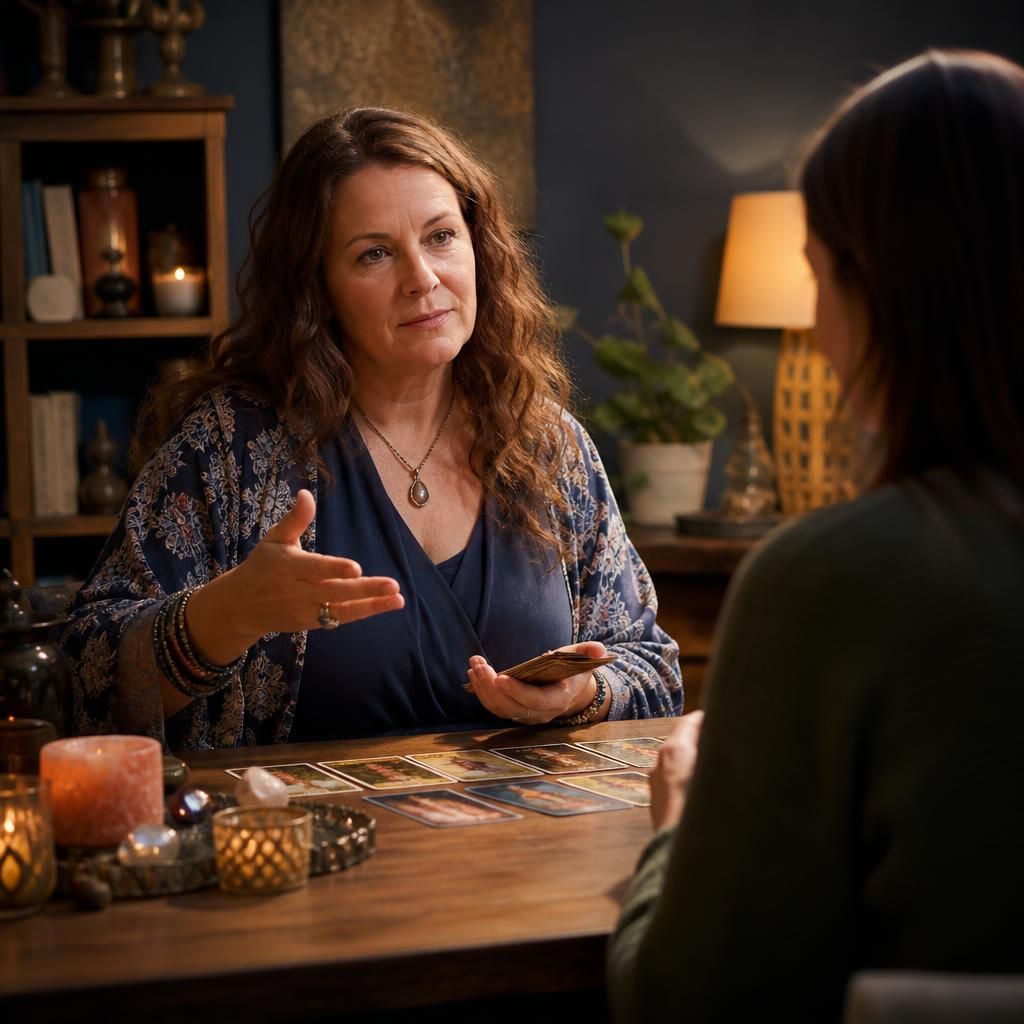
The name of a reading does not always describe the entire session. Some practitioners use one primary method and add other intuitive techniques when relevant, while others offer a clearly defined format from start to finish. Before choosing, check which method will lead the consultation, what information you need to provide, and whether the reader explains interpretations as possibilities rather than established facts.
It is also useful to ask how sensitive subjects are handled. A professional approach should leave room for questions, acknowledge uncertainty and avoid pressure to accept a particular conclusion. This helps you compare readings on more than their labels and select a session whose method, boundaries and style of interpretation suit your purpose.