


Are cheap phone psychic readings as accurate as in-person readings?
Cheap phone psychic readings can be as accurate as in-person readings, but price and format alone do not determine accuracy. The main factors are the psychic’s skill, the reading method used and the clarity of the information shared; phone sessions may provide meaningful guidance without the visual cues available in person.
Accuracy is not reliably determined by whether a psychic reading is cheap, conducted by phone or held in person. A fair comparison depends on what you mean by accurate, how the reading is conducted, the information you provide and whether the statements can be assessed without reinterpretation afterwards.
Define accuracy before comparing formats. A specific, testable statement is different from a broad observation that could apply to many people. For example, a clear reference to a particular circumstance may be assessed against what actually happens, whereas general comments about change, uncertainty or emotional stress are open to several interpretations. A reading may also be useful as a reflective exercise without producing objectively verifiable predictions.
Phone readings have some characteristics that can affect the experience:
- Less visual information: the psychic cannot see your facial expressions, clothing or surroundings. This may reduce visual cues, but it also means the conversation is centred more closely on spoken information and the reading itself.
- Greater control over the setting: you can choose a private place, take notes and pause to consider what has been said. These conditions can make it easier to distinguish useful detail from statements that feel persuasive in the moment.
- Communication quality matters: poor audio, interruptions or unclear questions can affect how the session develops. A quiet environment and a clear connection help prevent misunderstandings, although they cannot establish whether a psychic claim is true.
In-person sessions are not automatically more accurate. Visual contact can support rapport and make it easier to notice emotion or hesitation, but those same cues may influence the direction of a conversation. Neither format independently proves that a prediction is valid, and neither removes the need to judge the reading critically.
Price mainly affects the terms of the session, not its evidential quality. A lower-cost reading may involve a shorter consultation, a simpler booking arrangement or fewer additional features. Those differences can affect how much can be discussed, but they do not demonstrate that the information is more or less accurate. Be cautious of claims that a higher fee guarantees superior insight, or that a cheap service guarantees unusually strong results.
Before booking, check how the service describes its readings and whether it presents them as guidance rather than certainty. A credible description should make clear what type of consultation is offered, how charges are calculated and whether the reader welcomes questions. It should not rely on guaranteed predictions, pressure to purchase repeated sessions or claims that difficult events are certain to occur.
During the call, keep your initial explanation concise and avoid supplying more personal detail than is necessary. Ask open but focused questions, record key statements with their context and note which points are specific enough to evaluate later. Do not treat a statement as confirmed merely because it sounds familiar, and do not alter its meaning after an event has occurred to make it appear accurate.
It is also important to separate spiritual guidance from professional advice. A psychic reading should not replace medical, legal or financial expertise, and decisions in those areas should be based on appropriately qualified practitioners and reliable evidence. Used with those limits in mind, a phone reading can be assessed on the clarity, specificity and relevance of the consultation rather than on the assumption that its low price or remote format determines the result.
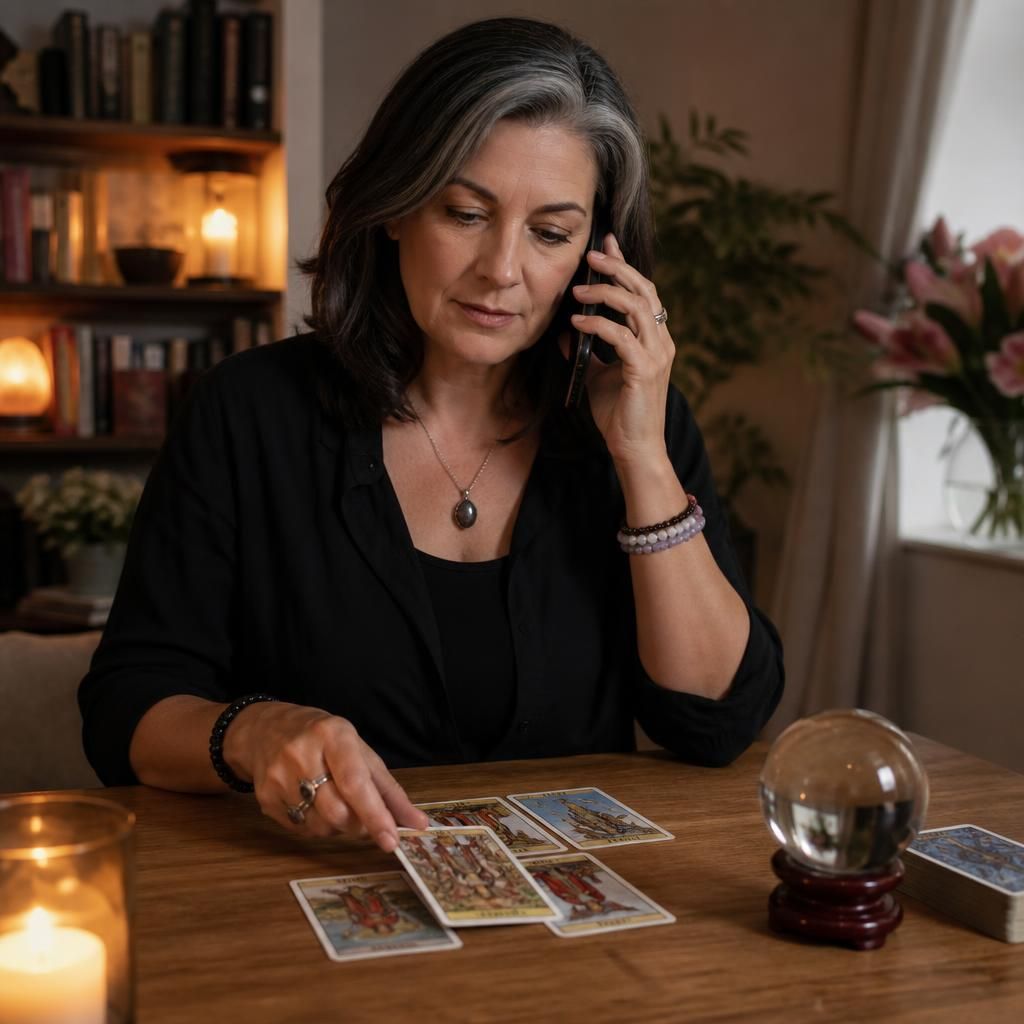
The effect of a phone format depends partly on the type of reading. Tarot does not require the client and reader to be in the same room: the reader can draw and interpret the cards remotely, provided the spread and its relevance are explained clearly. Astrology can also be conducted by phone, but the interpretation depends on accurate birth details rather than physical presence.
Mediumship and clairvoyance do not gain automatic evidential strength from an in-person setting. Being physically present may make the consultation feel more immediate, but it does not independently verify a message or prediction. When comparing formats, consider whether the method has been explained, whether the information is sufficiently specific to assess and whether the session gives you a clear account of how conclusions were reached.