



What should I expect during my first private medium reading, and how can I prepare effectively for it?
A first private medium reading typically involves discussing your focus, allowing the medium to share impressions or messages, and clarifying what arises during the session. Prepare by choosing a clear intention, writing down a few questions, and deciding in advance what personal information you are comfortable sharing.
A first private medium reading is a one-to-one session in which a medium interprets perceived impressions associated with someone who has died and communicates them to you. The process is usually exploratory rather than scripted: information may emerge in an order that does not match your expectations, and you may need to consider whether a detail is meaningful to you rather than expecting the medium to prove every point immediately.
Before the appointment, decide what a useful experience would mean for you. Some people want to reflect on a particular relationship, while others are mainly interested in understanding how a mediumship session works. Keeping expectations flexible is important because a reading cannot guarantee contact, provide certainty about every personal question, or predict events with precision. It should be treated as spiritual guidance and personal reflection, not as a replacement for medical, legal, financial or mental-health advice.
It is also sensible to establish your boundaries in advance. You can decide which subjects you do not want to discuss, whether you prefer not to disclose identifying details, and what you will do if a message feels upsetting or unclear. A professional session should allow you to decline a topic, request a pause or end the conversation without pressure. You are not required to accept an interpretation simply because it has been offered.
At the beginning, the medium may explain the format, ask for basic consent to proceed and outline how they communicate impressions. Some mediums work with names, photographs or other contextual information; others prefer to receive as little background as possible. Ask how much information is helpful before the session starts. This can reduce the risk of inadvertently supplying clues and helps you understand how the reading will be conducted.
During the reading, listen for specific details and note your immediate response without feeling obliged to confirm everything. Mediumship language can include symbols, sensations, memories, personality descriptions or references to events. An unfamiliar detail is not automatically meaningless, but neither should it be forced to fit someone you know. You can ask the medium to explain how they reached an interpretation, distinguish a direct impression from a suggestion, or return to a point that requires clarification.
Good communication works both ways. Give concise corrections when something is inaccurate, but avoid filling gaps with extensive personal history. If a statement is too general to assess, ask for a more precise explanation. You may also ask whether the medium regards something as a firm impression, a possibility or a symbolic reading. These distinctions make it easier to assess the session thoughtfully afterwards.
For a phone reading, prepare a private place where you can concentrate and keep notes without interruption. Check your telephone connection beforehand, have water nearby and keep a clock or agreed end time visible if that helps you maintain perspective. If you want to record the session, request permission first rather than assuming recording is acceptable.
For an email reading, organise your request so that the medium can understand the relevant context without receiving more personal information than necessary. Review the message for sensitive details, confirm the preferred reply address and save the response securely. Read the material when you have enough privacy to consider it carefully; an email format gives you time to revisit wording, but it can provide less opportunity for immediate clarification than a live conversation.
After the session, write down what was said in your own words, including which details were specific, which were uncertain and which did not resonate. Avoid making major decisions solely because of a reading. If grief, anxiety or other difficult feelings arise, discuss them with an appropriately qualified professional or someone you trust. A considered review helps you separate the experience itself from assumptions you may make about its meaning.
When choosing a private medium reading, look for clear explanations of the format, transparent terms, respectful communication and a straightforward way to raise concerns. Be cautious of pressure to book repeated sessions, demands for escalating payments, claims of guaranteed results or advice that encourages fear and dependence. Preparation is most effective when it supports curiosity while preserving your judgement, privacy and personal autonomy.
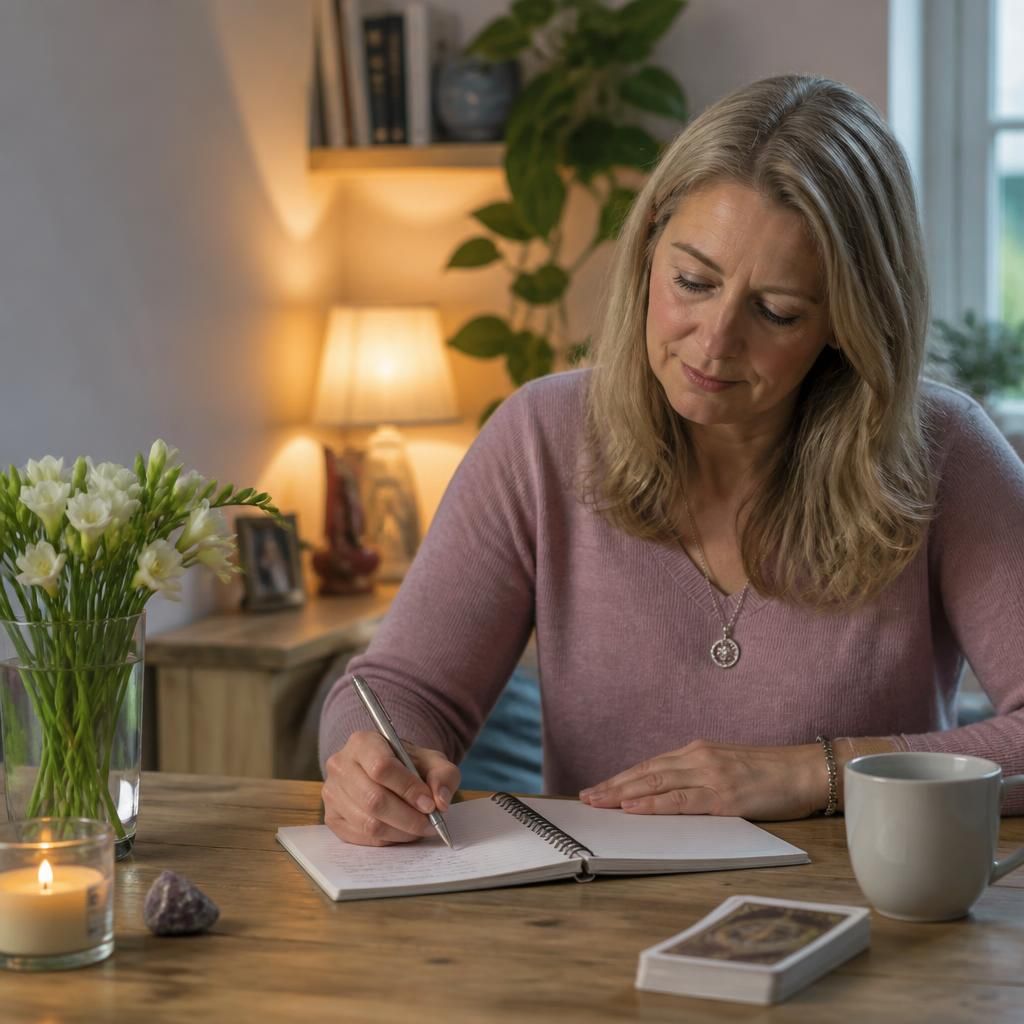
A useful way to prepare is to separate information you already know from details you would like the reading to clarify. Before the session, make two brief lists: one containing confirmed facts about the person or situation, and another containing points you genuinely cannot verify in advance. Keep the second list private unless the medium raises a relevant detail independently.
This approach helps you listen accurately without unintentionally guiding the conversation. It also gives you a clearer basis for reviewing the reading afterwards: a specific detail that can be checked is different from a broad statement that could apply to many people. Treat both accurate and inaccurate points as part of your assessment, rather than focusing only on the messages that fit your expectations.