


How do I determine which psychic love reading method—such as tarot, astrology, or clairvoyance—will deliver the most relevant insights for my situation?
The most relevant method depends on the kind of relationship insight you seek: tarot can help explore current dynamics and choices, astrology can examine personality patterns and relationship cycles, while clairvoyance offers intuitive impressions about your situation. Consider your question, the level of detail you want to provide, and which approach best fits your personal beliefs and preferences.
The most suitable psychic love reading method is determined by the type of question you want to examine, the information you are comfortable sharing and the kind of guidance you find easiest to interpret. Tarot is generally suited to exploring a specific situation and possible choices; astrology is useful for examining longer-term patterns and compatibility; clairvoyance is more open-ended and focuses on intuitive impressions about the people or circumstances involved.
Start with the question rather than the method. A focused question usually makes it easier to choose an approach:
- For uncertainty about a conversation, decision or current relationship dynamic, tarot may provide a structured way to consider influences, obstacles and possible responses.
- For questions about recurring relationship patterns, differing temperaments or significant periods of change, astrology may offer a broader framework.
- For a situation that feels difficult to define, or where you want an intuitive overview rather than a formal system, clairvoyance may be the more natural fit.
These distinctions describe the way each method is commonly used, not a guarantee that one will produce a definitive answer. A reading can offer perspectives for reflection, but it should not replace your judgement or professional advice on matters such as health, safety, finances or legal issues.
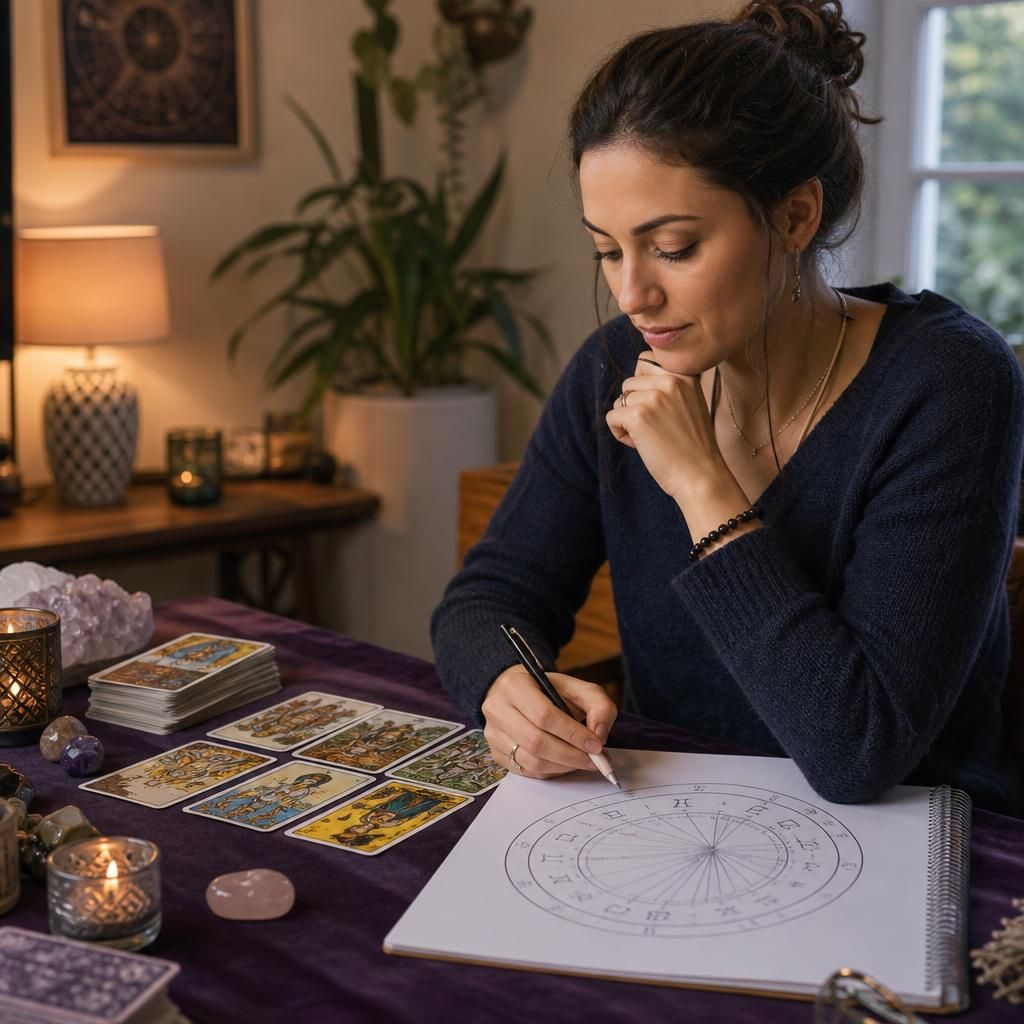
Choose tarot when you want a contained exploration. Tarot uses a selected spread of cards, with each position representing a particular aspect of the question. This structure can be helpful when you want to examine your own feelings, another person’s apparent influence, barriers within the relationship or the choices available to you. It is particularly appropriate when the circumstances are changing and you want to explore possibilities rather than ask for an unchangeable outcome.
Before a tarot reading, decide whether you want to focus on one relationship issue or several connected points. Questions such as “What may be affecting communication between us?” or “What should I consider before taking this next step?” tend to give the reading a clear direction. Asking only whether a relationship will succeed can produce a less useful discussion because it leaves little room to examine the factors you can influence.
Choose astrology when timing and personal patterns matter. Astrology interprets relationship themes through birth information and planetary positions. Depending on the reading, this may involve examining an individual birth chart, comparing two charts or considering current planetary movements in relation to the relationship. It can therefore be a good fit if you want to understand differences in communication, emotional needs, attachment patterns or periods that may feel more demanding.
Astrology normally requires accurate birth details, including dates and, where available, times and places of birth. If some information is missing, ask how that limits the interpretation before the session begins. Astrology can describe tendencies and cycles, but it should not be treated as proof that a particular person will behave in a fixed way or that a specific event must occur.
Choose clairvoyance when you prefer an intuitive, less structured approach. Clairvoyant readings focus on impressions, images, feelings or perceived themes connected with your situation. This can suit someone who has a broad concern rather than a single technical question, or who wants to discuss the overall direction of a relationship before narrowing down the details.
Because clairvoyance is less dependent on a formal system, it is useful to establish what you want the reading to address. You might ask for insight into the emotional atmosphere of a connection, the main issue affecting progress or the perspective you may be overlooking. Treat impressions as material to consider, and ask for clarification where a statement is ambiguous or overly general.
Use practical criteria to refine your choice. Consider the following points before booking:
- Specificity: choose tarot for a defined issue, astrology for chart-based patterns and cycles, or clairvoyance for a broader intuitive overview.
- Information available: astrology depends on birth details, whereas tarot and clairvoyance can usually begin with the circumstances you describe.
- Preferred structure: tarot and astrology follow recognisable systems; clairvoyance may feel more conversational and exploratory.
- Decision stage: tarot can help you examine options, astrology can place concerns within a wider pattern, and clairvoyance can help identify themes you may not have articulated.
- Personal beliefs: select an approach that you can engage with thoughtfully rather than choosing one because it is presented as universally superior.
It is also reasonable to ask whether a reader works with more than one method and how they decide which is appropriate. Some consultations combine techniques, such as using astrology to establish broader relationship themes and tarot to explore a particular concern. If a combined reading appeals to you, confirm which method will address which question so that the session remains focused.
Finally, assess the quality of the guidance by its relevance and clarity, not by whether it confirms a desired outcome. A responsible reading should leave room for your choices, acknowledge uncertainty and avoid pressuring you into further consultations or major decisions. For remote consultations, including phone or email readings, provide only the personal information needed for the chosen method and keep your questions centred on the insight you want to gain.
The relevance of a love reading also depends on whether the question concerns something you can observe or influence. No method can independently verify another person’s private thoughts, consent or intentions, so questions framed around your own choices are usually more useful than requests for absolute certainty about someone else.
For example, instead of asking, “What is my partner secretly thinking?”, consider, “What signs should I pay attention to in our communication?” or “How can I decide what boundary I need?” This framing gives tarot, astrology or clairvoyance a clearer subject to explore while keeping the interpretation grounded in your experiences, available evidence and personal judgement.