




What signs suggest a successful connection with a clairvoyant during a reading?
A successful connection with a clairvoyant is often indicated by specific, relevant intuitive details, a clear exchange of information and a stronger understanding of the issue you brought to the reading. You may also notice that the guidance prompts meaningful reflection without relying on vague claims or pressure to accept a particular interpretation.
A successful connection with a clairvoyant is usually shown by a respectful, focused process in which you can participate freely, assess what is being said and relate the reading to the purpose you brought to it. It does not depend on dramatic predictions or on accepting every statement as fact. The quality of the connection is better judged by how responsibly the session is conducted and how useful the information is for your own reflection.
You feel able to remain yourself. A sound reading should not require you to perform, disclose more than you wish or agree with an interpretation to keep the session moving. You can pause, say that something does not resonate, ask for clarification or decline to discuss a sensitive subject. A clairvoyant who respects these boundaries allows the session to remain a consultation rather than turning it into a test of compliance.
The conversation has a natural rhythm. A connection may involve periods of listening, questioning and quiet consideration. You are not expected to provide a detailed life history before any intuitive work begins, but some context can help distinguish the subject you want to explore. The exchange should feel sufficiently structured to remain focused without becoming a rigid script. If the discussion continually shifts towards unrelated subjects, it may be difficult to identify what the reading is actually addressing.
Uncertainty is handled honestly. Clairvoyant impressions may be expressed as possibilities, symbols or partial perceptions rather than confirmed events. A responsible practitioner distinguishes between what they perceive, what they infer and what remains unclear. They should not present every image as a fixed prediction or suggest that a particular outcome is unavoidable. Appropriate caution is especially important when discussing health, finances, legal matters or major personal decisions.
You can test the relevance without being led. One useful sign is that you have room to consider an impression before supplying an explanation. Open questions, such as asking what a symbol or theme means to you, can support a more accurate discussion than questions that put words into your mouth. You should also be able to separate information that genuinely relates to your circumstances from statements that are broad enough to fit almost anyone.
The reading respects your agency. Insight is not the same as instruction. A constructive session may help you examine options, recurring patterns or emotional responses, but it should leave decisions with you. Be cautious if a practitioner claims exclusive authority over your future, insists that only they can solve a problem or uses fear to influence what you do next. Pressure to purchase additional services, remove a supposed obstacle or follow a prescribed action is not evidence of a strong clairvoyant connection.
Your reactions become more considered, not less. People can experience many responses during a reading, including recognition, uncertainty, relief or disagreement. None of these reactions alone proves that a connection is genuine. A more useful indicator is whether you can review the session afterwards with a clear mind and identify which points deserve thought, which require verification and which should be set aside. Immediate intensity can be memorable without being reliable.
There is a clear distinction between intuitive material and established fact. A clairvoyant may use visual impressions, sensations, symbolic images or perceived emotional themes. These are part of the interpretative nature of the reading and should not be confused with documented evidence. For practical matters, compare any important suggestion with relevant information from qualified professionals and trusted sources. A reading should complement your judgement, not replace medical, financial, legal or mental-health advice.
You retain a useful record of the session. Making brief notes can help you assess the reading more fairly. Record the subjects discussed, the language used, the points that were specific to your situation and any statements that remained uncertain. Reviewing this record later can show whether your interpretation has changed simply because an event occurred, or whether the original discussion was genuinely relevant. It also reduces the risk of unconsciously filling in gaps afterwards.
Ultimately, a successful connection is not measured by how persuasive or certain the clairvoyant sounds. Look for professional boundaries, honest treatment of uncertainty, space for your own judgement and a discussion that remains coherent from beginning to end. These signs allow you to engage with a clairvoyant reading thoughtfully while retaining responsibility for the meaning you assign to it and the decisions you make afterwards.
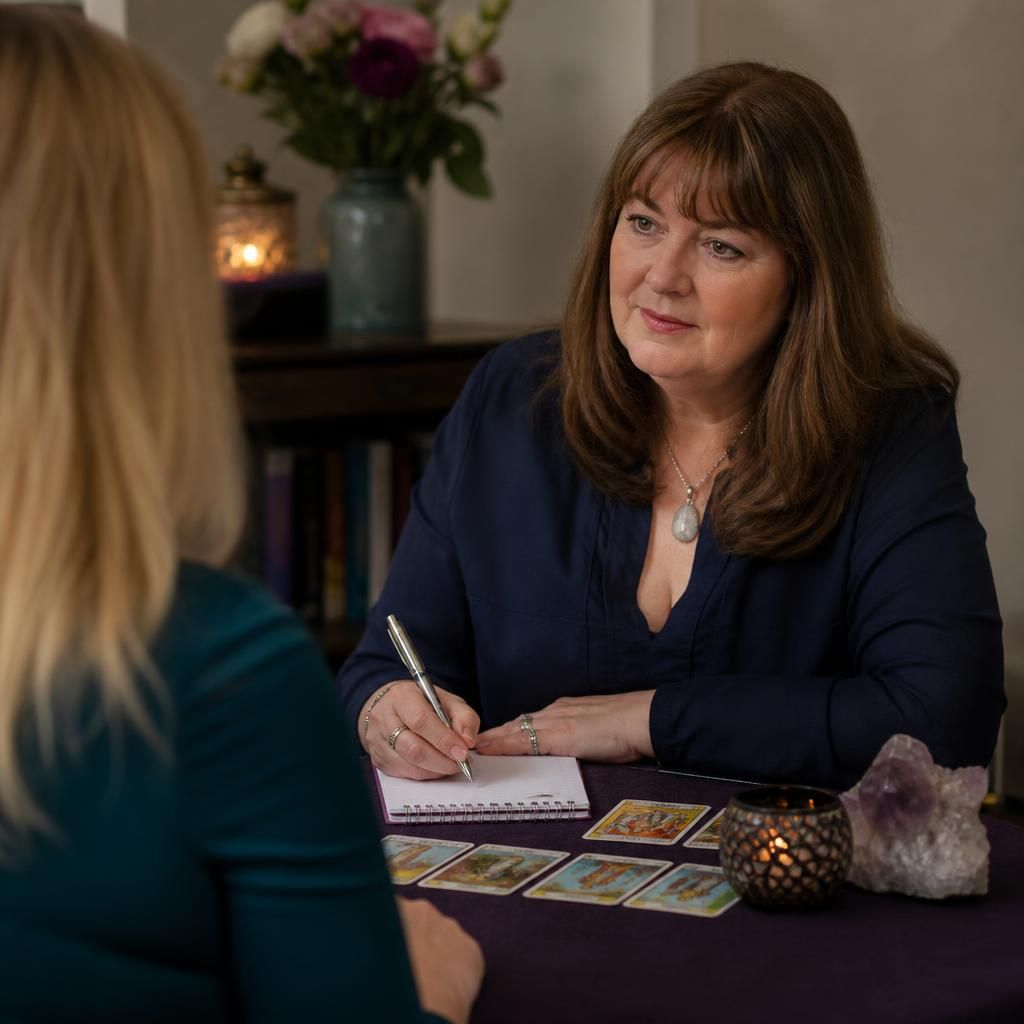
A further sign of a successful connection is a clear and proportionate ending to the reading. If difficult or emotionally charged themes arise, the clairvoyant should place them in context rather than intensify them through alarming language. The discussion should conclude with a straightforward summary of the main impressions, the areas that remain open to interpretation and any points that need independent consideration.
This helps distinguish meaningful insight from an interaction that leaves you confused or dependent on further readings. A useful session can raise questions without creating fear, urgency or the impression that every concern requires spiritual intervention. The way the reading is brought to a close can therefore be as informative as the impressions shared during it.