


What should I expect during a phone clairvoyant reading session?
During a phone clairvoyant reading session, you discuss the areas of life you want to explore while the clairvoyant shares intuitive impressions and interprets the information that arises. Expect a conversational, personalised consultation focused on subjects such as relationships, career or personal growth, with opportunities to ask relevant questions and reflect on the guidance provided.
A phone clairvoyant reading is usually a guided, two-way consultation in which the clairvoyant describes intuitive impressions, explores possible meanings and invites you to consider how they relate to your circumstances. The information may be presented as images, feelings, symbols, words or impressions rather than as a fixed sequence of events, so the session is best approached as an opportunity for perspective rather than a guaranteed prediction.
At the beginning, the reader will generally establish the focus and explain how the session will work. You may be asked for limited background information so that the discussion is relevant, but you do not need to disclose anything you consider private. It can be useful to state whether you want a broad reading or would prefer to concentrate on one particular concern. A clear focus helps distinguish useful insight from general discussion.
During the reading, the clairvoyant may pause to interpret what they are sensing and then describe it in ordinary language. Some impressions may seem immediately recognisable, while others may require thought or may become meaningful only when viewed alongside other details. A professional reading should leave room for clarification: you can ask what a symbol or impression might represent, explain when something does not fit, and request that the reader return to an important point.
The conversation may move between present circumstances, possible influences and different choices available to you. Clairvoyant information is not a substitute for professional medical, legal or financial advice, and it should not be treated as proof that a particular outcome must occur. For health concerns especially, consult an appropriately qualified healthcare professional. You remain responsible for decisions about your relationships, work, finances and wellbeing.
To get more from the session, keep a short list of topics or questions nearby without trying to script every answer. Find a private place where you can concentrate, have something available for notes, and allow enough mental space to assess what is said. Recording a session should only be considered with the reader’s agreement and in line with any applicable rules. Notes can help you separate specific observations from your own immediate reactions.
It is also reasonable to set boundaries before the reading starts. You can decline to answer a question, say that you do not want to explore a subject, or ask for a clearer explanation. If an impression feels unsettling, ask how the reader interprets it rather than assuming the most alarming meaning. A responsible consultation should not pressure you into accepting a statement, making an immediate decision or purchasing additional services.
As the session draws to a close, the reader may summarise recurring themes or practical points for reflection. You can use this time to check that your main questions have been addressed and to clarify anything that remains ambiguous. After the call, review your notes when you feel settled and consider which ideas are genuinely useful, rather than attempting to act on every detail at once.
Elizabeth Rose Psychics provides phone readings for people throughout the USA, making this form of consultation accessible without travelling to an in-person appointment. The essential experience remains the spoken exchange: careful listening, clear questions and a willingness to evaluate the guidance thoughtfully can all help you understand what the session offers.
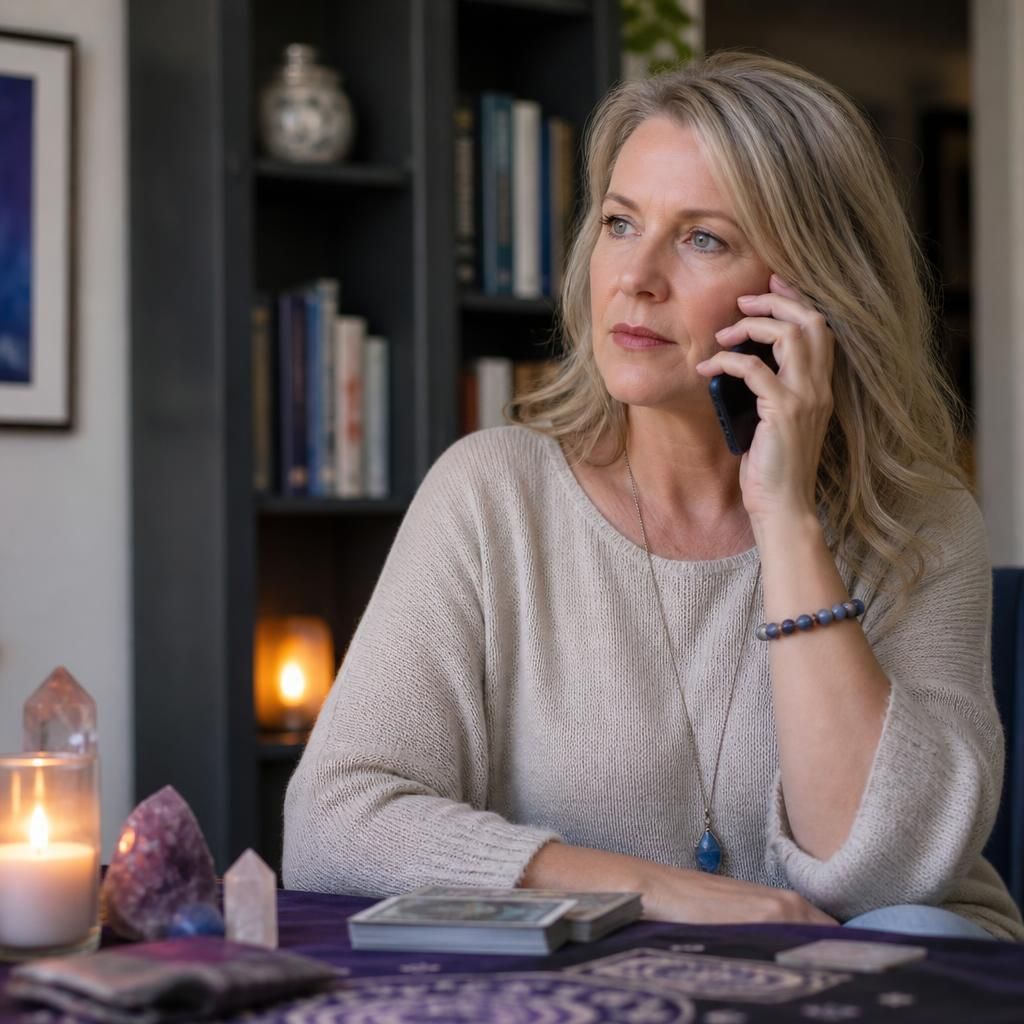
A phone clairvoyant reading session depends on spoken communication rather than visual cues. The clairvoyant describes impressions aloud, while you explain which parts relate to your circumstances and which do not. Because neither person can rely on gestures or facial expressions, precise wording and attentive listening are especially important.
You may hear the reader qualify an impression with phrases such as “this may suggest” or “does this connect with you?” This reflects the interpretive nature of clairvoyance: an image, feeling or symbol can have more than one possible meaning. A pause may indicate that the reader is considering how best to express an impression, rather than signalling a definite prediction.
It can help to distinguish three parts of the conversation: the impression itself, the reader’s interpretation of it, and your response to whether it fits. Keeping these separate makes it easier to assess the discussion without treating every detail as certain or assuming that an unfamiliar impression has no relevance.