






What if I do not know my exact birth time?
Yes, you can still have a useful personal horoscope reading without knowing your exact birth time. Your birth date and place can identify many planetary positions, while your rising sign and house placements may require an approximate time or a chart-rectification approach.
The missing birth time mainly affects the parts of a horoscope chart that depend on the Earth’s rotation: the rising sign, the house positions and the precise angles between the chart points. Many planetary sign placements can still be assessed from the birth date and birthplace, but conclusions about timing, life areas and the Ascendant need to be treated with greater care.
What can usually still be examined
- The Sun’s zodiac sign and, in most cases, the signs occupied by the planets.
- Planetary relationships, known as aspects, when the planets moved slowly enough for their positions to remain reliable throughout that date.
- Broad themes associated with temperament, communication, relationships, motivation and personal development.
- The position of the Moon, provided it did not change signs during the relevant part of the day.
These elements can provide a meaningful foundation for a personal horoscope reading. However, an astrologer should distinguish between information that is secure and information that depends on an assumed birth time.
What an unknown time makes less certain
The Ascendant, or rising sign, changes relatively quickly and is calculated from the precise time and location of birth. It is used in astrology to interpret outward manner, first impressions and the way a person approaches new situations. Without a recorded time, the Ascendant cannot be identified confidently from the date alone.
Birth time also determines the twelve houses. Houses are used to associate planetary influences with areas such as relationships, work, finances, home and long-term goals. If the time is missing, house cusps may shift considerably, so a reading should not present house-based conclusions as definite.
The Moon requires particular attention. It moves more quickly than the other traditional planets and may change signs on the date of birth. If that happened, the astrologer may need to describe both possibilities or use additional personal information to assess which interpretation fits better.
Useful alternatives to an exact time
- Use an approximate time. A family memory such as early morning, around lunchtime or late evening is more useful than no indication at all. It can narrow the range of possible Ascendants and house placements, although it should remain labelled as approximate.
- Check official and family records. A birth certificate, hospital record or information from a parent or relative may provide a time. It is important to check whether the recorded time refers to the local time at the birthplace and whether any daylight-saving adjustment applies.
- Use a solar or date-based chart. Where the Ascendant is unavailable, an astrologer may use the Sun as a reference point or concentrate on planetary signs and aspects. This avoids pretending that uncertain house placements are precise.
- Consider chart rectification. Rectification is an interpretive process in which a possible birth time is compared with significant past events, such as major changes in education, work, relationships or residence. It can produce a working hypothesis, but it is not the same as verifying the original time and should not be described as certain.
Information to provide for a more useful reading
Provide the full birth date, the town or city and country of birth, and any estimated time range. Include how the time was obtained, such as an official document or a relative’s recollection. If the time is only a guess, say so directly. This allows the reading to separate dependable chart features from interpretations that may change if another time is used.
It can also help to identify the areas you want to explore, such as a relationship decision, career direction or personal growth. The focus does not replace missing birth data, but it helps the astrologer explain which chart factors are being used and avoid drawing conclusions from uncertain houses.
How to interpret the result responsibly
A reading based on an unknown birth time should use qualified language where appropriate. For example, a planet’s zodiac sign may be described with confidence while its house placement is presented as one of several possibilities. If two candidate birth times produce different Ascendants, comparing both charts can show which themes are sensitive to the uncertainty.
Elizabeth Rose Psychics can use the birth information available to structure a personalised astrology reading by phone or email. The most transparent approach is to explain the limits of the data, identify the chart components being used and avoid presenting an estimated birth time as an established fact.
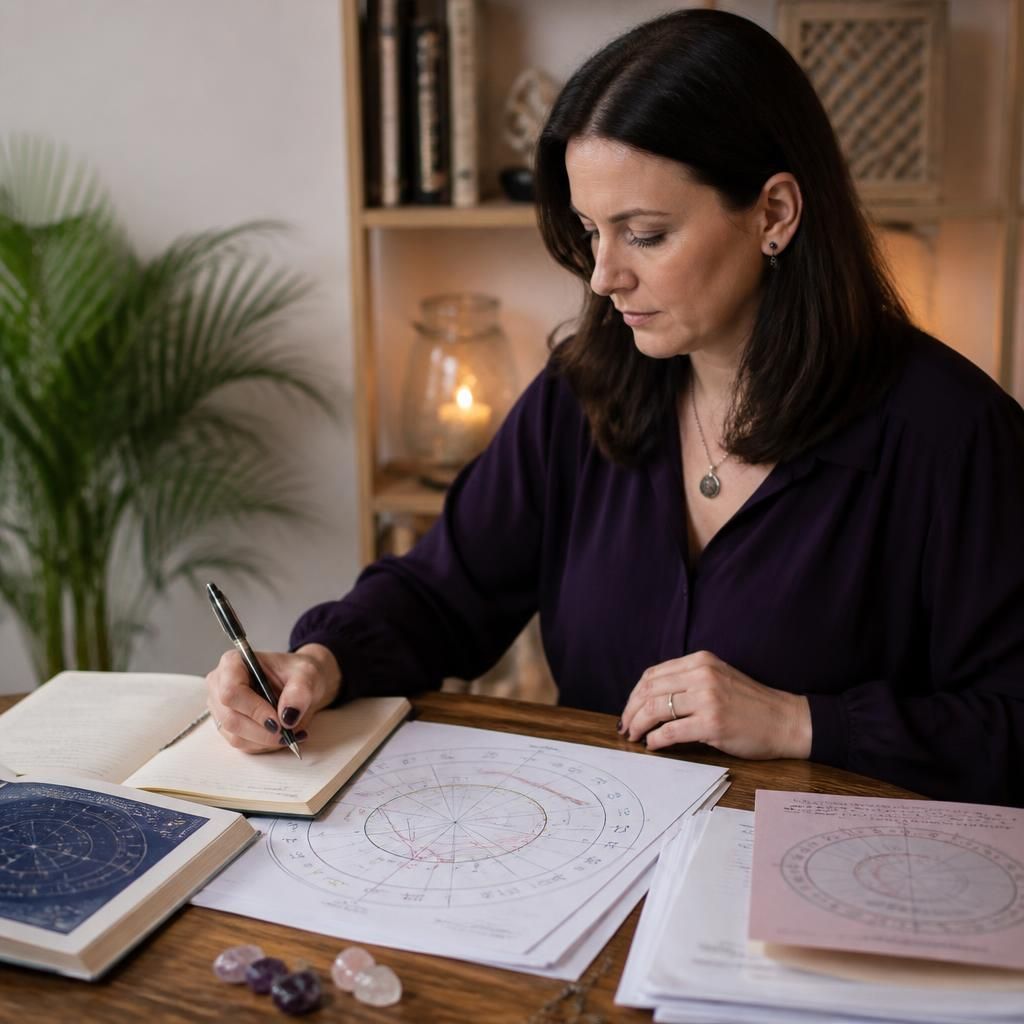
When the birth time is unknown, forecasting can be organised around planetary transits to natal planets rather than chart angles or house cusps. This allows an astrologer to examine broader periods associated with themes such as communication, responsibility, relationships or change, while avoiding claims about a specific life area that depends on the missing time. A careful reading should distinguish between a reliable planetary influence and the less certain date, house or event timing attached to it.