






What information do I need to obtain an accurate birth chart reading?
An accurate birth chart reading requires your full date of birth, exact time of birth and place of birth. The time zone or local time in effect at your birth may also be needed to calculate the chart’s houses and planetary positions correctly.
An accurate birth chart reading depends on two things: reliable birth data and a clear understanding of how that data will be interpreted. The core details establish the chart’s astronomical calculations, while supporting context helps the astrologer avoid administrative errors, resolve uncertainty and focus the reading on the areas most relevant to you.
Before submitting your details, check the original source wherever possible. A birth certificate, hospital record or official family document may help confirm the information, particularly if relatives remember different details. Enter dates in an unambiguous format, such as writing the month as a word, because numerical date formats can be interpreted differently.
The birthplace should be identified precisely enough to distinguish it from nearby towns with the same or a similar name. If the location has changed name, crossed a regional boundary or used a different time standard at the relevant date, mention that if you know it. Historical time-zone rules and daylight-saving changes can affect the calculation, so an astrologer may need to verify how local civil time was recorded at the time of birth.
If any part of the birth information is uncertain, state that clearly rather than presenting an estimate as confirmed. Explain whether the uncertainty concerns a few minutes, a broader period or the date itself. A reading based on an estimated time should be described as such. Some practitioners may discuss chart rectification, which compares significant life events with possible birth times to identify a more plausible time, but this is an interpretive process rather than a replacement for an official record.
It is also useful to provide the practical context for the consultation. You might include:
- the main subjects you want to explore, such as relationships, work, personal development or recurring challenges;
- specific questions, provided they are open enough to allow a detailed interpretation rather than requiring a simple yes-or-no answer;
- important background that affects how a symbol or pattern should be understood; and
- whether you want a broad overview or a closer examination of particular parts of the chart.
Ask which astrological approach will be used if this has not already been explained. Western and Vedic astrology use different conventions, including differences in zodiac calculation and interpretive practice. House systems can also vary within Western astrology. These choices do not alter your recorded birth information, but they can change how placements and life areas are described, so knowing the method makes the reading easier to evaluate.
Your name is generally not required to calculate the planetary positions. It may be requested for identification or booking purposes, but it is separate from the astronomical data used to construct the chart. Share only information that is relevant to the consultation, and consider how personal details will be stored or handled before submitting them by email or another digital method.
Finally, treat the reading as an interpretive service rather than a scientific measurement or guaranteed forecast. Astrological interpretations can offer a framework for reflection on patterns, preferences and possible approaches to personal questions, but they should not replace qualified medical, legal, financial or mental-health advice. Providing accurate data, identifying any uncertainties and setting a focused purpose gives the astrologer the clearest basis for an informed reading.
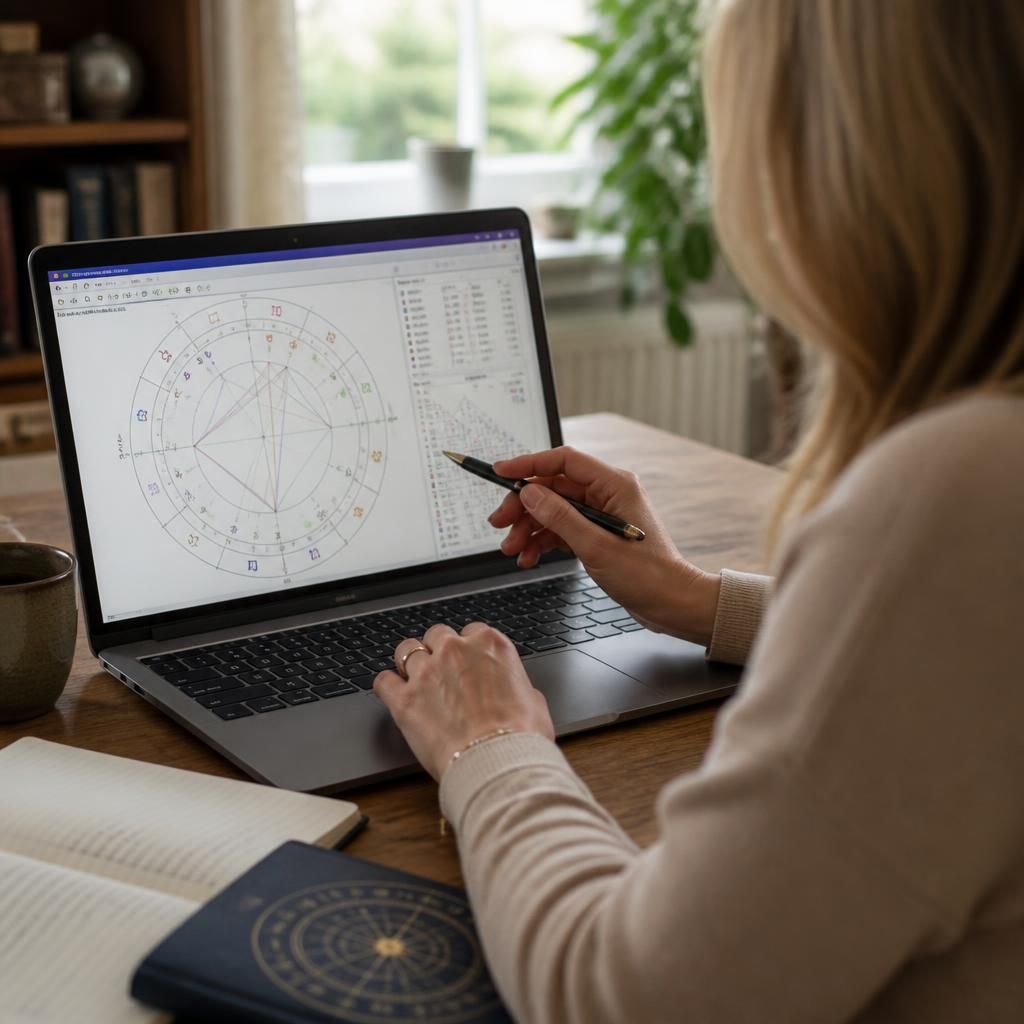
A final chart-checking step can help distinguish a calculation issue from an interpretive difference. Before the reading begins, review the chart summary and confirm that the displayed birth details match the information you supplied. Check the selected zodiac framework and house system as well, since these settings determine how placements and life areas are presented.
If the chart shows an unexpected Ascendant, house cusp or planetary position, ask for the calculation settings to be checked before discussing its meaning. This keeps technical discrepancies separate from the astrologer’s interpretation and provides a clearer basis for evaluating the reading.