


Are tarot card images universal in all readings?
No, tarot card images are not universal across all readings. While many decks share established symbols and card meanings, the artwork, imagery and visual emphasis can vary considerably, so interpretation also depends on the deck used and the reader’s approach.
Tarot has conventions rather than a single required visual standard. A card’s identity is established through its title, position in the spread and traditional correspondences, while the image provides an interpretive framework rather than a fixed picture that must appear in every deck.
Most tarot decks contain 78 cards divided into the Major Arcana and Minor Arcana. The Major Arcana usually presents symbolic scenes associated with broad themes such as choice, change, limitation or renewal. The Minor Arcana is generally organised into four suits, with numbered cards and court cards. These structural features are widely recognised, but the way they are represented can differ substantially.
One important distinction is between fully illustrated numbered cards and decks that use simpler “pip” designs. In a fully illustrated deck, a numbered card may show a situation or interaction that gives the reader visual clues about its possible meaning. In a pip-based deck, the card may display mainly the relevant number of suit symbols, so interpretation relies more heavily on established associations, the surrounding cards and the question being explored.
Images can also vary in cultural, artistic and symbolic emphasis. A deck may use historical, mythological, natural or contemporary imagery. Colours, clothing, landscapes, animals, facial expressions and objects may all carry additional associations. Some decks adapt the symbolism to a particular spiritual tradition or social perspective, whereas others retain a more traditional visual language. These choices can affect which details a reader notices first, without changing the card’s place within the tarot system.
The same image may also be read differently according to its position in a spread. For example, a card representing movement could relate to an immediate action in an “advice” position, an obstacle in a “challenge” position or a developing influence in a “future” position. Its orientation may be considered too: some readers use reversed cards, while others read every card upright and express contrasting possibilities through the spread and the client’s circumstances.
A reader normally combines several layers of information rather than relying on a picture alone:
- Traditional meaning: the card’s commonly recognised themes and associations.
- Visual details: symbols, direction of movement, expressions, colours and relationships within the scene.
- Spread position: the specific role assigned to the card by the layout.
- Neighbouring cards: surrounding cards can qualify, reinforce or redirect an interpretation.
- The question and context: a card may have a different practical application in a relationship, career or personal-development reading.
- Intuitive impressions: the reader may notice an aspect of the image that is especially relevant to the discussion.
This is why two readers can use the same deck and provide different but reasoned interpretations. The difference does not necessarily indicate that one image is correct and the other is incorrect. Tarot interpretation involves applying a symbolic system to a particular question, layout and set of circumstances. A responsible reading should distinguish between established card associations and the reader’s personal or intuitive interpretation.
When choosing a deck for personal study, consider whether the imagery is clear enough for you to engage with, whether the guidebook explains the system consistently and whether the deck’s themes suit your purpose. Comparing several versions of the same card can show which symbols are traditional, which are artistic additions and which meanings depend on the deck’s specific framework. During a phone or email reading, the reader may describe the relevant imagery or refer to the card’s title and position, so understanding the underlying structure remains useful even when you cannot examine the physical card yourself.
Ultimately, tarot images function as symbolic prompts within an organised method. They support reflection and interpretation, but they are not universal illustrations with one compulsory appearance or one automatic conclusion.
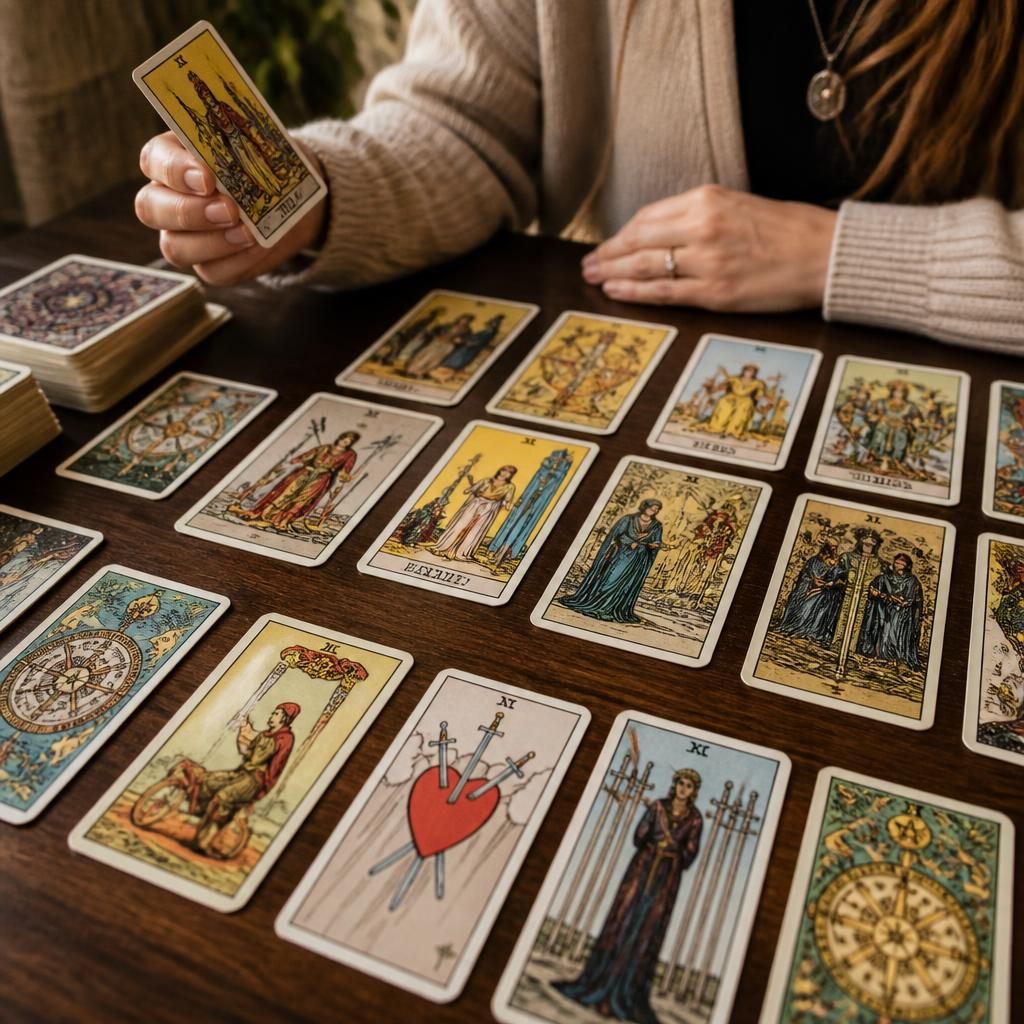
The Rider–Waite–Smith tradition has strongly influenced modern tarot artwork, but it is not a compulsory visual standard. Other established traditions, including Tarot de Marseille and Thoth-based decks, use different artistic systems, symbolism and interpretive emphasis. As a result, the same card name does not guarantee identical imagery or the same balance of meanings across every deck.
This distinction matters when comparing readings. A reader may refer to a card’s recognised tradition while also explaining how the chosen deck modifies or develops that symbolism. When reviewing an image, identify the deck’s system first rather than assuming that a familiar-looking illustration represents the only valid version of the card. The image is best assessed alongside the deck’s stated structure and interpretive method.
Explore a Personalised Tarot Reading
If you would like to explore how tarot symbolism relates to your circumstances, consider arranging a personalised tarot reading with Elizabeth Rose Psychics. You can raise your question and ask the reader to explain how the cards’ imagery informs the interpretation.