




What are the benefits of a clairvoyant reading over traditional advice methods?
A clairvoyant reading offers an intuitive, spiritually focused perspective that may highlight patterns, possibilities and personal feelings which traditional advice methods do not usually address. Rather than replacing practical or professional guidance, it can complement it by encouraging reflection on relationships, career choices and personal growth.
A clairvoyant reading differs from traditional advice because it uses the reader’s claimed intuitive perception—often described as receiving images, impressions or sensations—rather than relying solely on conversation, personal experience, professional training or established evidence. Its main benefit is that it can introduce a distinct reflective viewpoint, while traditional advice remains essential for factual assessment and practical decision-making.
It can reveal perspectives that ordinary discussion may overlook
Friends, relatives and advisers usually respond to the information you provide and interpret it through their own knowledge or experience. A clairvoyant session follows a different process. The practitioner may describe impressions associated with a situation and invite you to consider how, or whether, they relate to your circumstances. This can help you examine assumptions that have become difficult to notice from within a problem.
The usefulness is not necessarily in treating every impression as a prediction. It may instead be in prompting questions such as:
- Which part of the situation is creating the greatest uncertainty?
- Are you making a choice because it reflects your priorities, or because you feel pressured?
- What information or conversation would help you make a sounder decision?
It provides a dedicated and personalised setting
Traditional advice is often shaped by the adviser’s relationship with you, the information they already know and the time available to discuss the issue. A clairvoyant consultation is specifically centred on the concerns you bring to the session. This can make it easier to focus on one subject, explain relevant context and consider several possible interpretations without having to manage another person’s expectations.
Personalisation does not mean that a reading should confirm everything you hope to hear. A responsible session should leave room for uncertainty and allow you to question an interpretation. You remain the person who decides what is relevant and what action, if any, is appropriate.
It may support reflection when a decision is emotionally complicated
Conventional advice often concentrates on facts, risks and likely consequences. Those factors are necessary, but they do not always capture how conflicted, hesitant or motivated a person feels. A clairvoyant reading can provide a structured opportunity to examine those less tangible aspects of a decision. Speaking aloud about an impression or concern may help separate instinct from fear, preference from pressure, and a genuine priority from a temporary reaction.
This reflective benefit is particularly relevant when there is no immediately clear answer. It does not establish which option will occur or remove responsibility for choosing. Instead, it can help you identify the questions that deserve further thought before you act.
It can complement, rather than compete with, established forms of advice
The strongest use of a reading is alongside appropriate practical sources of information. For example, a relationship reading may encourage an honest conversation; it cannot establish another person’s consent or intentions. A career reading may help you clarify what matters to you; it cannot replace research into qualifications, contracts, finances or employment conditions. A reading concerning health should never replace assessment or treatment from a suitably qualified healthcare professional.
Traditional advice has a different evidential basis and should take priority where decisions involve safety, legal obligations, money or health. Clairvoyant insight is best treated as an optional perspective for reflection, not as proof, diagnosis or a guaranteed forecast.
It may help identify useful next questions
One practical advantage is that a session can move an unclear concern into more specific areas for investigation. After a reading, you might decide to check a document, set a personal boundary, seek professional advice, gather more facts or speak directly with someone involved. The value then comes from using the discussion to guide sensible follow-up, rather than from making an immediate decision based only on an intuitive impression.
How to assess whether the approach is suitable
- Choose a reading for reflection and perspective, not certainty about an uncontrollable outcome.
- Keep important decisions grounded in verifiable information and appropriate professional guidance.
- Be cautious of anyone who presents impressions as unquestionable facts or pressures you to take a particular action.
- Do not disclose more personal information than you are comfortable sharing.
- Afterwards, write down the points that were useful and separate them from claims that cannot be checked.
Elizabeth Rose Psychics provides clairvoyant guidance through phone and email readings, giving clients a remote format for considering personal questions. Whether that format is useful depends on what the reader wants from the consultation: a clairvoyant session can add an intuitive framework for self-examination, while traditional advice supplies the evidence, expertise and practical safeguards needed for responsible choices.
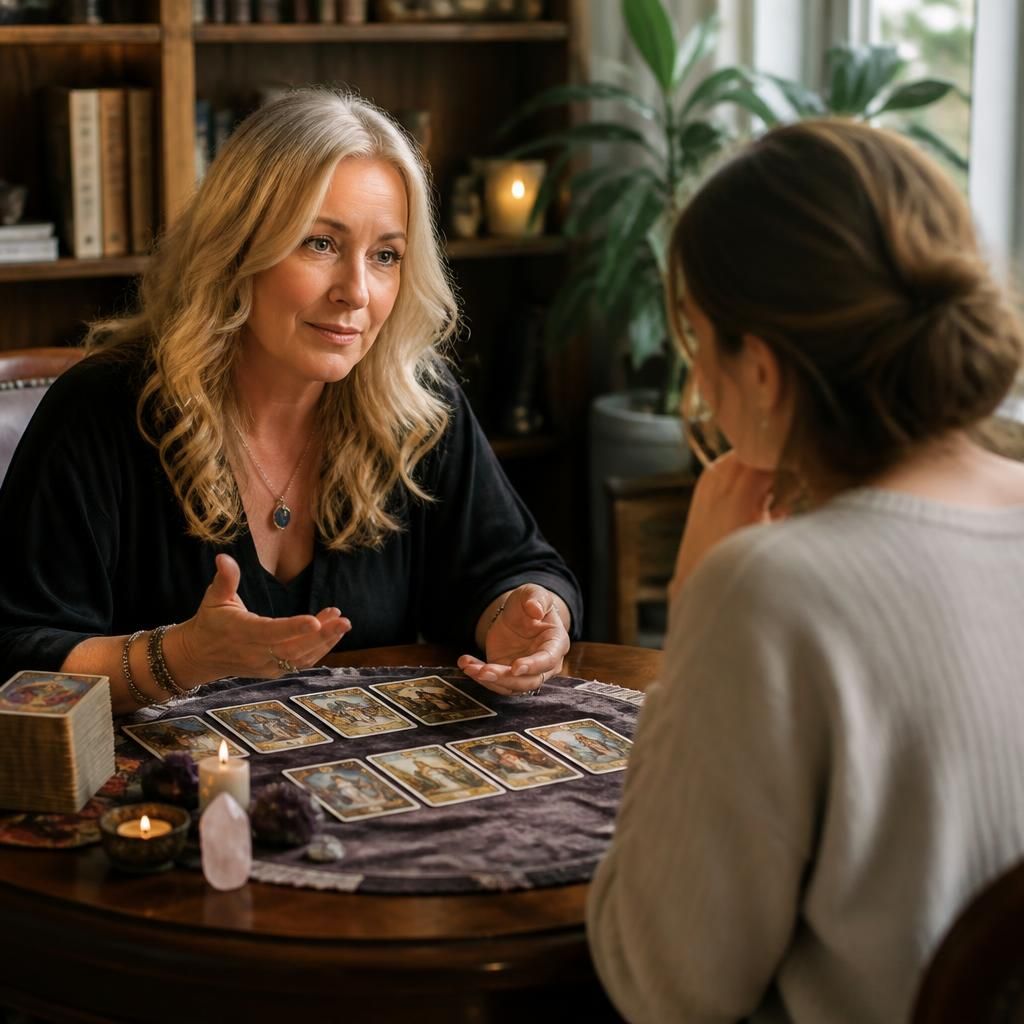
A clairvoyant reading can be useful when the main question concerns meaning rather than procedure. Traditional advice is well suited to questions such as which form to complete, what rule applies or how to assess a practical risk. A clairvoyant consultation may instead explore the personal significance of a situation, including recurring themes, unresolved feelings or the direction in which a person believes they are developing. This can be valuable at an early stage, before a practical decision has been clearly defined. The resulting impressions are subjective and should be treated as material for consideration, not as independently verified information.