






How can I develop my clairvoyance ability?
Developing clairvoyance involves strengthening your ability to notice and interpret mental images, symbols and visual impressions through regular, focused practice. Begin with meditation and observation exercises, record impressions in a journal, and review them calmly over time to distinguish consistent intuitive patterns from imagination or expectation.
Developing clairvoyance ability means learning to recognise internally arising images, colours, symbols or scenes and assess them without immediately treating them as facts. The most reliable approach is not to force visions, but to improve visual awareness, symbolic understanding, recall and discernment through structured exercises and honest evaluation.
Start by establishing a clear intention. Before practising, decide what you are attempting to notice: a visual impression, a symbolic association, information about a person or an image connected with a particular question. Vague aims make it difficult to assess what happened. Keep each exercise focused on one purpose and avoid asking the same question repeatedly in search of a preferred answer.
Practise visual recall. Study a simple object for a short period, then put it out of sight and reconstruct it mentally. Notice its shape, colour, texture, position and distinctive features. When the image fades, rebuild it in sections rather than trying to hold every detail at once. This exercise strengthens your ability to identify which parts of a mental picture are clear and which have been supplied by assumption.
Use controlled image exercises. Place an unfamiliar photograph, card or concealed object where you cannot see it. Without trying to guess its identity, record the first visual qualities that arise, such as a dominant colour, outline, movement or setting. Reveal the item afterwards and compare broad impressions before examining smaller details. The purpose is to test observation and recall, not to produce a correct answer every time.
Learn how symbols operate for you. A bridge, key, bird or doorway may carry a widely recognised association, but its meaning can change according to the question and the surrounding impressions. Build interpretations from several elements rather than assigning a fixed definition to every symbol. Consider the emotional tone, context, repetition and practical relevance of an image before drawing a conclusion.
Separate impressions from interpretation. During a reading or exercise, distinguish between what appeared and what you think it means. For example, “a red door beside water” is an impression; “a major emotional transition is approaching” is an interpretation. Keeping these stages separate reduces the risk of turning an uncertain image into an overly definite prediction.
Develop sensory discrimination. Pay attention to how a genuine-feeling impression differs from ordinary mental activity for you. Some people experience images as vivid pictures, while others receive brief flashes, moving scenes, colours or a strong sense of visual presence. Notice whether an impression arrives spontaneously or follows deliberate imagination, and whether it remains coherent when examined calmly. These observations are personal indicators rather than proof that an image has a supernatural source.
Use feedback carefully. When practising with another person, obtain consent and avoid fishing for information. Share an impression in neutral language, allowing the other person to confirm, reject or clarify it without pressure. Treat feedback as a way to improve communication and interpretation, not as evidence that every image is accurate. Avoid adapting your account after receiving a reaction, as this can make an impression appear more precise than it originally was.
Build discernment alongside sensitivity. Ask whether an impression could have come from something you already knew, expected or feared. Strong emotions, leading questions and a desire for a particular outcome can influence visualisation. Consider ordinary explanations first, especially when an impression concerns health, safety, finances or another high-stakes decision. Clairvoyant practice should not replace medical, legal or financial advice.
Work with a defined practice structure:
- Choose one uncomplicated exercise and one specific objective.
- Set a clear beginning and end so the practice does not become an attempt to interpret every thought.
- Describe impressions in neutral, observable terms before assigning meaning.
- Compare outcomes without selecting only the examples that appear successful.
- Adjust one aspect of the exercise at a time, such as distance, complexity or the type of image used.
Progress is better measured by clearer distinction between perception, imagination and interpretation than by the number of visions experienced. A developing practitioner may become more precise in describing impressions, more willing to acknowledge uncertainty and less inclined to make sweeping claims from limited information.
If visual experiences are distressing, intrusive, difficult to control or present outside intentional practice, pause the exercises and speak with an appropriate healthcare professional. Spiritual practice should remain grounded, consensual and compatible with everyday wellbeing. For additional perspective, a professional clairvoyant reading can demonstrate how an experienced practitioner frames impressions, explains uncertainty and avoids presenting symbolic information as guaranteed fact.
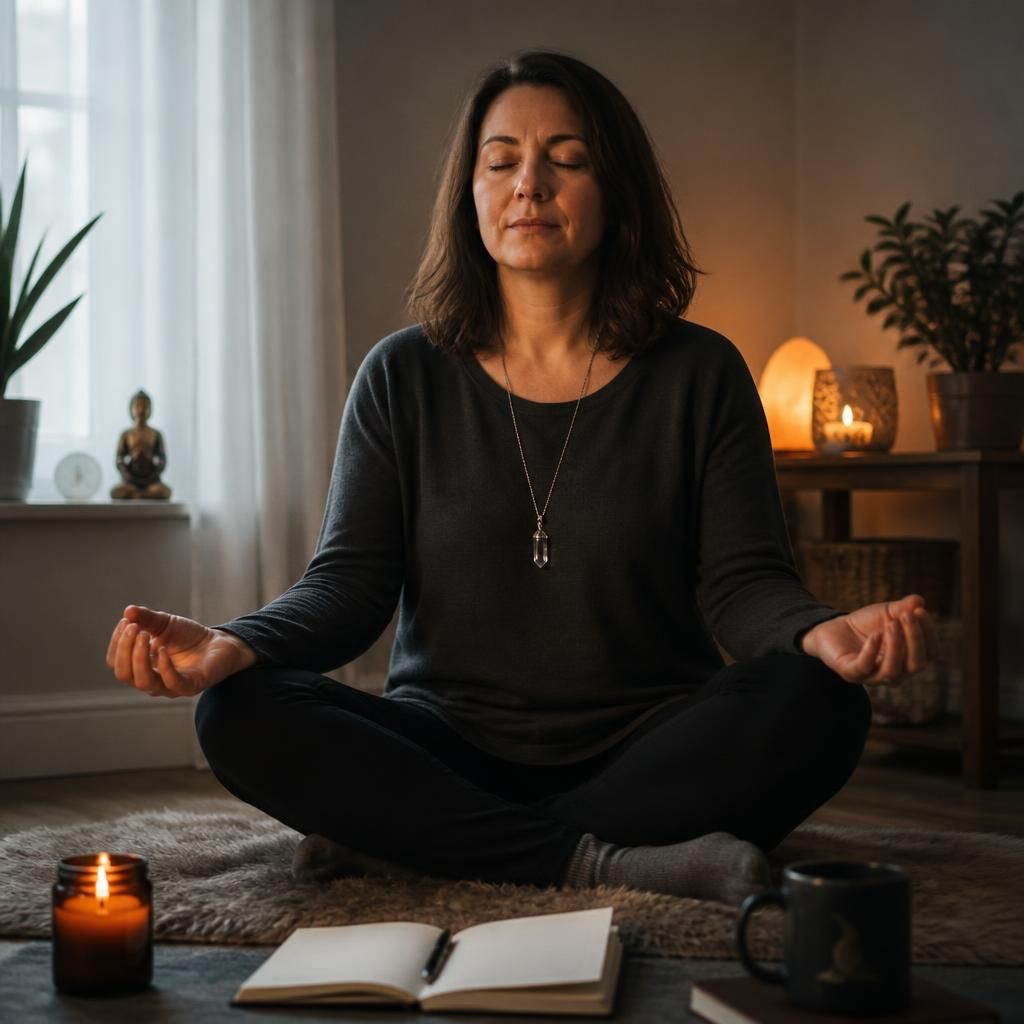
A useful way to develop clairvoyance is to practise receptive visualisation rather than deliberately inventing images. In constructive visualisation, you choose and control the image; in receptive practice, you create a quiet mental focus and observe what changes without directing the content. This distinction helps you identify spontaneous impressions without confusing them with imagination.
Begin by visualising a simple, neutral setting, such as an empty room. Observe its imagined features without adding people, objects or events. If a detail changes or a new image appears, note it mentally and allow it to pass rather than developing it into a story. Afterwards, write down the sequence in plain language and consider whether the detail arose before you consciously expected it. Repeating the same exercise on separate occasions can show whether your impressions follow a consistent pattern.
Keep the practice receptive rather than effortful. Straining to produce an image can make ordinary imagination feel significant, while a relaxed but attentive approach makes it easier to notice the difference between an image you create and one that appears unexpectedly. The aim is improved awareness and discrimination, not a constant stream of visions.