





Can anyone learn the practice of psychic seeing, and what steps are involved?
Many people can explore psychic seeing as a personal intuitive practice, although the clarity and form of their experiences may differ. Begin by grounding yourself, practise focused observation and visualisation, record impressions in a journal, and review them critically over time to distinguish consistent intuition from imagination or expectation.
Yes. Psychic seeing can be learned as a structured intuitive practice, although people differ in how they perceive information and how readily they recognise meaningful impressions. Some experience visual imagery, while others notice colours, shapes, scenes, symbols or brief mental pictures. Learning the practice involves developing attention, testing impressions against context, understanding personal symbolism and maintaining clear boundaries between intuition, assumption and imagination.
Understand what psychic seeing involves. Psychic seeing, often associated with clairvoyance, refers to receiving or interpreting information through inner visual perception rather than ordinary sight. An impression may appear as a distinct image, a symbolic object, a change in perceived colour or a short sequence resembling a memory. It does not necessarily arrive as a complete prediction. It may instead highlight an emotional theme, a person’s circumstances or a possible direction.
The first step is to treat the experience as an impression rather than an unquestionable fact. This attitude allows you to remain curious without assigning certainty to every image. It also makes it easier to compare what you perceive with what later becomes known, rather than unconsciously changing your interpretation to fit an outcome.
Learn your personal visual language. Symbols do not have one universal meaning. A doorway might suggest an opportunity to one person and uncertainty to another, depending on personal experience, cultural background and the circumstances of the reading. Create a reference list of recurring images and note the meaning each symbol seems to take on for you. Keep the interpretation provisional until a pattern develops.
Pay attention to the qualities of an image as well as its subject. Consider whether it is sharp or indistinct, still or moving, near or distant, warm or cold in tone, and accompanied by a particular feeling or physical response. These details can help distinguish a recurring personal signal from a random thought, but they should not be treated as objective proof.
Develop concentration in stages. Rather than trying to receive complex information immediately, work with simple exercises. Study an ordinary object, then look away and reconstruct its shape, texture and proportions mentally. Move on to describing an unfamiliar photograph or scene without making claims about the people involved. Later, practise with neutral subjects where some form of feedback can be obtained. The purpose is to improve observation and recall, not to force an image to appear.
Short, regular sessions are generally more useful than intense attempts that encourage fatigue or wishful thinking. Finish an exercise when concentration becomes strained. A tired mind can produce vivid but unreliable associations, particularly when the practitioner is eager for a specific answer.
Separate perception from interpretation. When an image appears, describe it in two stages. First state the observable impression: for example, “a narrow path beside water” or “a red circular object”. Then consider possible meanings. This separation prevents an immediate interpretation from becoming confused with what was actually perceived. It also gives the person receiving the reading an opportunity to identify relevant context without being led towards a fixed conclusion.
Use neutral language when an impression is uncertain. Phrases such as “this may suggest” or “I am noticing a possible association with” are more accurate than presenting a symbolic interpretation as established fact. A responsible practice leaves room for clarification and acknowledges when an impression is incomplete.
Use feedback carefully. Feedback helps identify which impressions are consistent and which are shaped by expectation. It should be gathered without fishing for information or encouraging someone to confirm a statement simply because it sounds plausible. Ask open, limited questions only when clarification is appropriate, and accept that some impressions will remain unverified.
Reviewing outcomes is most useful when it includes both accurate and inaccurate impressions. Recording only apparent successes creates confirmation bias, in which matching details are remembered more strongly than details that did not fit. Look for repeated patterns across different exercises rather than judging ability from one striking image.
Practise with clear boundaries. Decide in advance what subjects are appropriate for your practice and what information should not be claimed. Psychic seeing should not be used to diagnose illness, replace medical or mental health care, determine legal decisions or make high-risk financial choices. Where a concern involves health, safety or another specialist matter, qualified professional advice remains the appropriate source of guidance.
Consent is also important when practising with other people. Do not attempt to interpret someone’s private circumstances without permission, and do not use a reading to pressure them into a decision. Avoid statements that create fear, dependency or the impression that only one reader can provide answers. Ethical boundaries protect both the practitioner and the person seeking insight.
Learn to manage uncertainty. Not every visual impression is psychic information. Images can arise from memory, emotional associations, recent media, dreams or expectations. Before accepting an interpretation, ask:
- Did the image arrive spontaneously, or was it produced by actively searching for an answer?
- Is it connected with the stated subject, or could it reflect a personal concern?
- Has a similar image appeared repeatedly in comparable situations?
- What evidence would support or challenge the interpretation?
- Am I making a definite claim from limited information?
These questions do not prove or disprove psychic perception. They provide a disciplined way to assess impressions and reduce the risk of mistaking confidence for accuracy.
Seek informed practice and supervision. Learning from an experienced practitioner can help with symbolic interpretation, communication and ethical conduct. Choose guidance that encourages independent judgement, explains uncertainty and welcomes questions. Be cautious of anyone who claims guaranteed accuracy, demands unquestioning belief or uses alarming predictions to encourage repeated consultations.
Practice groups can provide useful feedback, but group agreement is not the same as verification. A supportive group should allow different interpretations and distinguish personal belief from evidence. Comparing impressions after an exercise, rather than influencing one another beforehand, produces more meaningful feedback.
Recognise when to pause. Stop practising if the experience becomes distressing, disrupts sleep, encourages compulsive checking or makes ordinary decisions feel unsafe without a psychic answer. Psychic seeing should remain an optional reflective practice, not a requirement for managing everyday life. If unusual perceptions cause significant distress or affect functioning, discuss them with an appropriate health professional.
Progress is best measured by clearer observation, more precise communication, better awareness of personal bias and a more responsible approach to uncertainty. Whether someone eventually experiences vivid clairvoyant imagery or mainly develops symbolic and intuitive awareness, the essential steps are the same: learn the vocabulary of the experience, practise in controlled situations, evaluate impressions honestly and keep ethical limits in place.
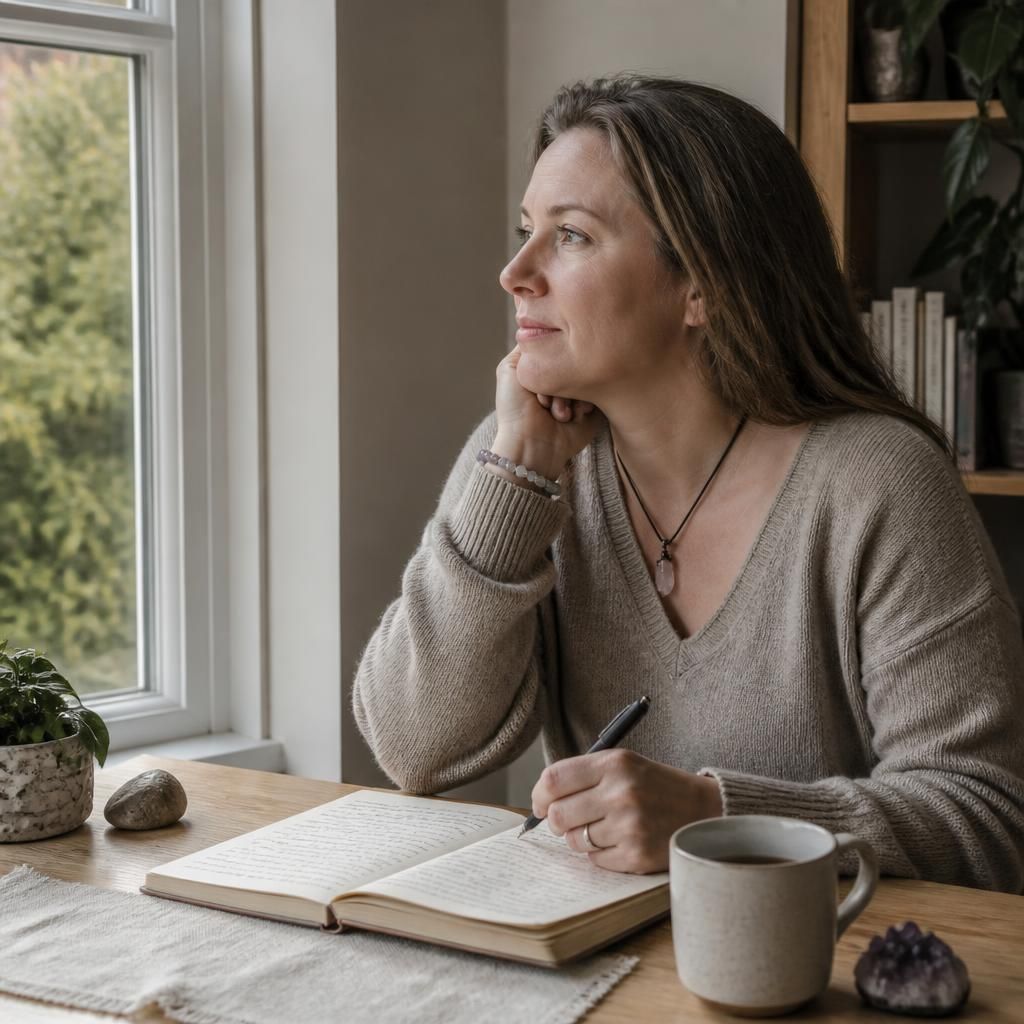
One practical way to learn psychic seeing is to establish a personal baseline before interpreting any impressions. Spend time noting how you normally visualise, dream, remember places and respond to emotionally significant images. This gives you a clearer reference point for recognising changes in the quality or spontaneity of your inner imagery, rather than labelling every vivid thought as clairvoyance.
Record the circumstances surrounding each experience, including your state of mind, the subject being considered and whether the image appeared unexpectedly or followed deliberate visualisation. Over time, this information can reveal whether certain impressions occur consistently in relevant situations or mainly reflect memory, mood or expectation. The aim is not to force a conclusion, but to learn how your own imaginative and intuitive processes differ.