


How does a phone astrology reading differ from other types of readings?
A phone astrology reading interprets your birth chart and planetary influences, whereas tarot uses card symbolism, clairvoyance relies on intuitive impressions, and mediumship focuses on communication with spirits. The phone format affects how the reading is delivered, not the distinct method or source of insight used.
The main difference is the framework used to reach an interpretation. A phone astrology reading is structured around a person’s birth details and the positions of celestial bodies at particular times. Other readings may instead work from a card spread, the reader’s intuitive perceptions, or impressions associated with a person who has died. Each approach can address personal questions, but the type of information considered and the way conclusions are formed are different.
Astrology uses a time-based system. The reader normally considers the date, place and, where available, exact time of birth to construct a natal chart. This chart is then examined for patterns involving the Sun, Moon, planets, signs and houses. Current or future planetary movements may also be compared with the natal chart to discuss periods of emphasis, change or reflection. The interpretation is therefore connected to a defined set of birth and astronomical data rather than being based solely on what arises during the conversation.
This gives astrology a particular strength when the question involves long-term patterns or timing. A reading may explore recurring relationship tendencies, approaches to work, personal priorities or the themes associated with a forthcoming period. It is not a guarantee that a specific event will happen. Astrology is better understood as an interpretive framework that may help someone consider tendencies, choices and possible developments.
Tarot readings use symbolic cards as their primary reference point. The cards selected in a spread are interpreted according to their imagery, traditional meanings, position and relationship to the other cards. The layout can be tailored to a question, such as the factors affecting a decision or the dynamics within a relationship. Unlike a natal chart, a tarot spread does not require a precise birth time and is usually centred on the circumstances and concerns presented for the reading.
Tarot can be useful for examining a situation from several angles, including influences that may be overlooked, competing priorities and the likely direction of a choice if current conditions remain similar. Its interpretation is generally more responsive to the immediate question, whereas astrology can provide a wider background of personality patterns and recurring cycles.
Clairvoyant readings are based on intuitive impressions. A clairvoyant reader may describe images, feelings, symbols or other perceptions that arise while focusing on the client and their question. The method does not depend on calculating a birth chart or laying out cards. The information may be less tied to a formal system and more dependent on the impressions that emerge during the consultation.
Mediumship has a different purpose again. A medium focuses on perceived communication with spirits, often in connection with someone who has died. The discussion may concern memories, personality traits or messages associated with that person rather than planetary patterns, practical decision-making or a conventional forecast. Mediumship should not be treated as a substitute for professional support when someone is dealing with bereavement, health concerns or another serious difficulty.
The approaches also differ in how personal information is used. Astrology usually needs factual birth information before the interpretation can begin. Tarot may need only a clear question and some context. Clairvoyant and medium readings may involve less structured information at the outset, with the reader working from impressions during the call. Providing context can still help any reader understand what the client wants to examine, but it does not change the underlying method.
The nature of the questions can help determine which type of reading is most suitable:
- Choose astrology when you want to examine birth-chart patterns, relationship compatibility, personal tendencies or periods of transition through a time-based system.
- Choose tarot when you want to reflect on a specific situation, decision or set of possible directions using symbolic prompts.
- Consider clairvoyance when you are seeking intuitive impressions about a concern and do not want the discussion to depend on a chart or card spread.
- Consider mediumship when your main focus is a perceived connection with someone who has died, rather than a forecast or analysis of personal traits.
A phone astrology reading also differs in the way the conversation may develop. Because the chart provides an established reference, the reader can move between broad themes and specific planetary relationships while relating them to the client’s questions. The consultation may therefore feel analytical and cumulative: one chart factor is considered alongside another rather than interpreted in isolation. A tarot, clairvoyant or medium reading may be more dependent on the sequence of the spread or on impressions that develop during the discussion.
No method provides a substitute for qualified medical, legal, financial or mental-health advice. Astrology and other spiritual readings are best used for reflection and personal exploration, with important decisions considered alongside reliable evidence, professional guidance and the client’s own judgement.
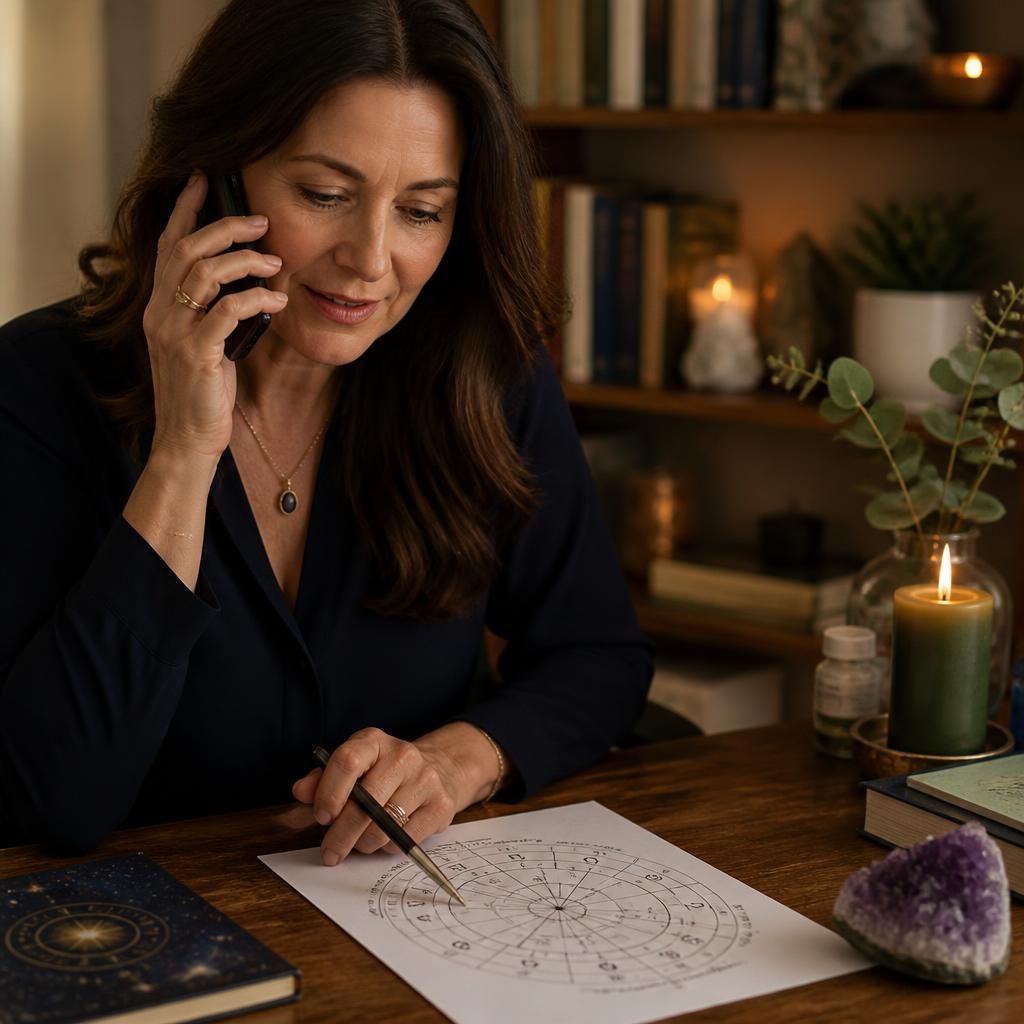
A phone astrology reading is more personalised than a general horoscope because it relates the interpretation to one individual’s birth chart rather than to a broad sun-sign category. This distinction helps explain why astrology can examine recurring themes and periods of change in a way that a short, general forecast cannot.
The phone format allows that interpretation to be discussed directly, with the reader explaining how the relevant chart factors relate to the question being asked. The result is an individual chart-based discussion, rather than a one-size-fits-all horoscope.