






How does Vedic Astrology differ from Western Astrology?
Vedic Astrology and Western Astrology use different zodiac systems and interpret birth charts through distinct traditions. Vedic Astrology typically uses the sidereal zodiac, aligned with the constellations, and places greater emphasis on the Moon, lunar mansions ( nakshatras), planetary periods and predictive timing, whereas Western Astrology generally uses the tropical zodiac, aligned with the seasons.
Vedic and Western Astrology differ mainly in their interpretive frameworks, chart techniques and aims. Although both use a person’s birth details to examine planetary symbolism, Vedic Astrology tends to follow a more structured, predictive and duty-focused system, while Western Astrology more often explores psychological patterns, identity and personal development.
Different historical traditions
Vedic Astrology, traditionally known as Jyotisha, developed within the wider intellectual and spiritual traditions of the Indian subcontinent. It is closely associated with ideas of karma, life purpose, duty and the consequences of past actions. Western Astrology developed through a combination of Mesopotamian, Hellenistic, medieval and modern European traditions. Contemporary Western practice includes psychological, humanistic, traditional and evolutionary approaches, so interpretations can vary considerably between astrologers.
This difference in background affects the questions each system commonly asks. A Vedic reading may examine duty, life direction, marriage, professional responsibility and the periods in which particular themes are likely to become prominent. A Western reading may focus more strongly on motivation, emotional habits, self-expression, relationship dynamics and the ways a person can respond to recurring challenges.
Chart structure and interpretation
Vedic charts are commonly presented in a fixed geometric layout, such as the North Indian or South Indian style. The visual format differs, but the underlying purpose is to organise signs, houses and planets so that particular combinations can be assessed. Western charts are usually circular, making it easier to see angular relationships between planets and the division of the chart into houses.
House calculation can also differ. Many Vedic astrologers use whole-sign houses, in which an entire sign occupies each house, although other house approaches are used. Western astrologers may use systems such as Placidus, Equal House or Whole Sign. Consequently, the same birth details can place a planet in a different house depending on the tradition and calculation method selected.
Vedic interpretation often gives substantial attention to yogas, which are combinations of planets, signs and houses associated with particular tendencies or life themes. It also uses divisional charts, known as vargas, to investigate specific areas such as marriage, career or spiritual development in greater detail. Western Astrology generally relies more heavily on the natal chart as a single integrated map, supported by aspects, house placements and planetary condition.
Different approaches to planetary relationships
Both traditions assess relationships between planets, but they do not always calculate or prioritise them in the same way. Western Astrology commonly emphasises angular aspects such as conjunctions, oppositions, squares, trines and sextiles. These describe the geometric distance between planets and are often interpreted as forms of ease, tension or integration within the personality.
Vedic Astrology uses its own aspect principles, including graha drishti, or planetary aspect. Certain planets are given additional aspect patterns, and the meaning of an aspect is considered alongside rulership, house placement, dignity and relevant combinations. This can produce a different interpretation of the same planetary relationship, even when both astrologers are examining the same birth moment.
Different use of signs, planets and chart factors
Vedic practice traditionally works with nine principal planetary influences, including the ascending and descending lunar nodes, known as Rahu and Ketu. The outer planets are not always given the same central role as they are in modern Western Astrology. Western practitioners commonly include Uranus, Neptune and Pluto, particularly when interpreting generational patterns, transformation and psychological change.
Vedic Astrology also places importance on planetary strength, rulership, exaltation, debilitation and functional benefic or malefic roles within the individual chart. Western Astrology may consider similar conditions, but modern interpretations often give greater weight to symbolism, personal meaning and the way a person consciously works with a placement.
Remedial practice and personal agency
A further distinction is the use of remedial measures. Some Vedic traditions may recommend practices intended to support constructive engagement with difficult chart factors, such as mantras, charitable acts, devotional observances or other culturally specific measures. These recommendations are not universal and should be considered within their spiritual and cultural context.
Western Astrology generally concentrates on awareness and choice rather than formal remedies. A challenging placement may be discussed as a pattern to understand and manage, rather than as something requiring a prescribed spiritual response. Neither approach removes personal responsibility; a chart is generally treated as a framework for reflection, not a substitute for practical judgement.
Which approach is more suitable?
The more suitable system depends on the type of guidance sought and the practitioner’s method. Vedic Astrology may appeal to someone interested in karma, life duties, structured chart analysis, specific combinations and a detailed account of how life themes may unfold. Western Astrology may be preferable for someone seeking psychological insight, relationship reflection, identity work or a contemporary exploration of personal development.
It is also important to ask an astrologer which calculation methods they use before comparing interpretations. Birth time accuracy, house systems, ayanamsha choices, chart format and the astrologer’s training can all affect the result. A Vedic or Western birth chart reading is most useful when its terminology and assumptions are explained clearly, allowing the reader to distinguish traditional symbolism from practical advice and make their own informed decisions.
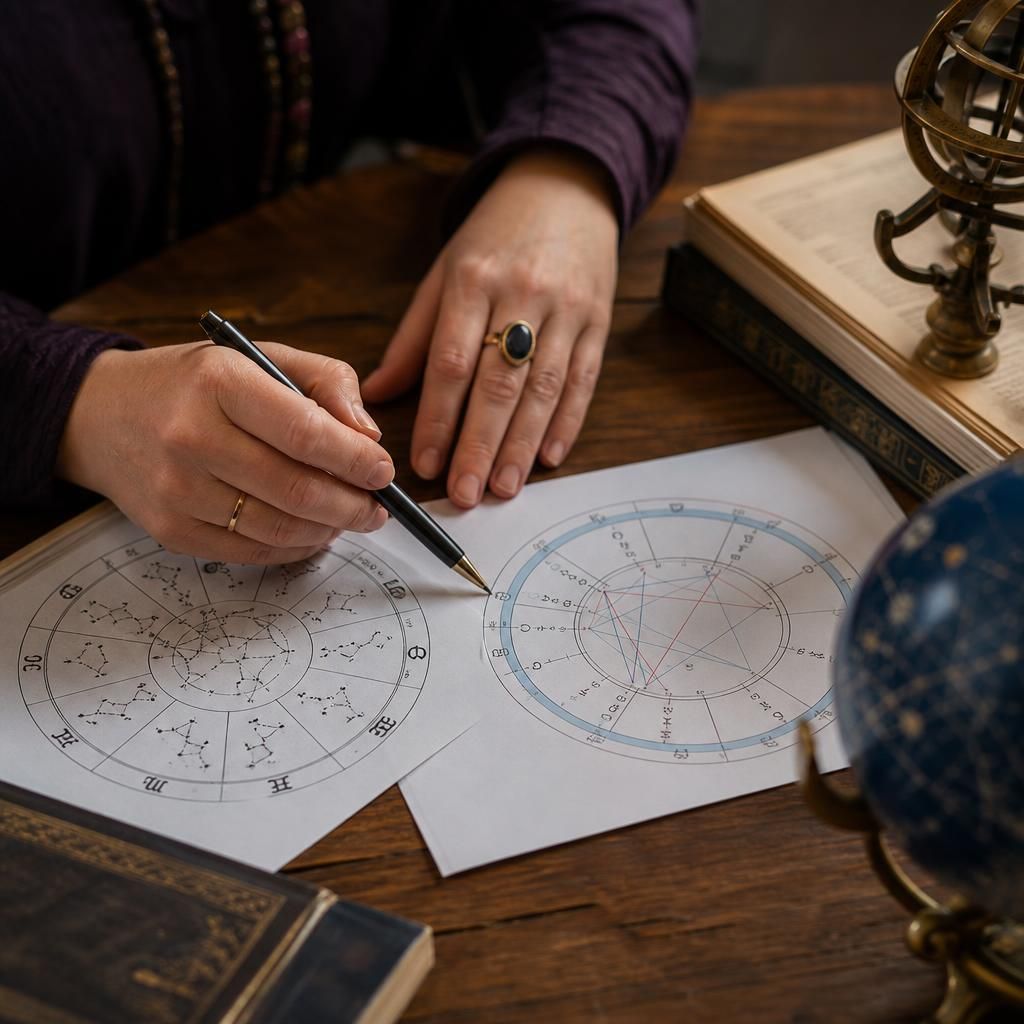
A key reason Vedic and Western charts can assign different zodiac signs to the same birth moment is the Earth’s axial precession. Over long periods, this gradual change in the orientation of the Earth’s axis shifts the apparent relationship between the zodiac and the seasons. Western Astrology generally retains the tropical zodiac, which anchors the signs to seasonal points. Vedic Astrology generally applies a sidereal framework, using an ayanamsha to account for the zodiac’s changing alignment with the constellations.
This distinction affects the position of the Sun, Moon and planets in a chart, so a person may receive different sign placements under the two systems. The difference is not simply a change in interpretation; it begins with the astronomical reference point used for calculation. Comparing charts is therefore meaningful only when the zodiac type, ayanamsha and calculation method have been identified.
Explore Vedic Astrology with a Personal Birth Chart Reading
To explore how Vedic Astrology applies to your own birth details, consider arranging a personal Vedic birth chart reading with Elizabeth Rose Psychics. Use the consultation to ask which calculation methods are being applied and how the interpretation relates to your specific question.