


How do you ensure the accuracy of phone psychic readings?
Phone psychic reading accuracy cannot be guaranteed or measured like a factual prediction. Elizabeth Rose Psychics approaches each consultation as a personalised, empathetic interpretation, drawing on clairvoyance, mediumship, tarot or astrology according to the reading while keeping the guidance relevant to the client’s questions and circumstances.
Accuracy in a phone psychic reading is best assessed by how clearly and consistently the interpretation relates to the client’s question, rather than by treating it as a guaranteed forecast. Psychic guidance is interpretative: its value depends on the information discussed, the method used, the reader’s judgement and the way the client applies what is shared.
A careful reading should distinguish between an impression, an interpretation and an established fact. This is particularly important when discussing future events. Circumstances can change, and a prediction may describe a possibility rather than a fixed outcome. A responsible reader therefore avoids presenting uncertain information as definite, and does not use confidence or dramatic language as a substitute for clarity.
Several factors help determine whether a phone reading is useful and credible:
- Relevance: The guidance should address the client’s stated concern rather than rely on unrelated or overly general observations.
- Specificity: Useful interpretations explain how an impression relates to the situation. Vague statements that could apply to almost anyone are harder to assess meaningfully.
- Consistency: The main themes should remain coherent throughout the consultation. If the interpretation changes, the reader should explain why new information has altered the perspective.
- Transparency: Uncertainty should be acknowledged. A reader should not claim certainty about details that cannot reasonably be established during a spiritual consultation.
- Client relevance: The guidance should take account of the question, circumstances and priorities the client has shared, while avoiding assumptions presented as evidence.
The telephone format does not provide visual information, so the reading should not depend on observing facial expressions, clothing or surroundings. At the same time, voice, pauses and the wording of a question can influence how a conversation develops. Clients can improve the clarity of the session by deciding what they want to explore beforehand and answering questions accurately without supplying more information than feels appropriate.
Open questions generally produce more informative guidance than questions designed to confirm a hoped-for answer. For example, asking “What influences should I consider in this relationship?” leaves room for interpretation, whereas asking “Will this person definitely contact me next week?” demands a level of precision that a psychic reading cannot reliably establish. Questions about choices, patterns and possible influences are usually more practical than requests for an unchangeable outcome.
During a consultation, clients can assess the quality of the process by noting whether the reader:
- listens carefully to the question;
- keeps the interpretation connected to the subject being discussed;
- separates spiritual impressions from information supplied by the client;
- allows the client to disagree or ask for clarification;
- avoids pressure to accept an interpretation or make an immediate decision;
- handles sensitive subjects with appropriate care and restraint.
It is also useful to review a reading accurately afterwards. Write down the main points soon after the call, including what was stated as a possibility and what was stated more cautiously. This reduces the risk of memory changing over time or broad comments appearing more precise in hindsight. Revisit the notes later and consider whether the guidance was genuinely relevant, rather than counting every loosely similar event as a prediction fulfilled.
Accuracy should not be confused with certainty, detail or a reader’s ability to sound persuasive. A highly specific statement can still be wrong, while a broader interpretation may help a client recognise a pattern or consider an option. Elizabeth Rose Psychics frames phone consultations as personalised guidance using the approach most relevant to the reading, so clients should treat the information as one perspective to reflect on rather than as proof of what must happen.
For decisions involving health, safety, law, money or significant personal risk, psychic guidance should not replace qualified professional advice or the client’s own informed judgement. The most responsible use of a phone psychic reading is to use it as a reflective tool: compare the interpretation with known facts, consider alternative explanations and retain control over any decision that follows.
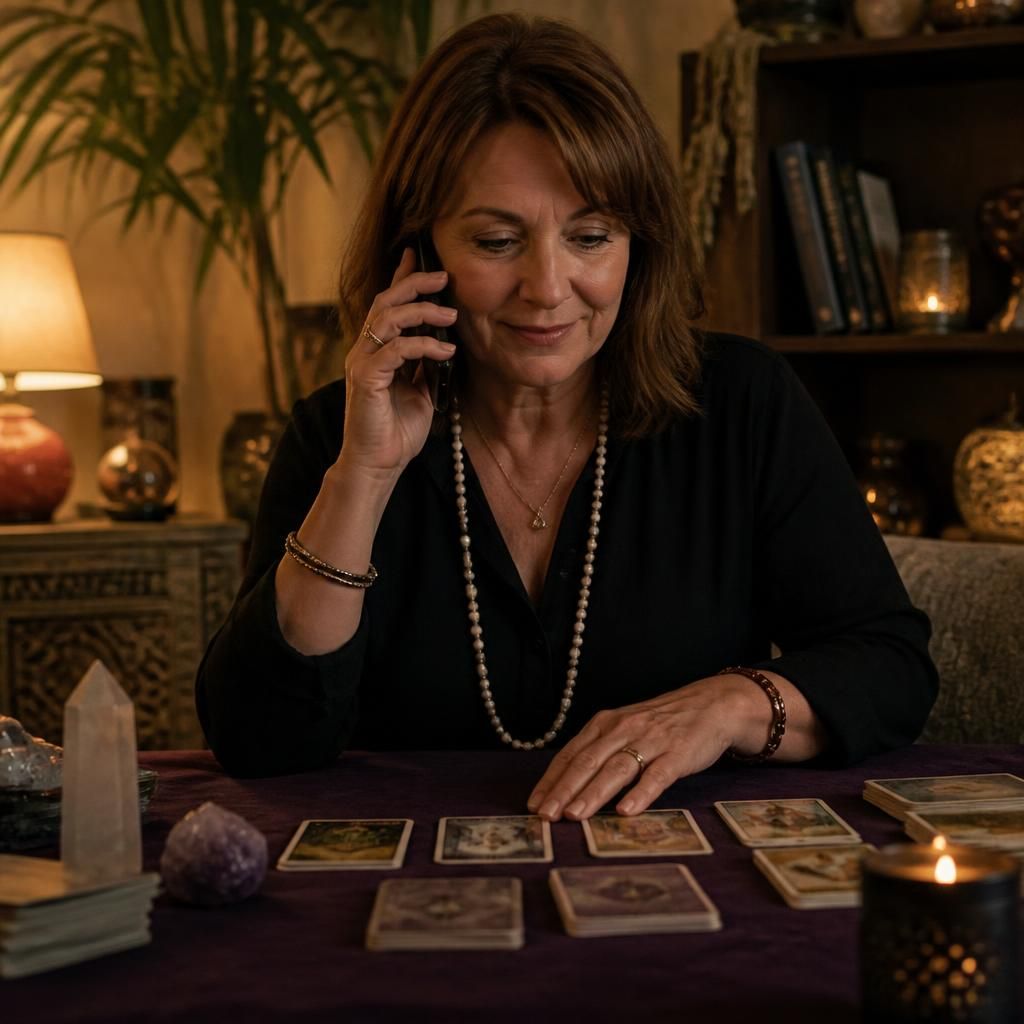
The meaning of “accuracy” varies according to the reading method used. Clairvoyant impressions are interpreted as perceptions, tarot cards as symbolic patterns, astrology through chart-based influences, and mediumship as an attempt to interpret communication associated with a deceased person. These approaches should not be assessed as though they produce the same type of evidence.
A more useful review considers whether the reader explains the method being used, keeps its limitations clear and connects the interpretation to the client’s stated question. This gives the client a fair basis for judging the reading without treating symbolism, spiritual impressions or possible future influences as independently verified facts.