


How does a love fortune teller use tarot cards in readings?
A love fortune teller uses tarot cards as a structured tool for exploring relationship dynamics, romantic questions and possible influences on future choices. The reader interprets the selected cards, their positions and connections to provide guidance rather than a guaranteed prediction.
A love fortune teller uses tarot as a symbolic system for examining romantic circumstances, emotional patterns and potential choices. Each card contributes a theme, while the spread places that theme in a specific context, such as the querent’s feelings, the other person’s behaviour, an obstacle or a possible direction. The reading is therefore an interpretive discussion rather than a fixed verdict about a relationship’s future.
The reading begins with a focused question. Broad questions such as “Will I find love?” can produce general material. A more precise question gives the cards a clearer subject, for example:
- What should I understand about the current dynamic between us?
- What may be influencing communication in this relationship?
- What do I need to consider before deciding whether to continue?
- How can I approach a new relationship more constructively?
A reader may also ask for relevant context, such as whether the people involved are dating, separated, considering reconciliation or getting to know one another. This does not determine the cards; it helps distinguish a meaningful interpretation from one that is too general.
Card selection and spread positions create the framework. Cards may be selected by the client, by the reader, or through a combination of the two. The layout then assigns each card a role. A simple relationship spread might consider the client’s position, the other person’s apparent position, the central dynamic, the main challenge and a sensible next step. Larger spreads can examine background influences, communication, expectations and developing possibilities in greater detail.
The position matters as much as the card itself. A card associated with withdrawal could suggest a person’s present emotional state in one position, but indicate a recommended boundary in another. A card associated with change might describe an unstable phase, a necessary adjustment or the effect of an external circumstance. This is why tarot interpretation is not based on reading a card in isolation or assigning one permanent meaning to it.
The four suits help identify the type of relationship issue involved.
- Cups are commonly linked with feelings, affection, emotional exchange and sensitivity.
- Swords often relate to thoughts, communication, disagreements, decisions and mental tension.
- Wands may point towards attraction, enthusiasm, initiative, confidence and personal drive.
- Pentacles can draw attention to practical commitments, stability, shared responsibilities and the realities of building a life together.
These associations are not rigid rules. For example, a practical card in a romantic spread may raise questions about security or shared plans, while a card from the Swords suit may indicate the need for a direct conversation rather than a lack of feeling.
The Major and Minor Arcana provide different levels of emphasis. Major Arcana cards are often interpreted as significant themes, turning points or lessons that may shape the wider situation. Minor Arcana cards tend to describe day-to-day behaviour, reactions and circumstances. A spread containing several Major Arcana cards may prompt discussion about an important period of personal development, whereas a spread dominated by Minor Arcana may focus more closely on communication, habits and immediate choices.
Numbered and court cards add detail about behaviour and roles. Number cards can suggest progression, repetition, balance or strain within a situation. Court cards may represent a person, an attitude or a way of behaving. A Queen, for instance, does not necessarily identify a particular woman; she may describe an emotionally perceptive or self-possessed approach. Likewise, a Knight might reflect pursuit, movement or inconsistency depending on the suit and surrounding cards.
Reversed cards are handled according to the reader’s method. Some readers use an inverted card to explore blocked, delayed or inwardly expressed energy. Others keep all cards upright and identify nuance through the spread and surrounding symbolism. A reversed card is not automatically negative. In a relationship reading, it might suggest that an issue is being avoided, that a feeling is difficult to express, or that a pattern is beginning to change.
Connections between cards are used to build a coherent interpretation. Repeated suits can highlight a dominant concern, such as emotional uncertainty or practical incompatibility. Several cards with similar imagery may reinforce a theme, while contrasting cards can expose a difference between what someone feels and how they act. The reader may also compare cards in related positions, such as the client’s expectations and the relationship’s observable pattern.
For example, a spread might show strong emotional cards alongside cards associated with hesitation and unclear communication. A responsible interpretation would not conclude that love is guaranteed or impossible. It might instead identify genuine feeling alongside a need for honest discussion, clearer boundaries or more consistent behaviour. The value lies in examining the combination and relating it to the client’s circumstances.
Tarot can also be used to explore choices rather than predict a single outcome. A reader may compare the considerations surrounding two possible approaches, such as initiating a conversation or taking time to reflect. The cards can be treated as prompts for examining likely pressures, personal priorities and potential consequences. This keeps decision-making with the client, who can assess the reading alongside direct evidence, consent, communication and personal safety.
Timing requires particular care. Tarot may be used to discuss stages, momentum or factors that could affect development, but cards do not provide a dependable calendar. A reading should not be used to justify waiting indefinitely for someone, overlooking harmful conduct or treating another person’s private thoughts as established fact. Claims about another person’s feelings remain interpretations, not substitutes for what that person communicates or does.
In a phone consultation, the reader works from the spoken question and the conversation around it while explaining the cards and their positions aloud. The client can ask for a term or interpretation to be clarified and can relate the symbolism to the situation being discussed. With email readings, the same elements may be presented in written form, allowing the client to review the card meanings and practical reflections afterwards.
A well-conducted love tarot reading should distinguish symbolism from evidence, possibilities from certainties and guidance from instruction. It can help organise a complicated romantic situation, identify patterns worth examining and formulate more useful questions. The client remains responsible for decisions about contact, commitment, boundaries and personal wellbeing.
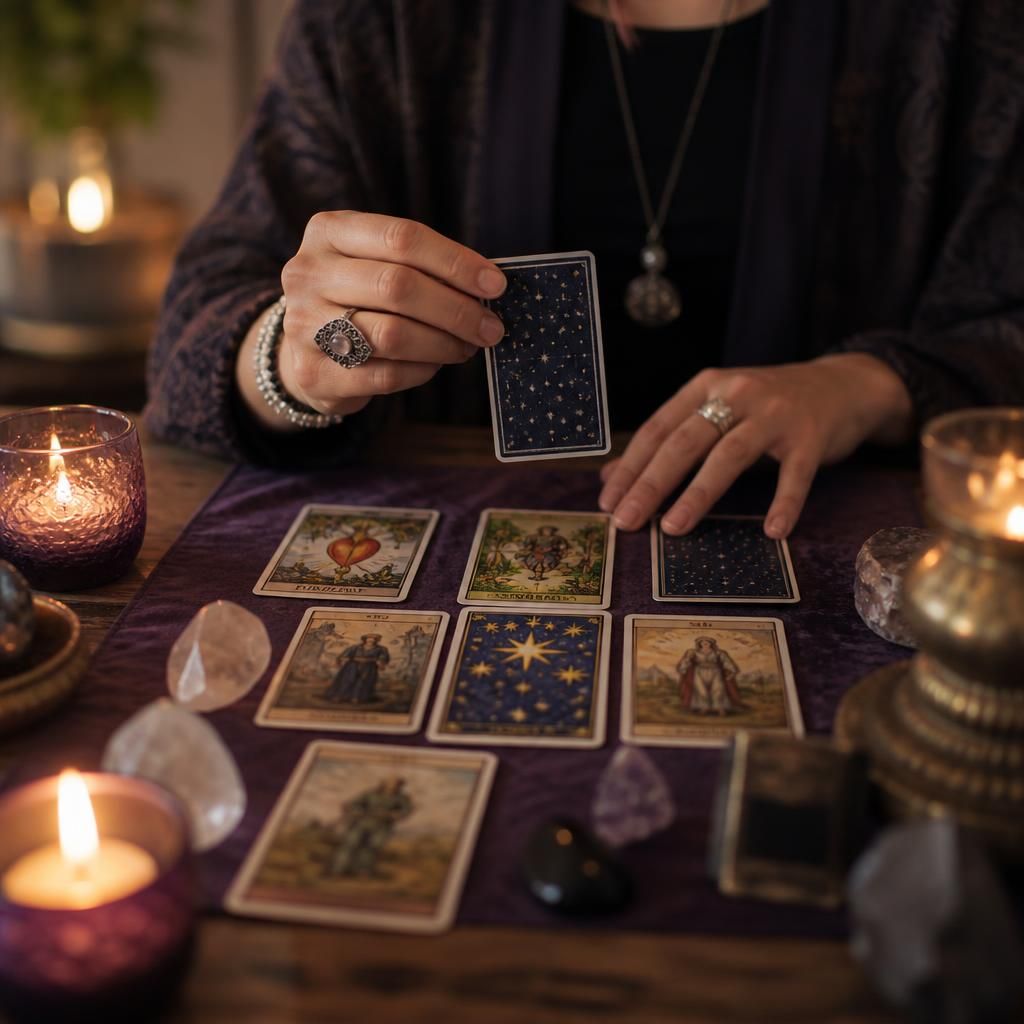
A love fortune teller may use a clarifying card when the meaning of a position remains broad or appears to conflict with the surrounding cards. The additional card does not replace the original interpretation; it narrows the issue by adding context, such as whether uncertainty relates to communication, expectations or practical circumstances.
Clarification is most useful when it addresses a specific point. Drawing repeated cards until a preferred answer appears can make a reading less focused, so a careful reader treats the first spread as the main framework and uses extra cards sparingly. The resulting discussion should explain how the clarifier relates to the original card rather than presenting it as independent proof of a romantic outcome.