





What techniques do gay relationship psychics use during phone readings?
Gay relationship psychics may combine clairvoyance, tarot, astrology and mediumship with attentive listening and empathic questioning during a phone reading. They interpret intuitive impressions and symbolic details in the context of the caller’s relationship, offering personalised perspectives on love, trust and connection.
Gay relationship psychics typically use a combination of symbolic interpretation, focused intuitive practice, conversational reflection and relationship-specific questioning during a phone reading. The techniques are not fundamentally different from those used in other relationship readings; the distinction lies in applying them without assuming heterosexual roles, gender expectations or a particular relationship structure.
Common techniques include:
- Tarot or other card layouts: The reader may assign positions to themes such as the current dynamic, each person’s perspective, communication patterns, obstacles and possible areas for development. The cards are interpreted as symbols rather than fixed predictions. Their value comes from examining how an image, position and surrounding cards relate to the issue being discussed.
- Clairvoyant focus: A psychic may concentrate on impressions connected with the relationship, such as recurring images, colours, places or changes in atmosphere. These impressions are treated as material for exploration, not as independently verifiable facts. A careful reader distinguishes an impression from information supplied by the caller.
- Astrological comparison: If birth details are provided, the reader may compare relevant chart factors associated with communication, emotional needs, attraction, conflict and commitment. This can provide a framework for discussing differences in temperament, although it does not determine whether a relationship will succeed.
- Mediumistic interpretation: Where mediumship forms part of the consultation, the reader may interpret perceived impressions relating to someone who has died. This is separate from analysing the living partner’s behaviour and should be clearly explained so that the caller understands which part of the reading is being addressed.
Phone readings also rely on techniques suited to an audio-only setting. The reader may use pauses, changes in pace, emphasis and the caller’s wording to identify which subjects require clarification. This is not the same as treating vocal behaviour as proof of hidden feelings. It is a way to keep the consultation focused and to check whether an interpretation is relevant rather than forcing every impression into the reading.
Inclusive framing is especially important in a reading about a gay relationship. A responsible practitioner avoids assigning one partner a traditionally masculine or feminine role, presuming that both people have the same level of openness about their sexuality, or treating non-monogamy, gender identity and chosen family as problems in themselves. Instead, the reader can explore the boundaries and circumstances the caller actually describes, including privacy concerns, family reactions, social pressures and differing experiences of identity.
Another technique is to separate observation from interpretation. For example, a reader might identify a recurring theme of guarded communication, then discuss several possible explanations: fear of rejection, a previous breach of trust, uncertainty about commitment or a practical disagreement. This approach leaves room for the caller’s knowledge of the relationship and reduces the risk of presenting one explanation as certain.
A structured reading may then move from reflection to practical discussion. The reader can help the caller identify questions to ask, boundaries to define, assumptions to test and patterns to monitor. Guidance is more useful when it distinguishes between what the caller can control—such as communicating clearly or deciding what they will accept—and what remains another person’s choice.
Ethical boundaries are part of the technique. Psychic impressions should not be presented as medical, legal or psychological diagnosis, and a reader should not encourage surveillance, coercion or decisions based solely on a prediction. Claims about a partner’s private thoughts also require caution, because a phone consultation cannot independently establish another person’s intentions. The strongest readings present interpretations as possibilities, acknowledge uncertainty and leave relationship decisions with the people involved.
Before a phone reading, it can help to decide whether the main aim is compatibility analysis, understanding a recurring conflict, considering reconciliation, or gaining perspective on a new connection. Providing only the relevant background allows the reader to work with the chosen method while preserving space for an independent interpretation. The caller can also ask which techniques will be used, how symbolic information is interpreted and how uncertainty will be handled.
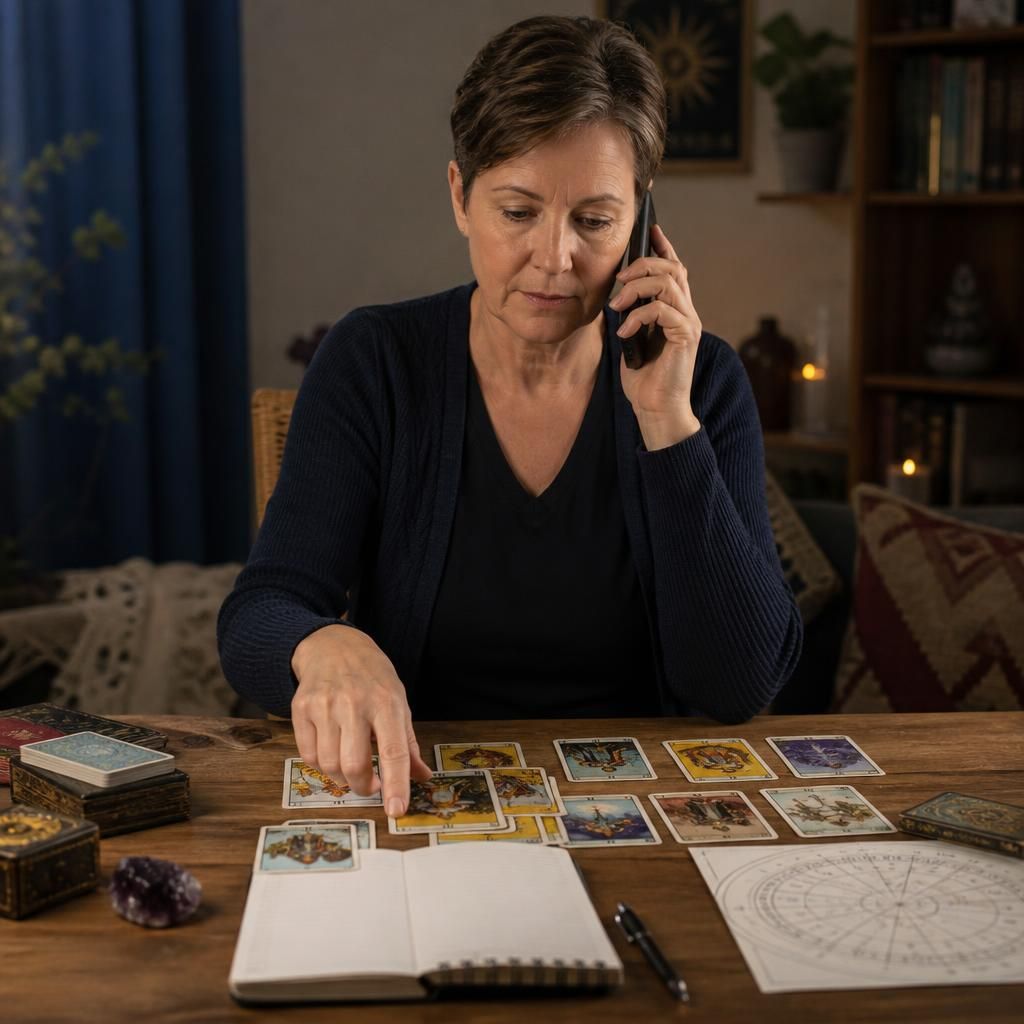
One technique used in some gay relationship phone readings is cross-checking themes across more than one method. A reader may compare a tarot spread with an astrological factor or a clairvoyant impression, looking for a common subject such as uncertainty, changing priorities or a need for clearer communication.
This process is not a way to prove that a prediction is true. Each method has its own limits, and apparent agreement can still be interpreted incorrectly. A careful reader uses convergence as a prompt for further questions, then tests the theme against the caller’s actual circumstances rather than treating it as a fixed conclusion. The same approach can be applied whether the relationship is monogamous, non-monogamous, newly established or long-term.