


Meditation can help manage stress in spiritual guidance by providing a structured way to notice physical tension, settle reactive thought patterns and approach spiritual practices with greater self-awareness. It is not a substitute for medical or psychological care, but it can be a useful complementary practice when stress affects reflection, decision-making or engagement with clairvoyance, mediumship, tarot or astrology.
Stress often narrows attention towards immediate problems and encourages rapid, habitual reactions. Meditation introduces a deliberate pause between an experience and the response to it. By observing thoughts, sensations and emotions without immediately acting on them, a person may become better able to distinguish a current concern from an assumption, fear or unresolved feeling. This distinction is particularly relevant in spiritual guidance, where personal interpretation can otherwise become influenced by anxiety.
A practical stress-management meditation does not need to involve complex visualisation. A simple approach is to:
- Adopt a supported seated position and identify where stress is felt in the body.
- Allow the breath to remain natural while placing attention on its physical movement.
- Notice thoughts as they arise, using a neutral label such as “planning”, “worrying” or “remembering”.
- Return attention to the breath or bodily sensations without judging the distraction.
- End by identifying one practical action that would support greater steadiness.
This process can be adapted before a psychic reading or another spiritual guidance session. The purpose is not to force a particular message or create a desired answer. Instead, it helps the participant recognise their expectations and emotional state before interpreting what is discussed. Writing down a specific question beforehand can also reduce mental clutter and make it easier to assess guidance thoughtfully afterwards.
Meditation may support stress management in several complementary ways. Body-focused practice can increase awareness of muscular tension and restlessness. Breath-focused practice can provide a consistent point of attention during periods of worry. Open-monitoring practice involves noticing thoughts, emotions and sensations as they change, which may help a person identify recurring stress triggers. A compassionate approach can reduce harsh self-criticism, although it should not be used to dismiss genuine problems that require practical action.
Consistency is generally more useful than intensity. Short, regular sessions may be easier to maintain than occasional, demanding practices. It is sensible to choose a quiet setting, keep the technique uncomplicated and stop if meditation increases distress, panic, dissociation or intrusive memories. Anyone experiencing persistent or severe stress should seek advice from a qualified healthcare professional. Spiritual guidance and meditation can support personal reflection, but neither should replace appropriate clinical assessment or treatment.
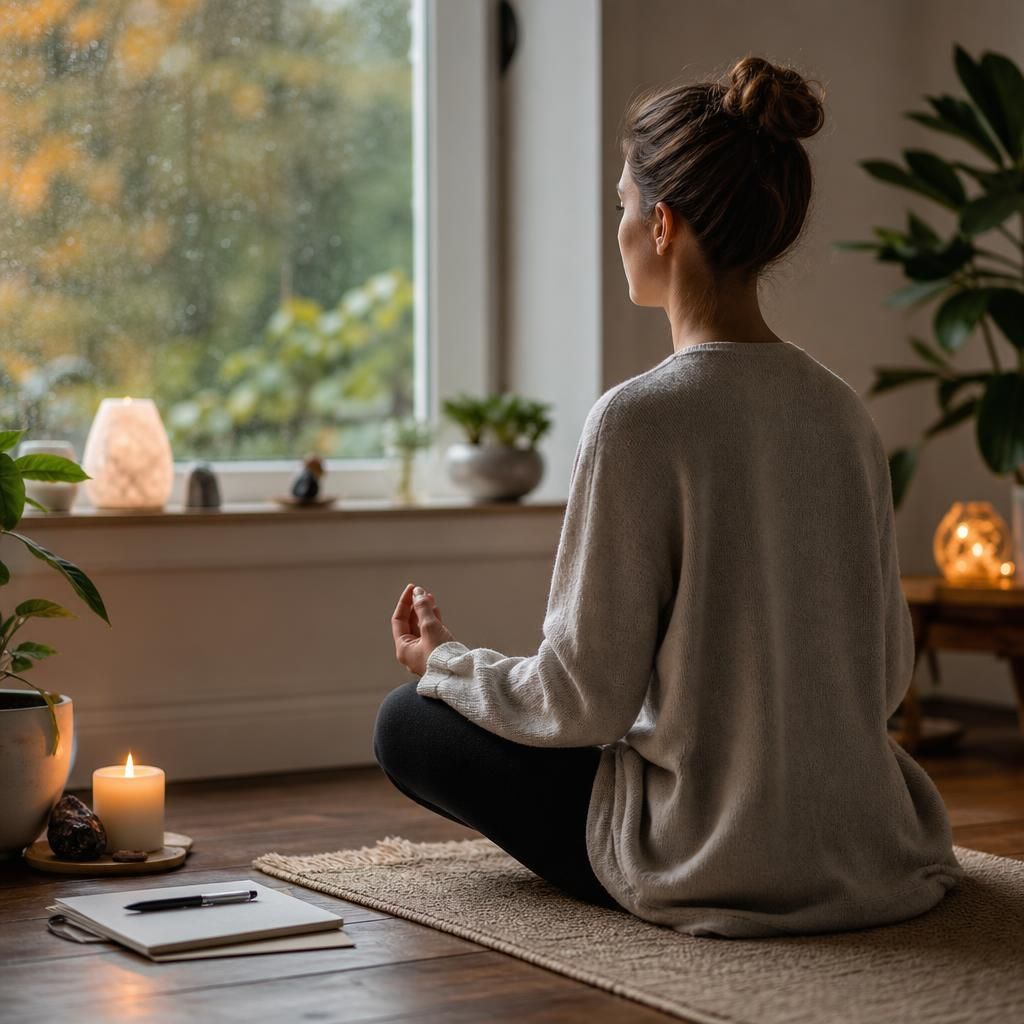
A useful way to judge meditation’s contribution to stress management is to monitor its practical effect rather than treating a calm feeling as proof that a spiritual interpretation is accurate. Before and after a session, briefly note your level of tension, concentration and emotional urgency. Over time, this record can show whether meditation is helping you approach spiritual guidance with greater steadiness.
This distinction matters because reduced stress and reliable insight are not the same thing. Meditation may make it easier to examine a relationship, career or personal-growth concern without being dominated by immediate anxiety, but any guidance still requires thoughtful evaluation. Compare what arises in meditation with observable circumstances, relevant evidence and practical options before making an important decision.