


How does meditation enhance psychic readings for spiritual guidance?
Meditation can enhance psychic readings for spiritual guidance by calming mental distraction and helping you approach the reading with focused attention. This may make it easier to reflect on intuitive impressions, symbolic information and practical guidance without confusing immediate anxiety with deeper personal insight.
Meditation enhances a psychic reading by preparing the mind and body to engage with symbolic or intuitive material more deliberately. Its main contribution is not to guarantee a particular prediction, but to improve self-awareness, reduce reactive interpretation and help you assess guidance in relation to your own circumstances.
It can improve the quality of the consultation in several ways:
- Clearer intentions: Meditation gives you an opportunity to identify what you genuinely want to explore. A specific intention, such as understanding a relationship pattern or considering a career decision, is usually more useful than approaching a reading with a collection of loosely connected worries.
- Greater awareness of personal assumptions: People naturally bring expectations, fears and preferred outcomes to spiritual consultations. Observing these reactions before a reading can help you distinguish information that prompts reflection from information that simply confirms what you already hope or fear.
- More accurate recognition of emotional responses: Meditation encourages awareness of sensations such as tension, unease or relief. During a reading, noticing these responses can identify which subjects need further clarification, without treating every physical sensation as proof that a statement is true.
- Better listening and questioning: A settled, observant state makes it easier to note important details and ask useful follow-up questions. Rather than trying to remember an entire consultation, you can focus on the specific themes, symbols or possibilities that have practical relevance.
- More considered interpretation: Psychic readings often use metaphor, symbolism or broad themes. Meditation can help you pause before assigning a fixed meaning to these elements. This allows you to compare an interpretation with known facts and personal values instead of making an immediate decision based on one impression.
Meditation can also influence the way information is received between the reader and the client. When a client has reflected on a question beforehand, the consultation may have a clearer frame of reference. This does not remove the reader’s interpretive role, and it does not make an impression objectively verifiable; it simply gives both parties a more defined subject to examine.
A practical preparation method is to meditate briefly, then write down one primary question and two or three related points. Avoid scripting the answer you want. Record what you are seeking to understand, what evidence you already have and which decisions remain open. This creates a useful distinction between the purpose of the reading and the conclusion you may eventually reach.
During a phone reading, simple awareness of breathing and posture can provide a neutral way to pause when a significant topic arises. For an email reading, meditation can be used before drafting questions and again when reviewing the written response. Leaving space between reading the material and acting on it may help you consider whether the guidance is relevant, practical and consistent with your circumstances.
Afterwards, meditation supports integration rather than passive acceptance. You might reflect on which points were specific, which were symbolic and which require independent verification. Writing a short summary of possible actions, unanswered questions and boundaries can turn a spiritual consultation into a structured reflection exercise. Decisions involving health, finances, legal matters or personal safety should still be based on appropriate professional advice and reliable evidence.
The effectiveness of meditation depends on how it is used. It is most constructive as a method for preparation, observation and reflection, not as a test that must produce visions or unusual sensations. A short, repeatable practice may be more useful than trying to force an intense experience. If meditation increases distress or brings up difficult memories, stop the exercise and consider discussing those experiences with a qualified mental health professional.
Used in this way, meditation adds a reflective layer to psychic guidance: it helps you define the issue, notice your reactions, evaluate interpretations and decide what, if anything, belongs in your next step.
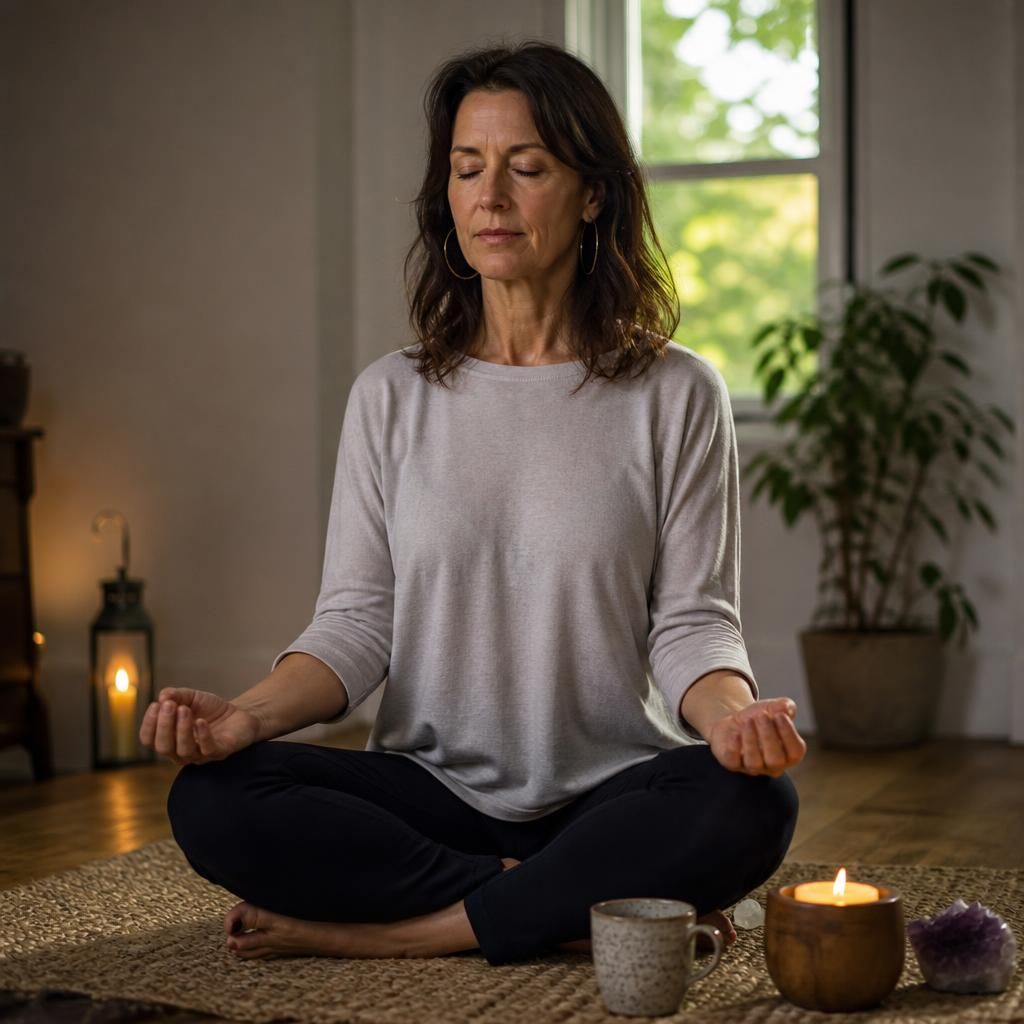
Meditation can enhance a psychic reading by helping you tolerate uncertainty while considering intuitive or symbolic information. Instead of demanding an immediate yes-or-no conclusion, a calm and observant mindset allows several possible meanings to remain open until they can be considered alongside your circumstances.
This is particularly useful when a reading raises an issue that cannot be resolved immediately. Meditation may help you notice the difference between a genuine need for clarification and an urge to eliminate uncertainty quickly. That pause creates room to ask more precise questions, identify what further information is needed and avoid treating an ambiguous impression as a fixed outcome.
A useful practice is to focus on the breath for a few minutes, notice thoughts as they arise and return attention without trying to suppress them. Apply the same approach when reviewing a reading: record the possible themes, leave their meaning provisional and revisit them after you have had time to assess relevant facts. Meditation therefore supports a more flexible form of spiritual guidance, in which insight can inform reflection without replacing personal judgement or practical evidence.