


What role does breathing play in meditation for spiritual guidance?
Breathing gives meditation a steady point of focus, helping settle mental distraction and support sustained attention. In spiritual guidance, mindful breathing can create a calmer state in which personal reflections, intuitive impressions and symbolic thoughts are easier to notice and consider clearly.
Breathing plays a physiological and attentional role in meditation for spiritual guidance: it helps regulate arousal, anchors awareness in the present and provides a way to notice changes in the body before interpreting thoughts, emotions or intuitive impressions. It does not prove that an impression is spiritually or psychically accurate, but it can create more favourable conditions for careful reflection.
The breath is closely linked with the nervous system. Rapid, shallow breathing commonly accompanies tension or heightened alertness, while slower, more comfortable breathing can support a less reactive state. Directing attention towards the breath gives the mind a simple, observable process to follow instead of immediately engaging with every thought. This can make it easier to distinguish a passing worry from a considered personal response.
Breathing also strengthens interoception, which is the ability to notice internal bodily sensations. During meditation, a person may become aware of changes such as muscular tightness, warmth, a fluttering heartbeat or a sense of ease. These sensations may provide useful information about emotional reactions, but they should not automatically be treated as messages or predictions. They are best considered alongside circumstances, reasoning and any relevant practical evidence.
For spiritual guidance, the most useful approach is usually gentle and consistent rather than forceful. A simple practice can be structured as follows:
- Adopt a sustainable posture. Sit or lie in a position that allows the chest and abdomen to move without strain.
- Observe the natural breath. Notice its pace, depth and physical movement without trying to change it immediately.
- Allow the exhalation to lengthen slightly. Keep the breath comfortable rather than imposing a strict count.
- Return attention when it wanders. Each return develops attentional control without requiring the meditator to suppress thoughts.
- Review impressions afterwards. Write down ideas or feelings once the practice ends, then assess them separately from the immediate meditative experience.
Different breathing methods serve different purposes. Abdominal breathing directs movement towards the lower ribs and abdomen and can reduce unnecessary effort in the upper chest. Counted breathing introduces a predictable rhythm, which may help someone who finds unstructured meditation difficult. A brief pause between breaths can increase awareness of bodily sensations, but breath retention is not essential and should never be prolonged to the point of discomfort. Practices involving rapid breathing, strong breath holds or complex patterns require particular caution.
Breath awareness can also improve discernment during a guidance session. Before considering a question about a relationship, career decision or personal direction, a few unforced breaths may help identify the difference between an immediate fear and a deeper concern. During the session, returning to the breath can prevent a person from becoming absorbed in a vivid image or emotionally charged thought. This makes the process more reflective, even when the person uses spiritual, symbolic or intuitive language to describe what arises.
Breathing should not be used to force a particular insight. Trying to breathe in a prescribed way until a desired answer appears can increase concentration on expectation rather than observation. A better measure of the practice is whether the person can remain present, recognise uncertainty and consider an impression without treating it as an instruction that must be followed.
There are practical limits and safety considerations. Anyone who feels dizzy, breathless, panicked, light-headed or physically uncomfortable should return to normal breathing and stop the exercise. People with respiratory or cardiovascular conditions, those who are pregnant, and anyone affected by panic or trauma may benefit from discussing breathwork with an appropriate healthcare professional before using more intensive techniques. Meditation can support reflection, but it does not replace medical, mental-health, legal or financial advice.
In summary, breathing contributes to spiritual-guidance meditation by regulating effort, organising attention and providing information about bodily reactions. Its main value is not the production of guaranteed psychic information; it is the cultivation of a more observant and less reactive state in which personal meaning can be examined with greater care.
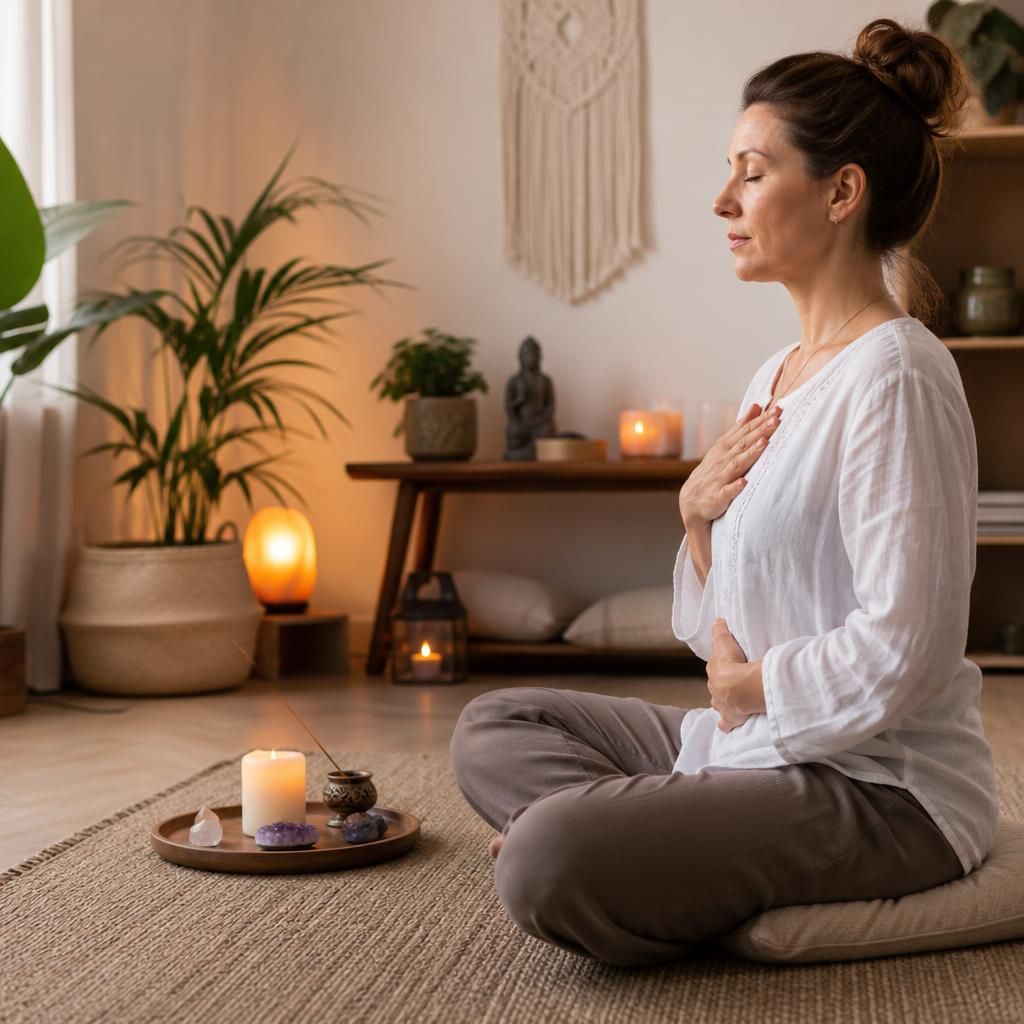
In meditation for spiritual guidance, breathing can function as a neutral reference point that separates an experience from the meaning assigned to it. A thought, image or emotional response may arise while attention rests on the breath, but the breath itself does not confirm or explain that experience. This distinction helps the meditator observe an impression before deciding whether it reflects a concern, a memory, a symbol or a practical issue.
Using the breath in this way also supports a clear sequence: notice the impression, return briefly to the physical sensations of breathing, and then consider the impression in context. If the idea remains relevant after this pause, it can be recorded for later reflection rather than treated as an immediate answer. Breathing therefore supports discernment by creating a small gap between receiving an inner impression and interpreting it.