







What techniques are commonly used in meditation for spiritual guidance?
Common meditation techniques for spiritual guidance include breath awareness, mantra repetition, visualisation, body scanning and open-monitoring mindfulness. Some people also use contemplative prayer or focused reflection to settle attention and examine thoughts, emotions and intuitive impressions with greater clarity.
Meditation for spiritual guidance commonly combines attention training, reflective enquiry and receptive awareness. The purpose is not to force a prediction or produce a particular sensation, but to create enough mental steadiness to examine thoughts, emotions, values and intuitive impressions with less reactivity.
Attention training is the foundation of many practices. The meditator chooses one simple anchor, notices when attention has wandered and returns to that anchor without treating distraction as failure. Repetition strengthens the ability to observe mental activity rather than immediately following every thought. This can make it easier to distinguish a considered insight from an impulsive reaction, worry or wish.
Receptive awareness takes a less tightly focused approach. Instead of analysing each thought as it appears, the meditator notices the overall flow of sensations, memories, feelings and images. The important skill is allowing experiences to arise and pass without assigning them an immediate meaning. For spiritual guidance, this helps prevent a striking image or emotion from being treated as definite evidence before it has been considered carefully.
Contemplative enquiry uses a question or theme as the subject of reflection. Suitable questions are open and practical, such as “What am I avoiding?” or “Which choice is most consistent with my values?” The question is introduced at the beginning, followed by a period of quiet observation. The meditator records relevant thoughts afterwards rather than repeatedly interrupting the practice to search for an answer.
Guided meditation provides spoken instructions that direct attention through a sequence of stages. It may be useful for people who find unstructured practice difficult, particularly when the exercise has a clear purpose such as self-reflection, grief processing or considering a decision. A guided exercise should be treated as a framework, not as an authority: its suggestions can prompt reflection, but they do not establish that an interpretation is true.
Compassion-focused practice directs a non-judgemental attitude towards oneself and other people. This is relevant to spiritual guidance because harsh self-criticism can distort decision-making and make ordinary uncertainty feel like a warning. Developing a kinder internal response does not require accepting every thought; it means examining difficult experiences without adding unnecessary blame.
Movement-based meditation uses slow, deliberate physical activity to maintain awareness. Walking, stretching or other gentle movements can be appropriate when remaining still increases restlessness. Attention is placed on bodily coordination and present-moment sensations, while thoughts are noticed without allowing them to dominate. This approach can also demonstrate whether an apparent insight remains clear when attention is no longer absorbed in a highly inward state.
Symbolic contemplation involves reflecting on a meaningful object, image, religious passage or personal symbol. The symbol acts as a prompt for associations and questions rather than a fixed code with one universal interpretation. Its usefulness depends on the meditator’s background and the context in which it is considered. Recording the personal meaning that emerges is more reliable than borrowing an interpretation from a general symbol list.
A structured session usually has four stages:
- Preparation: choose a quiet setting, adopt a stable posture and decide whether the purpose is calming, reflection or considering a specific issue.
- Settling: allow physical tension and mental activity to become more noticeable without trying to eliminate them.
- Observation or enquiry: use the chosen method while returning attention whenever it becomes absorbed in unrelated thought.
- Integration: end gradually, note significant observations and identify any practical action that follows from them.
Keeping a brief journal can help separate recurring themes from one-off impressions. Record the date, the question considered, the main experience and the interpretation made afterwards. Reviewing entries later may reveal whether an idea remains consistent, changes with mood or arises mainly during periods of stress. This adds a useful layer of discernment to spiritual practice.
Meditation should not be used to replace medical, psychological, legal or financial advice. Nor should an impression obtained during practice be treated as a guaranteed prediction or as a reason to make a high-risk decision without ordinary evidence. A sound approach combines inner reflection with factual information, personal responsibility and, where appropriate, discussion with a suitably qualified professional.
The most suitable technique is the one that produces a balanced form of attention rather than intense stimulation. If a practice causes persistent distress, confusion or detachment from everyday responsibilities, stop using it and seek appropriate support. Spiritual guidance is generally more constructive when meditation leads to clearer questions, considered choices and practical self-understanding, rather than dependence on dramatic experiences.
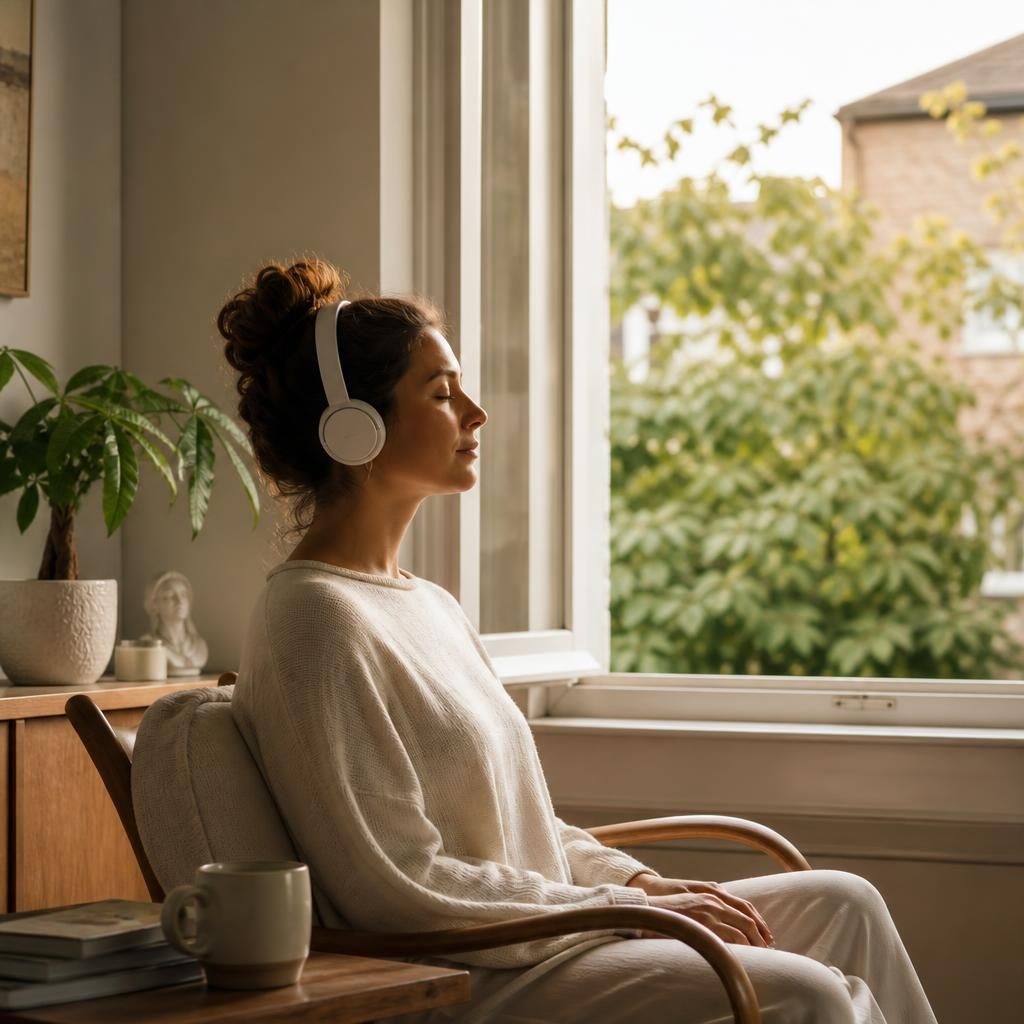
Sound meditation uses hearing as the primary point of attention. Rather than repeating a phrase or concentrating on breathing, the practitioner notices nearby sounds such as birds, traffic, household activity or silence, observing their volume, pitch and duration without judging or interpreting them.
When attention turns a sound into a story or symbolic message, the practitioner returns to the simple act of listening. This distinction makes the technique useful for spiritual guidance: sounds remain sensory experiences, while any personal meaning is considered separately after the exercise. Sound meditation can therefore support calm observation without requiring the practitioner to create a particular image or feeling.
Explore Meditation for Spiritual Guidance
After trying a meditation technique, consider a personalised psychic reading by phone or email to explore the questions and reflections that arise from your practice. Elizabeth Rose Psychics offers guidance through clairvoyance, mediumship, tarot and astrology.