


What techniques can enhance meditation's effectiveness for receiving psychic insights?
Meditation techniques that can support clearer psychic insight include focused attention, steady breath awareness, body scanning, visualisation and brief journalling afterwards. Practising consistently in a quiet setting can help distinguish intuitive impressions from distraction, expectation or emotional reaction.
The most effective meditation techniques for receiving psychic insights are those that reduce mental noise while preserving clear awareness. In practice, this means setting a precise intention, using a simple anchor such as a mantra or sound, allowing impressions to arise without forcing them, and checking what emerges against your emotional state and the available evidence. Meditation can support reflection and intuitive awareness, but it cannot guarantee that an impression is accurate or predict future events.
Set a defined intention. Begin by stating what you want to explore in neutral terms, such as, “What perspective would help me understand this situation?” A focused question gives the session direction without demanding a particular answer. Questions based on curiosity are generally more useful than questions that contain an assumed outcome. If the subject is emotionally charged, write the question down before meditating so that you do not keep reformulating it during the practice.
Use a mantra to stabilise attention. Silently repeat a short, non-directive phrase such as “clear and calm” or “notice without judging”. A mantra gives the thinking mind a manageable task and can make it easier to recognise when speculation has replaced observation. Choose wording that does not tell you what you should discover. The purpose is steadiness, not self-suggestion.
Try open-awareness meditation. Instead of concentrating on one object, notice thoughts, feelings, bodily sensations and mental images as they appear. Do not follow each impression or attempt to interpret it immediately. Label experiences briefly as “thought”, “feeling”, “memory” or “image”, then return to a broad awareness of the whole session. This approach is useful when you want to notice subtle associations without treating every passing idea as a psychic message.
Include sound as an anchor. A repeated tone, quiet ambient sound or soft rhythmic recording can provide a consistent point of attention. When the mind wanders, return to the sound and observe whether any impressions arise naturally around it. Avoid choosing music with strongly suggestive lyrics or dramatic changes, as these can introduce a storyline that feels like insight but is actually a response to the material being heard.
Use a question-and-receive structure. Spend the first part of the practice settling your attention. Ask one question once, then allow a period of observation without repeating it. During the receiving stage, note concise impressions rather than building a narrative around them. End by deliberately shifting back to ordinary awareness. Separating questioning from interpretation helps reduce the tendency to manufacture an answer through repeated mental prompting.
Distinguish impressions from reactions. An impression may arise as a brief association, phrase or sense of relevance, whereas fear, wishful thinking and anxiety often produce urgency, repetition or elaborate predictions. This distinction is not a test of supernatural accuracy; it is a practical way to examine the quality of your experience. Ask whether the impression remains coherent after you have rested, whether it depends on a desired outcome, and whether an alternative explanation is equally plausible.
Practise non-attachment. Treat each insight as a possibility to consider rather than an instruction that must be followed. Non-attachment reduces confirmation bias, the tendency to notice information that supports an initial belief while overlooking anything that challenges it. It also leaves room for a reading or later reflection to provide a different interpretation. Important decisions should be based on relevant evidence, informed discussion and personal responsibility, not meditation alone.
Use a transition ritual. Finish with a simple action that marks the end of the session, such as opening your eyes, naming the date and location, or drinking water. This prevents the reflective state from blending indistinctly into the rest of the day. Review any notes later rather than analysing them immediately, particularly when the subject involves a relationship, career choice or another emotionally significant matter.
A practical sequence is to set one neutral intention, repeat a steady mantra, move into open awareness, record only the clearest impressions afterwards, and review them with healthy scepticism. The value of the technique lies in improving attention, self-observation and interpretation; it should not be presented as proof that a perceived message comes from an external psychic source.
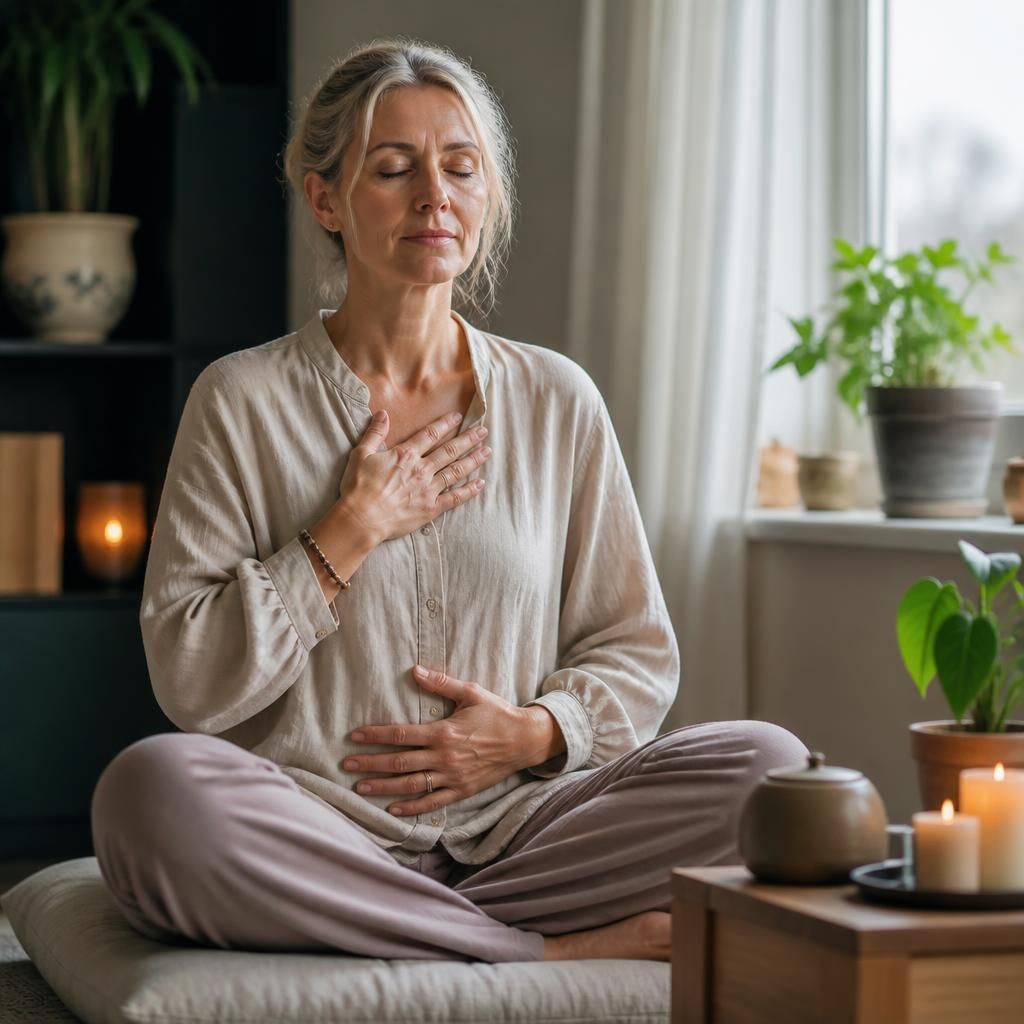
Paced breathing can improve the conditions for reflective insight. Use a comfortable rhythm, allowing the inhale and exhale to remain gentle rather than deliberately deep. Count silently if helpful, giving slightly more attention to the exhale without holding the breath. If thoughts become prominent, notice them and return to the next breath. This technique can settle physical restlessness and make it easier to observe subtle thoughts or images without immediately interpreting them. Stop or return to natural breathing if you feel light-headed, uncomfortable or anxious; meditation should remain a calm observational practice, not a way to force an experience.
Explore Meditation Techniques for Psychic Insights
If you would like to place your meditation reflections in a broader spiritual context, consider arranging a personalised phone reading with Elizabeth Rose Psychics. Bring one concise question and use the discussion as a reflective perspective alongside your own judgement.