




What are the benefits of choosing a phone reading over an in-person session?
A phone psychic reading offers practical advantages over an in-person session: you can consult from a private, familiar setting without travelling to a venue. The distance may also make it easier to focus on the conversation and discuss personal questions without the distractions of a physical appointment.
A phone psychic reading offers several practical benefits over an in-person session, particularly for people who value accessibility, choice and a conversation-led approach. The telephone format removes the need to rely on visual surroundings, making the reading centred on spoken questions, the reader’s interpretation and the information exchanged during the consultation.
Greater choice of reader is one of the main advantages. An in-person appointment is often limited by the practitioners available in a particular locality. A phone service can make it easier to consider a reader whose approach matches your interests, whether you are looking for clairvoyance, mediumship, tarot or astrology. This can be useful when you already know which type of reading you want or prefer a particular style of guidance.
Accessibility is another important benefit. A phone consultation can suit people who find travelling, navigating unfamiliar buildings or sitting in a face-to-face appointment difficult. It can also be a practical option for anyone who prefers to communicate verbally rather than rely on visual interaction. The format allows the reader and client to take part without the physical access requirements associated with a venue.
The audio-only format can make the structure of the consultation clearer. With no cards, room layout or physical reactions to interpret as part of the interaction, attention remains on the words used and the questions being explored. This may help a client identify which points require clarification. During a tarot or astrology reading, for example, the reader can explain how a card, spread or chart relates to the topic rather than relying on the client to view it directly.
Phone readings can also support a more deliberate conversation. You can prepare a short list of subjects, listen to the interpretation and ask follow-up questions where a point is unclear. This is especially relevant when the reading concerns several areas, such as relationships, career or personal development. The telephone format does not remove the need for active participation; the usefulness of the session still depends on asking clear questions and considering the guidance carefully.
A sense of physical distance may help some people communicate more comfortably. The absence of face-to-face observation can reduce concern about facial expressions, body language or how a reaction might appear to the reader. That does not guarantee that difficult subjects will feel easy to discuss, but it gives the client more control over how they take part in the exchange.
There are also practical differences to weigh against the benefits. An in-person session may suit someone who values visual contact, physical cards on a table or the atmosphere of a dedicated consultation space. A phone reading may be less suitable if you need to see a chart or card layout in detail, unless the reader provides a separate way to share that material. Asking in advance how the chosen method is explained can prevent misunderstandings.
The quality of a reading should not be judged solely by whether it takes place over the phone or in person. Relevant considerations include the reader’s area of expertise, the type of questions you want to address and how clearly the consultation is conducted. Phone readings provide a convenient, accessible and conversation-focused alternative, while the best format depends on how you prefer to receive and reflect on spiritual guidance.
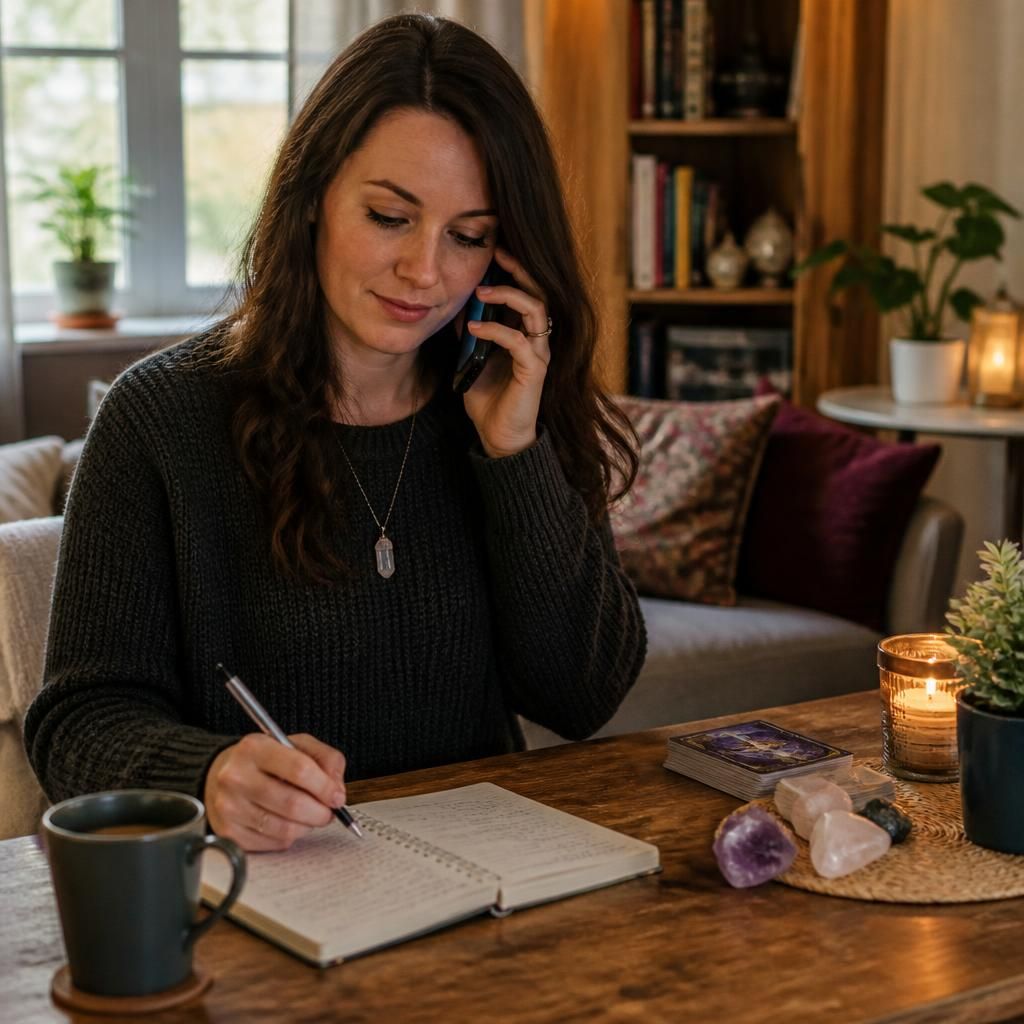
Another benefit of a phone reading is the control it gives the client over the consultation environment. You can arrange your notes, questions and any relevant background information before the call, then refer to them as the discussion develops. If a point is unclear, you can ask the reader to explain it in different terms or return to it before moving on. This makes it easier to keep the conversation focused on the issues you want to examine, rather than allowing the setting itself to shape the session.