






What tools do psychics use during telephone readings?
During telephone readings, psychics may use tools such as tarot cards, astrology charts and other symbolic systems to structure their interpretation. Some also rely primarily on clairvoyance or mediumship, using the conversation itself rather than a physical tool to develop personalised insights.
Psychics may use a combination of physical cards, personal data, reference systems and intuitive perception during a telephone reading. The tool is usually an interpretive aid rather than a source of independently verified facts; the psychic explains the symbols or patterns in relation to the client’s question and circumstances.
Card-based systems can include a structured deck with established meanings, spreads and positional relationships. A reader may select a layout suited to the subject, such as a decision, relationship or career query, then consider each card individually and in combination with the others. The order of the cards, repeated themes and contrasts between positions can provide a framework for the discussion. Some practitioners also use oracle-style decks, which generally have their own imagery and written themes rather than the fixed structure associated with traditional tarot.
Astrological reference material may include a natal chart, planetary positions, house placements and timing techniques. To prepare this type of chart, a reader normally needs details such as the client’s date, place and, where available, time of birth. The chart is then interpreted symbolically rather than treated as a guaranteed forecast. If the birth time is uncertain, the reader may explain that some chart details cannot be assessed with the same precision.
Numerological systems use numbers derived from information such as a birth date or a person’s name. Different systems assign meanings to recurring numbers, totals or cycles. During a telephone consultation, these calculations can be completed beforehand or worked through during the call, giving the client an opportunity to check that the underlying information is correct.
Spiritually focused readings may involve mediumship or clairvoyant perception without a physical object. In that setting, the practitioner may pay attention to impressions, images, emotions or perceived communication and describe them for the client to consider. This approach is less dependent on a spread or chart, so the conversation and the client’s responses become important parts of the interpretation.
Pendulums and similar objects are sometimes used as focusing devices. A practitioner may use one to support a simple yes-or-no exercise or to help concentrate on a particular question. Such a method is limited: it does not replace context, cannot establish certainty and is not an appropriate basis for medical, legal or financial decisions.
Telephone readings do not require the client to see the tool. A psychic can shuffle cards, consult a chart or perform calculations away from the camera while speaking aloud about the process. In other cases, the reader may ask the client to choose a number, select a card from a verbal list or identify which part of a question matters most. These adaptations allow the consultation to remain interactive without relying on visual access to the physical materials.
The most useful tool depends on the question and the practitioner’s method:
- Cards can organise several aspects of a situation and support a detailed discussion.
- Astrological charts provide a broader symbolic map based on birth information and planetary patterns.
- Numerology focuses on meanings assigned to calculated numbers and recurring cycles.
- Mediumship or clairvoyant work may use no physical tool, relying instead on perceived impressions and conversation.
- Pendulums can focus a narrow question but offer less detail than a system designed for layered interpretation.
Tools also affect the wording of a reading. A card spread may produce several possible themes, while a chart may encourage discussion of longer-term patterns. A numerological calculation may highlight a cycle or recurring tendency. None of these formats removes the need for clarification: a responsible reader should distinguish between what the tool appears to suggest, what the client confirms and what remains uncertain.
Before a reading, it is sensible to ask which method the psychic uses, what information is needed and whether the session will involve one tool or several. Clients should also treat the interpretation as personal or spiritual guidance rather than professional diagnosis, legal advice, investment advice or a substitute for qualified healthcare. At Elizabeth Rose Psychics, telephone and email consultations can draw on approaches including clairvoyance, mediumship, tarot and astrology, with the chosen method shaped around the individual consultation.
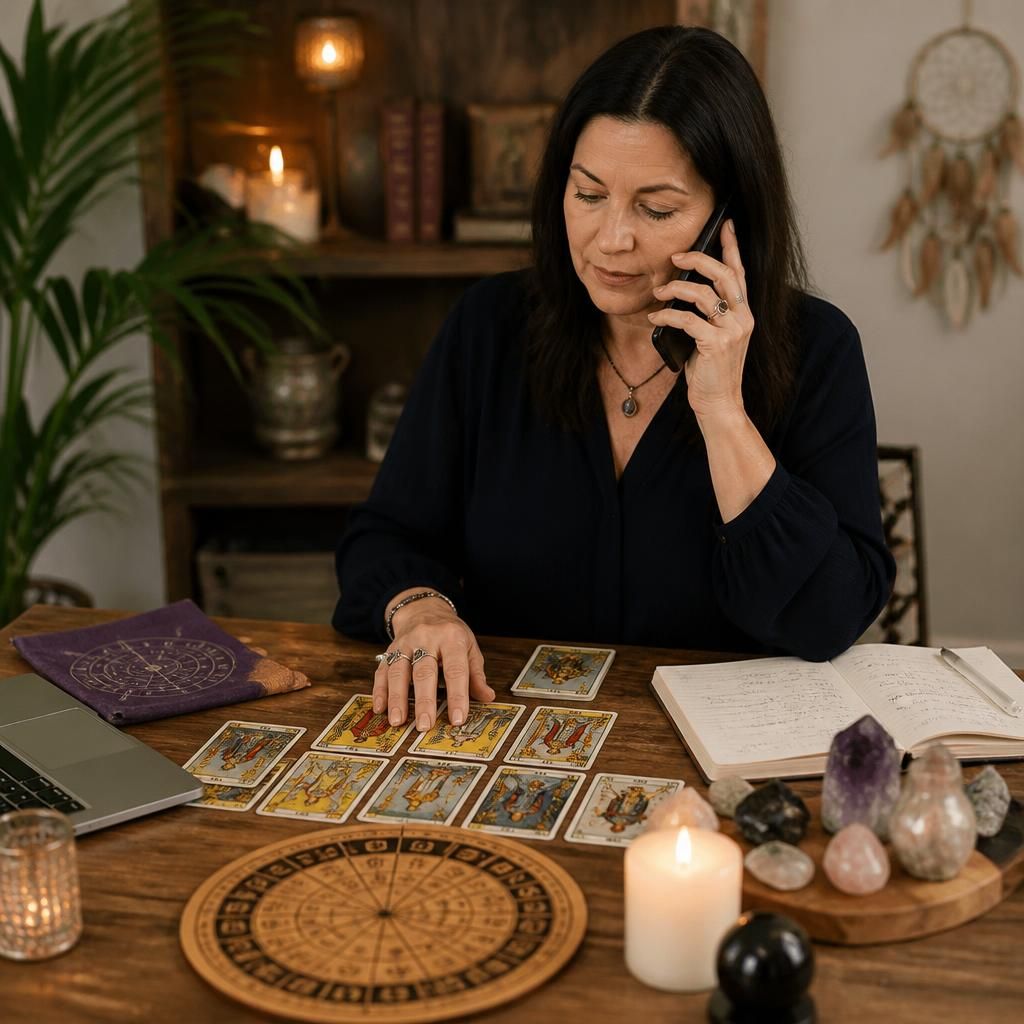
In a telephone reading, a tool mainly provides a shared symbolic vocabulary. A card image, planetary placement or number can give the psychic a specific theme to explain, while the client can add context, question an interpretation or identify which part is relevant. This makes the tool a way of organising the conversation rather than an automated system that produces a fixed answer.
The same tool can therefore be used differently by different practitioners. One reader may describe the imagery in detail, while another may concentrate on patterns across a spread or chart. When comparing services, ask how the psychic interprets their chosen tools and how much opportunity you will have to discuss the meaning in relation to your question.