


How do I prepare for a clairvoyant phone reading?
Prepare for a clairvoyant phone reading by choosing a quiet, private setting and deciding which areas of your life you want to discuss. Write down focused questions beforehand, keep relevant details to hand, and remain open to insights that may not match your initial expectations.
Preparing for a clairvoyant phone reading involves organising the practical details of the call and deciding how you want to use the session. Good preparation can help you communicate clearly, recognise which insights are relevant to you and reflect on the reading afterwards, but it cannot guarantee a particular answer or outcome.
Before the reading, clarify your expectations. A clairvoyant reading is generally offered as spiritual guidance based on the reader’s perceptions and interpretation, rather than as a substitute for professional medical, legal or financial advice. Treat any information about important life decisions as something to consider alongside reliable evidence and appropriate specialist support. You remain responsible for the choices you make.
It is also useful to decide what you are comfortable discussing. You do not have to disclose private information simply because it is requested, and you can say when a subject feels too personal or when you would prefer not to continue with a particular line of discussion. Establishing these boundaries in advance can make the conversation feel more controlled and purposeful.
- Check the practical arrangements. Make sure your phone is charged, the connection is suitable for a conversation and notifications are muted. Keep any booking or session information accessible so that you do not need to search for it during the call.
- Allow time to settle beforehand. Avoid joining the conversation while distracted by another task. A few minutes to collect your thoughts can help you listen carefully and respond without feeling rushed.
- Choose a useful level of detail. You can explain relevant background when it helps clarify your situation, but you do not need to provide a long account of events. Excessive detail may make it harder to identify the central issue.
- Decide whether you want to take notes. A notebook or digital document can help you record recurring themes, questions to revisit and any points that require later reflection. Write down the reader’s wording as accurately as possible rather than relying only on memory.
Consider how you will frame your questions. Questions that invite explanation usually provide more scope for discussion than questions designed only to produce a yes-or-no answer. For example, asking what may be influencing a relationship or what perspective could help with a career decision gives the reading room to explore context. This does not mean you need to phrase everything perfectly; the aim is to communicate the issue honestly and avoid deliberately steering the answer.
Try to distinguish between being receptive and suspending all judgement. Remaining receptive means listening to information before deciding whether it has meaning for you. It does not require accepting every statement as fact. If something is unclear, ask the reader to explain what they mean. If an interpretation does not fit your circumstances, note that respectfully and consider whether further context changes its relevance.
For readings involving another person, remember that a phone session cannot replace direct communication or consent. Use the guidance to examine your own feelings, expectations and options rather than treating it as proof of another person’s private thoughts or intentions. This approach is particularly important when considering relationship choices or emotionally sensitive situations.
After the session, review your notes when you feel calm rather than making an immediate decision based solely on a striking statement. Separate observations that relate directly to your original concern from general comments, and identify practical steps that are reasonable independently of the reading. Preparation is most useful when it supports thoughtful reflection, clear boundaries and informed personal decision-making.
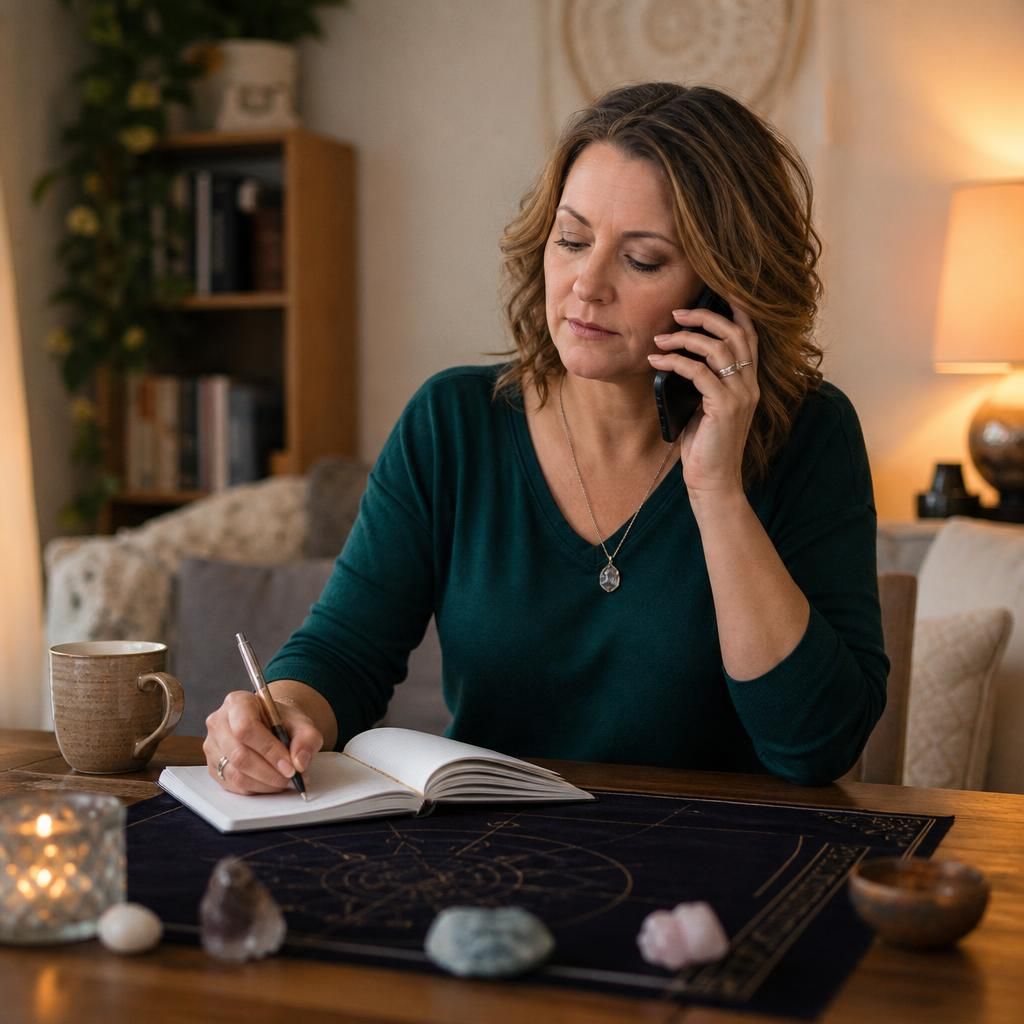
Protect your personal information before a clairvoyant phone reading. Prepare to discuss your circumstances in general terms, but do not provide passwords, security codes, identity documents or unnecessary financial details. A spiritual reading does not require access to your accounts or devices, and keeping these boundaries clear helps you concentrate on the guidance rather than the security of your information.