


What are some common misconceptions about clairvoyant readings by phone?
Common misconceptions about clairvoyant readings by phone include the belief that physical distance makes a reading ineffective, that every message is a fixed prediction, or that the reader must ask highly specific questions. In practice, a phone session is a conversation using intuitive interpretation, and its insights are best treated as guidance rather than certainty about future events.
Common misconceptions about clairvoyant readings by phone often arise from confusing intuitive practice with certainty, mind-reading or professional counselling. A clairvoyant phone reading is better understood as a structured conversation in which the reader interprets impressions and communicates them through spoken guidance. The quality and usefulness of a session depend on the clarity of the exchange, the reader’s approach and the client’s judgement about how to use what is discussed.
Misconception: a clairvoyant automatically knows everything about the caller. Clairvoyance is not the same as having complete access to another person’s thoughts, memories or circumstances. A reader may describe impressions relating to themes, emotions or possible influences, but this does not mean they know every relevant fact. Context from the caller can help distinguish a meaningful point from a general impression, and a responsible reader should allow the client to clarify or challenge what is said.
Misconception: callers must disclose extensive personal information before the reading can begin. A client does not need to provide a detailed biography to make a session valid. Some people offer a brief subject or question, while others prefer to hear what the reader picks up without much background. Either approach has limitations: too much information may shape the conversation, while too little context can make an impression difficult to interpret. Agreeing what information to share at the outset can help keep the session focused.
Misconception: a clairvoyant can never be wrong. No reading should be presented as an infallible source of facts. Impressions can be misunderstood, expressed in broad terms or interpreted differently by the client. A careful reader recognises uncertainty rather than claiming universal accuracy. The caller should assess statements critically and avoid treating a reading as a substitute for evidence, expert advice or direct communication with the people involved.
Misconception: an unsettling message is an unavoidable outcome. A reading should not be used to frighten someone into making a decision, buying further services or accepting a claim as inevitable. Statements about danger, illness, death or guaranteed loss require particular caution. A client can end a conversation or decline to explore a subject, and no reader should use fear or pressure to control that choice.
Misconception: a phone reading is the same as a diagnosis or a formal consultation. Psychic guidance does not diagnose medical or mental-health conditions, determine legal outcomes or replace regulated financial, employment or relationship support. Health concerns should be discussed with a qualified healthcare professional; legal and financial decisions require appropriate specialist advice. A clairvoyant reading may offer a reflective perspective, but it does not carry the authority of those professional services.
Misconception: clairvoyance, mediumship, tarot and astrology are interchangeable. These terms describe different approaches. Clairvoyance generally refers to intuitive impressions, mediumship concerns communication associated with someone who has died, tarot uses cards as a symbolic framework, and astrology interprets astrological information. A practitioner may work with more than one method, but the client should ask which approach is being used and how it shapes the reading.
Misconception: a phone session is either completely private or inherently unsafe. Privacy depends on practical choices as well as the reader’s handling of information. The caller should use a private setting, avoid sharing unnecessary identifying or financial details and check how personal information is handled before discussing sensitive matters. A reputable service should communicate its boundaries clearly and should not request passwords, security codes or unrestricted access to accounts.
Misconception: a reading has value only if every detail comes true. Some clients use a session to examine priorities, recognise recurring concerns or consider choices from another perspective. That reflective use is different from proving that every statement is factually predictive. It is sensible to record what was said, separate observable information from interpretation and allow time before making significant decisions. A reading should support personal reflection, not remove personal responsibility.
Useful safeguards are straightforward: ask how the reader defines clairvoyance, confirm the intended focus, set a personal boundary for sensitive subjects and pause if the discussion becomes coercive or distressing. Treating the session as an interpretive conversation, rather than a guaranteed source of knowledge, gives the clearest basis for evaluating what you hear.
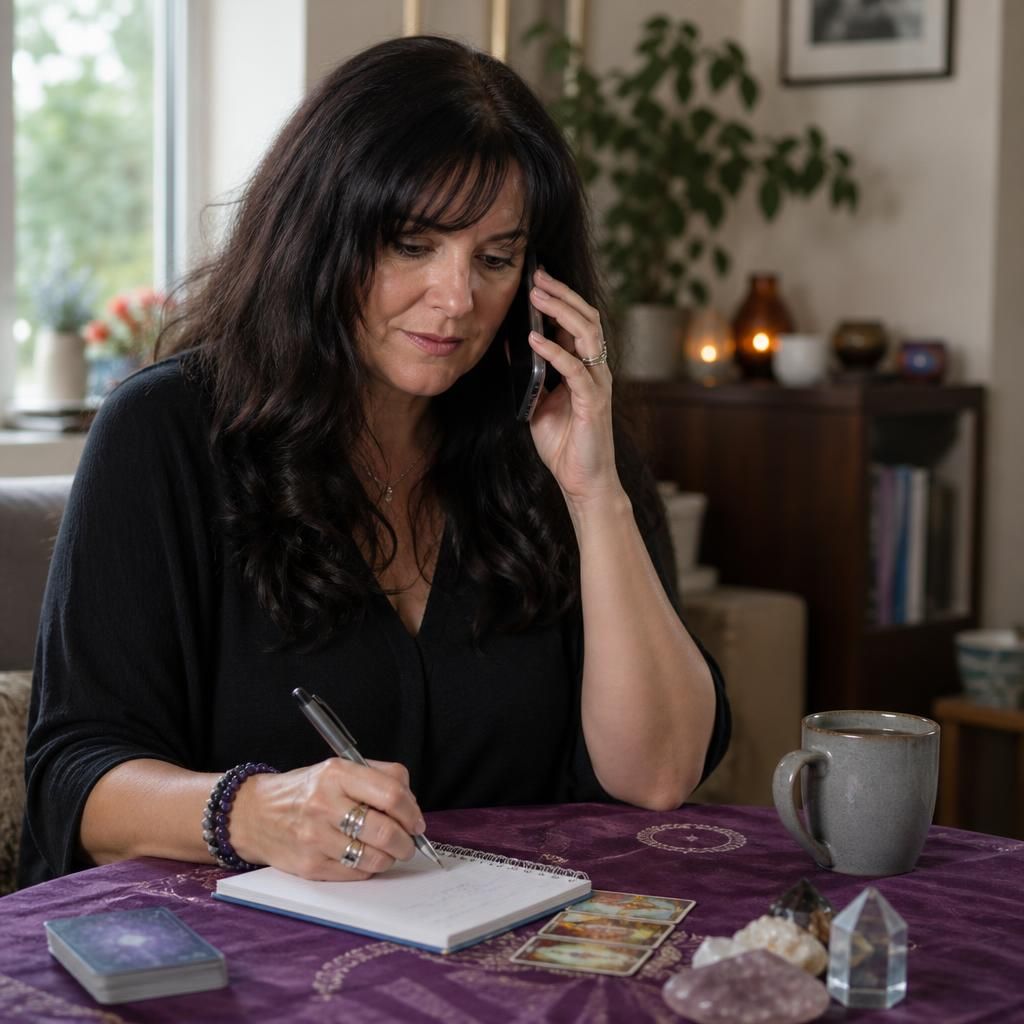
A longer clairvoyant phone reading is not automatically a more accurate one. Duration mainly affects how much time is available to explore a topic, clarify impressions and consider different perspectives; it does not turn an intuitive interpretation into verified fact.
A focused session may be sufficient when the caller has one clear area to discuss, while a broader reading may require more explanation. The useful measure is whether the conversation remains relevant, understandable and respectful of the caller’s choices—not how long it lasts or how many statements are made.